 Save to Pinterest
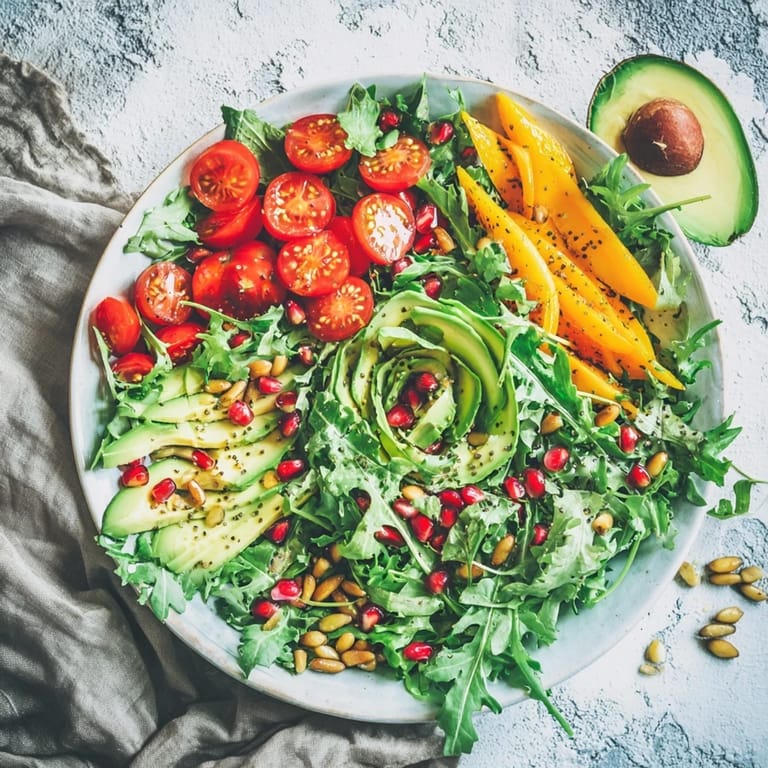
 I discovered this salad while organizing my kitchen one afternoon, noticing how the colors of fresh produce seemed to naturally arrange themselves in pleasing proportions. There's something magical about spiraling tomatoes and avocado across a platter in a pattern that feels both intentional and effortless, like your eye knows exactly where to rest. This Golden Ratio Salad transformed an ordinary weeknight into something that looked almost too beautiful to eat, but tasted even better than it looked. Now whenever I need to impress someone or just remind myself that everyday cooking can be art, I reach for this one.
My sister arrived unannounced on a Saturday with her new partner, and I had maybe fifteen minutes to pull together something that felt special. I grabbed whatever looked fresh from the market bag and started arranging it almost meditatively, and watching their faces light up as I set down that spiraling platter made me realize this wasn't just lunch—it was a conversation starter.
Ingredients
- Mixed baby greens: Choose a blend with different textures and colors—arugula adds peppery bite, spinach brings earthiness, and watercress contributes a subtle sharpness that ties everything together.
- Cherry tomatoes: Halving them lets the juice stay on the platter, creating little pools of flavor that catch the light and brighten every bite.
- Ripe avocado: Cut it just before assembling; the slice becomes part of the visual rhythm and stays creamy longer when not exposed to air longer than necessary.
- Yellow bell pepper: The color contrast against greens and reds is where the Golden Ratio magic starts, so slice it thin enough to let light shine through.
- Cucumber: Thinly sliced gives you more surface area to catch dressing and creates delicate, appealing layers in the spiral.
- Pomegranate seeds: These jewel-like pops of color are non-negotiable; they add tartness and become visual anchors in your arrangement.
- Feta cheese: Crumble it generously but not too fine—you want distinct little nuggets that stand out against the greens and vegetables.
- Toasted pine nuts: Toast them yourself if possible; the aroma filling your kitchen is half the appeal, and they taste fresher than pre-toasted versions.
- Extra-virgin olive oil: This is where quality matters; use one you actually love tasting straight.
- Lemon juice: Fresh squeezed makes a world of difference, adding brightness that bottled juice can't quite match.
- Honey: Just enough to round out the dressing and balance the acidity of the lemon.
- Dijon mustard: The secret emulsifier that makes everything cling together beautifully.
Tired of Takeout? 🥡
Get 10 meals you can make faster than delivery arrives. Seriously.
One email. No spam. Unsubscribe anytime.
Instructions
- Build your base:
- Spread the mixed greens across your largest platter in a loose, organic way, like you're creating a canvas. Don't make it perfectly flat—let there be gentle mounds and valleys where the other elements will nestle in.
- Spiral your elements:
- Start with the larger pieces—avocado slices and tomato halves—arranging them in a gentle spiral from the center outward, spacing them about an inch apart so the greens still show through. This creates the visual draw that makes people pause before eating.
- Fill the gaps:
- Tuck the cucumber slices and bell pepper strips into the spaces between larger elements, varying their direction so light catches them differently. The randomness within the structure is what makes it feel intentional rather than fussy.
- Add the jewels:
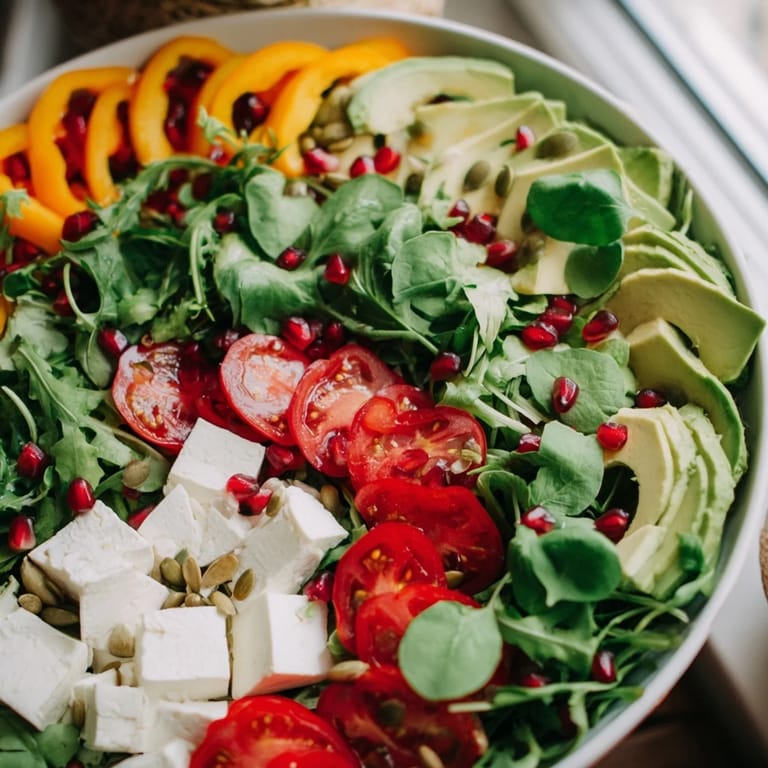
- Scatter pomegranate seeds across the spiral with a light hand, concentrating a few near the center but letting them trail outward. They should feel like happy accidents rather than scattered evenly.
- Top with texture:
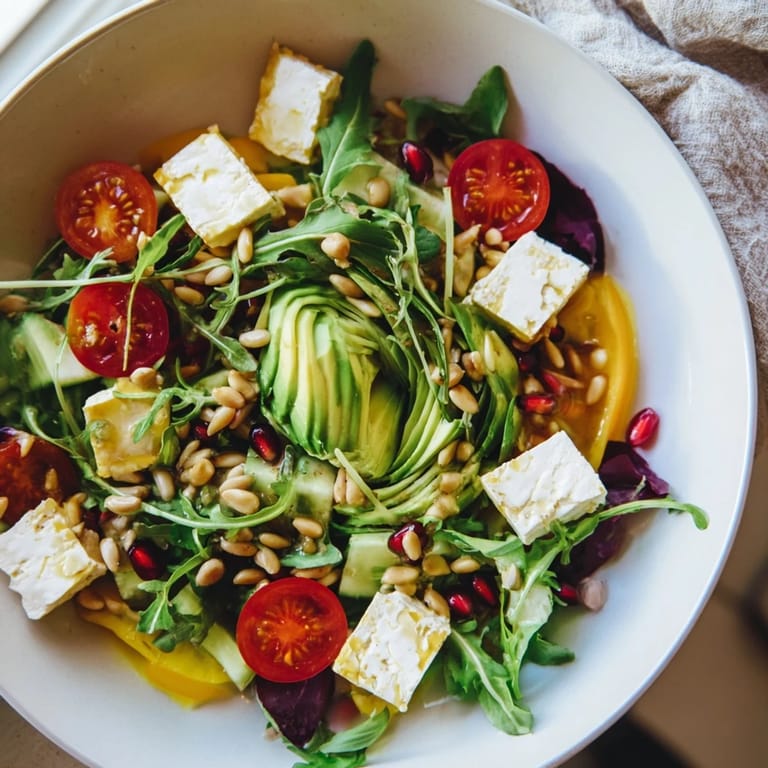
- Sprinkle crumbled feta and toasted pine nuts across the salad, adding a bit more weight toward the focal point so your eye naturally travels there first.
- Make the dressing:
- Whisk olive oil, lemon juice, honey, and Dijon mustard in a small bowl until it turns pale and emulsified, creating a silky coating rather than a separated puddle. Taste and season with salt and pepper to your preference.
- The finale:
- Drizzle the dressing lightly just before serving, letting it pool slightly in the valleys you created and glisten across the surface like morning dew.
 Save to Pinterest
 What struck me most about making this salad repeatedly is how it changed the way I see ingredients—not as things to chop and mix, but as elements with color, texture, and presence. Suddenly a simple salad became a moment of creative play in the kitchen, something that reminded me cooking doesn't always have to be complicated to feel meaningful.
The Art of Arrangement
The beauty of this salad lives in the arrangement, not in fussy technique or obscure ingredients. When you take time to place things intentionally, even something as everyday as vegetables feels special. The spiral pattern draws your eye naturally, making the salad feel both generous and elegant—like someone cared enough to arrange it thoughtfully just for you.
Playing with Variations
This salad's structure is flexible enough to shift with the seasons and what's available. In summer, swap in stone fruits or fresh berries where the tomatoes would go. Come autumn, roasted beets and walnuts create a warmer version of the same visual principle. The Golden Ratio framework becomes a template rather than a restriction, inviting you to compose new variations while keeping the spirit alive.
Serving and Storage Wisdom
The moment you dress this salad is the moment its clock starts ticking, so reserve the dressing and arrange everything first, then dress just before people gather around the table. If you're preparing elements ahead, keep the greens, dressing, and prepared vegetables in separate containers in the fridge; you can compose the platter in under five minutes when guests arrive.
- Cut avocado last and toss it gently with a squeeze of lemon to prevent browning while you finish the other elements.
- Toast pine nuts no more than a few hours before serving so they stay crispy and fragrant.
- Double-check that feta is crumbled into distinct pieces rather than pressed into clumps, so each forkful has the right amount of saltiness.
 Save to Pinterest
 This salad reminds me that food is conversation, color, and care on a plate. Serve it with pride, knowing you've created something that nourishes both body and the senses.
Recipe FAQs
- → What is the significance of the Golden Ratio in this salad?
The Golden Ratio guides the arrangement of ingredients in a spiral pattern, enhancing visual appeal and balance.
- → Can I substitute the feta cheese?
Yes, goat cheese works well as an alternative and maintains a creamy texture.
- → How should the dressing be prepared?
Whisk olive oil, lemon juice, honey, Dijon mustard, salt, and pepper together until emulsified for a zesty, balanced taste.
- → Is this suitable for gluten-free diets?
Yes, all ingredients are naturally gluten-free, making it suitable for gluten-sensitive diners.
- → What additions can increase protein content?
Consider adding grilled chicken or chickpeas to boost protein and make the dish more filling.