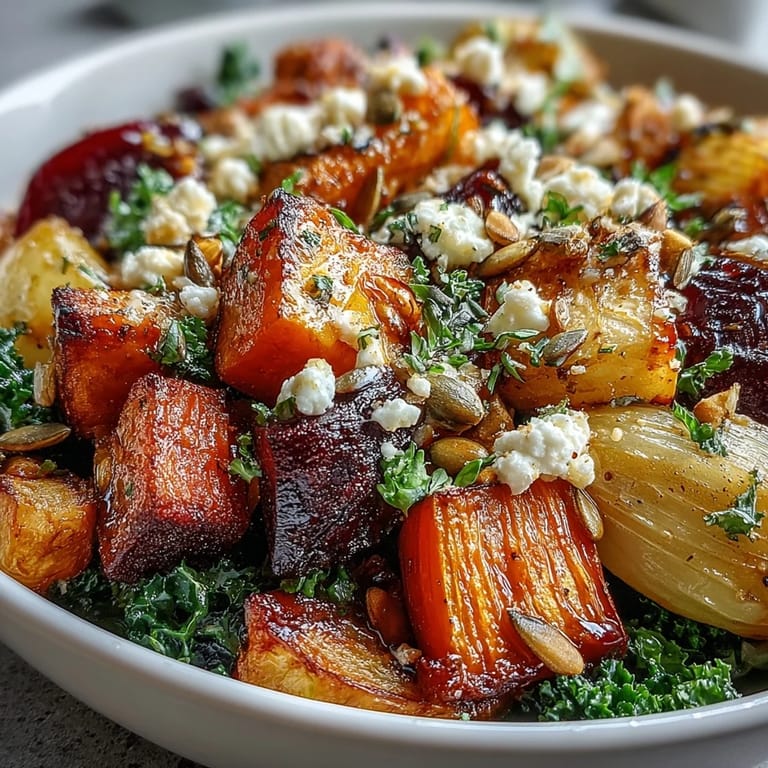
 Save to Pinterest
 Last November, I was standing in my kitchen on a particularly gray afternoon, staring at a pile of root vegetables I'd picked up without a real plan. My roommate wandered in asking what was for dinner, and instead of ordering takeout like usual, I found myself tossing everything with olive oil and thyme. Two hours later, we were both hunched over bowls of something warm and deeply satisfying, barely talking because the food was doing all the communicating. That bowl became my winter fix, the thing I'd make whenever the cold crept in and I needed to feel grounded again.
I made this for my sister's book club night, and she asked me to bring something that could work for both meat-eaters and the vegetarian in the group. Everyone went quiet for a moment after the first few bites—not the polite kind of quiet, but the kind where people are genuinely concentrating on their food. Afterward, three people asked for the recipe, and one of them has been making it monthly ever since.
Ingredients
- Carrots and parsnips: These two together create a sweet foundation that mellows under high heat; don't skip the parsnips because they add an earthiness that carrots alone can't deliver.
- Sweet potato: Adds natural sweetness and a creamy texture when roasted, making the bowl feel more luxurious than it has any right to be.
- Beet: This one's partly for color, but it also brings an unexpected mineral depth that makes you pause and wonder what just happened.
- Olive oil and thyme: The thyme is non-negotiable here—it ties everything together and smells like someone actually knows what they're doing.
- Curly kale: Massaging it beforehand might seem fussy, but it genuinely transforms the texture and makes it less like eating a salad and more like eating something intentional.
- Apple cider vinegar and Dijon mustard: These create the backbone of the dressing and make the warm oil sing instead of just sitting there.
- Toasted pumpkin seeds: They add crunch and nuttiness that keeps your spoon moving; skipping them means missing out on textural contrast that matters.
Tired of Takeout? 🥡
Get 10 meals you can make faster than delivery arrives. Seriously.
One email. No spam. Unsubscribe anytime.
Instructions
- Get Your Setup Ready:
- Preheat that oven to 425°F and line your baking sheet with parchment—this prevents sticking and makes cleanup almost pleasant.
- Prepare the Root Vegetables:
- Cut everything into roughly 1-inch pieces so they roast evenly; uneven pieces mean some burn while others stay raw, which is frustrating. Toss with olive oil, salt, pepper, and thyme until every piece glistens.
- Roast Until Golden:
- Spread them out and get them into the oven for 30-35 minutes, stirring halfway through so the edges caramelize without the underside burning. You'll know they're done when a fork slides through easily and the edges have turned a deep bronze.
- Soften the Kale:
- While vegetables roast, massage the kale with olive oil and salt using your hands—it feels a bit silly at first but the leaves darken and soften, becoming almost silky. This step takes maybe two minutes and completely changes how the salad feels.
- Make the Warm Dressing:
- Heat olive oil in a small skillet, add the minced shallot, and let it soften for a couple minutes until fragrant. Whisk in the vinegar, mustard, and honey until smooth, then taste and adjust the seasoning.
- Assemble Your Bowl:
- Divide kale among four bowls, pile roasted vegetables on top, then drizzle with that warm dressing while it's still steaming. The warmth wilts the greens just slightly and brings everything into conversation with itself.
- Top and Serve:
- Scatter pumpkin seeds and feta over everything, then eat it immediately before the kale gets too soft.
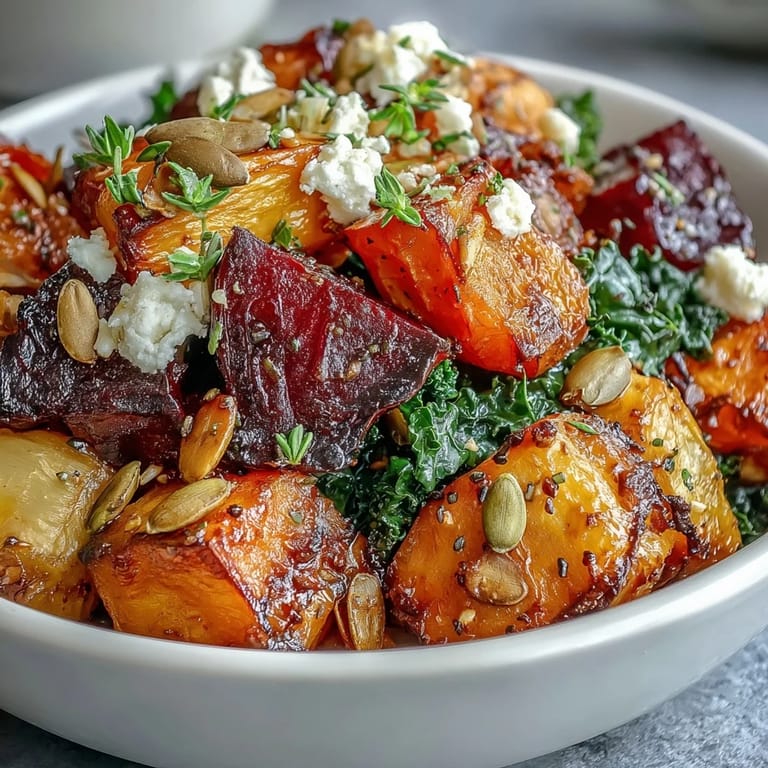 Save to Pinterest
 There's something about a warm bowl on a cold day that goes beyond nutrition. My neighbor came over once when I was making this, complained about feeling tired and overwhelmed, and after eating a bowl, she just sat there quietly for a while and seemed lighter. I realized then that this wasn't just dinner—it was the kind of food that gives you a moment to breathe.
Making It Your Own
This bowl is flexible enough to become something different every time you make it. I've swapped kale for baby spinach when I couldn't find anything crisp at the market, used parsnips and carrots only when the farmer's stand was picked over, and once threw in roasted Brussels sprouts just because they were on sale. The core idea stays the same—roasted sweetness, earthy greens, something tangy to wake everything up—but the details can shift with whatever you find or whatever you're craving.
Building Extra Heartiness
If you're serving this for a crowd of hungry people or you're someone who needs more substance, you can easily add grains without overthinking it. I've stirred in cooked quinoa, brown rice, farro, and even millet, and each one brings its own texture to the party. The warm dressing coats everything beautifully, so adding grain doesn't make it feel thin or incomplete—it just makes it more filling and turns it into something you could pack for lunch the next day.
Seasonal Swaps and Variations
Winter is when this bowl shines brightest, but it doesn't have to stay locked into January and February. Spring versions could include roasted radishes and baby turnips, summer could bring roasted fennel and delicate squash, and fall practically demands roasted Brussels sprouts and regular beets. The temperature of the dressing matters less as seasons warm up, but the principle of combining roasted vegetables with greens and something acidic stays relevant year-round.
- Add cooked chickpeas or white beans for plant-based protein that actually fills you up.
- Swap feta for goat cheese if you want something creamier, or skip it entirely for vegan versions.
- A generous drizzle of tahini thinned with warm water makes an excellent alternative dressing if you're avoiding mustard or want something earthier.
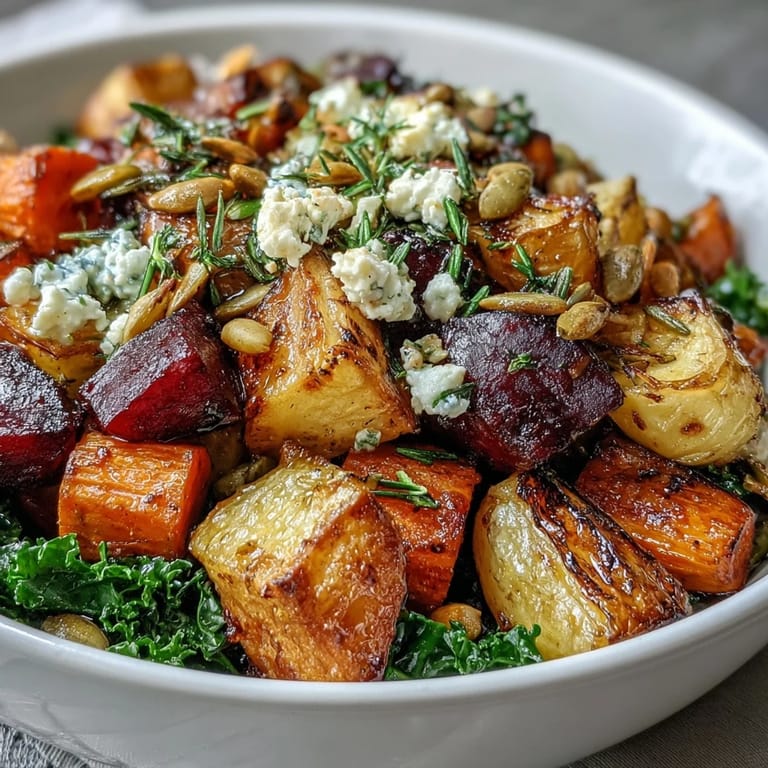 Save to Pinterest
 This bowl has become the thing I make when I want to feel capable and grounded, when I'm cooking for people I care about, or when winter's heaviness needs softening. It's simple enough that you can't mess it up, but thoughtful enough that it feels like you tried.
Recipe FAQs
- → Can I prepare the vegetables ahead of time?
Yes, peel and cut the root vegetables up to 24 hours in advance. Store them in an airtight container with cold water to prevent browning. Drain and pat dry before roasting.
- → What other greens work well in this bowl?
Baby spinach, Swiss chard, or sturdy spring greens make excellent substitutes. Adjust the massage time accordingly—tender greens need just a minute with oil, while hearty greens like chard benefit from more handling.
- → How do I store leftovers?
Keep components separate for best results. Roasted vegetables last 4-5 days refrigerated. Store the dressing in a small jar and bring to room temperature before serving. Reheat vegetables at 350°F for 10-15 minutes.
- → Can I add protein to make it more filling?
Absolutely. Roasted chickpeas, baked tofu, or shredded chicken pair beautifully. For a heartier grain bowl, add cooked quinoa, farro, or brown rice beneath the vegetables.
- → What's the purpose of massaging the kale?
Massaging breaks down kale's tough cellulose structure, making it tender and less bitter. The oil helps coat leaves evenly, improving texture and helping them absorb the warm dressing better.
- → Can I roast the vegetables at a different temperature?
425°F achieves ideal caramelization. At 400°F, extend roasting time by 5-10 minutes. Higher heat may char edges before centers cook through. Adjust based on your oven's tendencies.