 Save to Pinterest
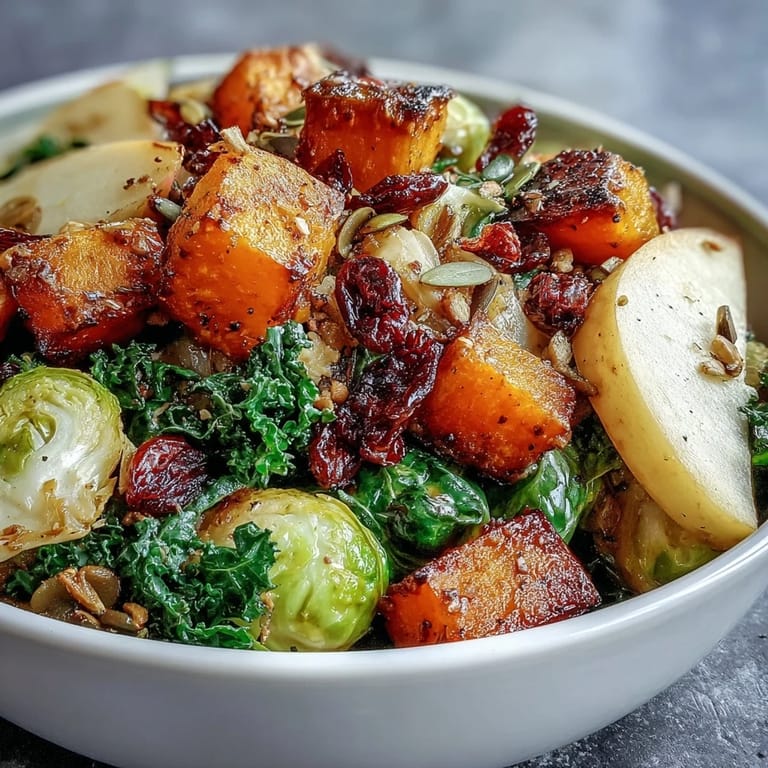
 There's something about September evenings that makes me crave bowls instead of plated dinners, and this one practically fell together on a Wednesday when my farmers market haul threatened to overwhelm my small fridge. The butternut squash was calling out to be roasted, the Brussels sprouts looked impossibly crispy-ready, and suddenly I was tossing everything with olive oil and paprika like I'd planned it all along. What started as ingredient management became my new favorite weeknight ritual, one that tastes like autumn feels and somehow satisfies in a way that surprised me.
I made this for my friend Sarah on a chilly October afternoon, and watching her slowly realize every component was roasted and intentional instead of steamed and sad was worth every dish I dirtied. She came back for thirds and asked for the recipe before she even finished, which told me everything I needed to know about whether this thing actually works.
Ingredients
- Butternut squash, peeled and cubed (2 cups): Buy them already peeled if your hands don't want to wrestle with the skin, and cube them fairly uniform so they caramelize evenly on the tray.
- Brussels sprouts, trimmed and halved (2 cups): The flat cut side is your secret weapon for crispiness, so don't skip the cutting step even though it feels fussy.
- Kale, stems removed and leaves chopped (2 cups): Massage it gently while wilting to break down the toughness, and don't overthink it—a quick sauté is all you need.
- Apple, cored and sliced (1 large): Toss it with the cinnamon before roasting so the spice sticks, and use something tart like a Granny Smith to balance the sweet vegetables.
- Farro (1 cup): Rinse it first even though the package doesn't strictly demand it, because a quick rinse removes the powdery starch that muddles the flavor.
- Vegetable broth or water (2 cups): Broth adds quiet depth, but water works perfectly fine and lets the vegetables speak for themselves.
- Olive oil (3 tbsp): Split between the vegetables strategically so everything gets its own moment to crisp up in the heat.
- Sea salt (1 tsp): Taste as you layer, because roasted vegetables need a little more seasoning than you'd expect.
- Black pepper (1/2 tsp): Freshly ground makes an actual difference here, and you'll notice it in the finish.
- Smoked paprika (1/2 tsp): This is what makes people ask what they're tasting without being able to identify it—don't skip the smoked variety.
- Ground cinnamon (1/2 tsp): Pairs the apples with the squash in a way that feels less like dessert and more like autumn itself.
- Toasted pumpkin seeds (1/4 cup): Buy them already toasted to save yourself a step, and toss them on right before eating so they don't get soggy.
- Dried cranberries (2 tbsp): They add tartness that cuts through the richness and look like little garnish jewels in the bowl.
- Feta or vegan cheese (2 tbsp crumbled): Optional but honest, and if you go vegan this becomes truly plant-forward without apology.
Tired of Takeout? 🥡
Get 10 meals you can make faster than delivery arrives. Seriously.
One email. No spam. Unsubscribe anytime.
Instructions
- Get your oven hungry:
- Preheat to 425°F and line two baking sheets with parchment paper so you're not thinking about cleanup while things are roasting. This is the moment to breathe and get organized before the action starts.
- Season the squash and Brussels sprouts:
- Toss them together with 2 tablespoons of olive oil, salt, pepper, and smoked paprika in a bowl, making sure every piece gets its coating of spice and oil. Spread them in a single layer on the first sheet so they can breathe in the heat.
- Prepare the apples separately:
- Slice them and arrange on the second sheet, then drizzle with the remaining tablespoon of olive oil and sprinkle with cinnamon. This keeps them from getting buried under the heavier vegetables and lets them caramelize at their own pace.
- Roast everything into tender gold:
- Put both sheets in the oven and roast the squash and Brussels sprouts for 25 to 30 minutes, stirring once halfway through, until the edges are golden and a fork goes through easily. Add the apple sheet for the last 15 minutes so they soften and caramelize without turning to mush.
- Cook the grain with intention:
- While things roast, rinse the farro and bring broth to a boil in a medium saucepan. Add the farro, lower the heat, cover it, and let it simmer for 20 to 25 minutes until the grains are tender and the liquid is mostly absorbed.
- Wilt the kale into softness:
- Heat a skillet over medium heat and add the chopped kale with just a splash of water, stirring for 2 to 3 minutes until it darkens and becomes tender. This quick cook keeps it from being tough while preserving that deep green color.
- Build your bowl with intention:
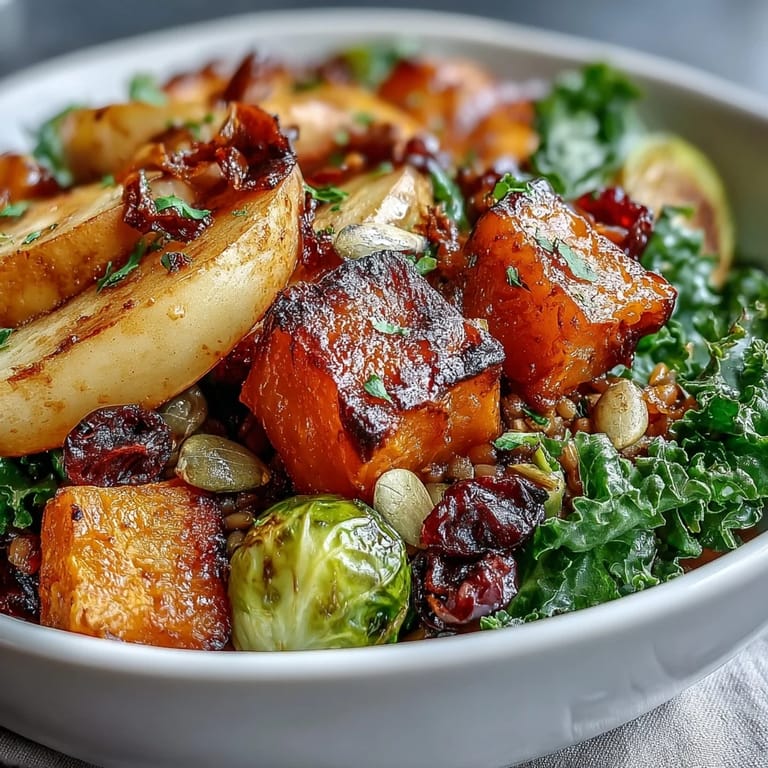
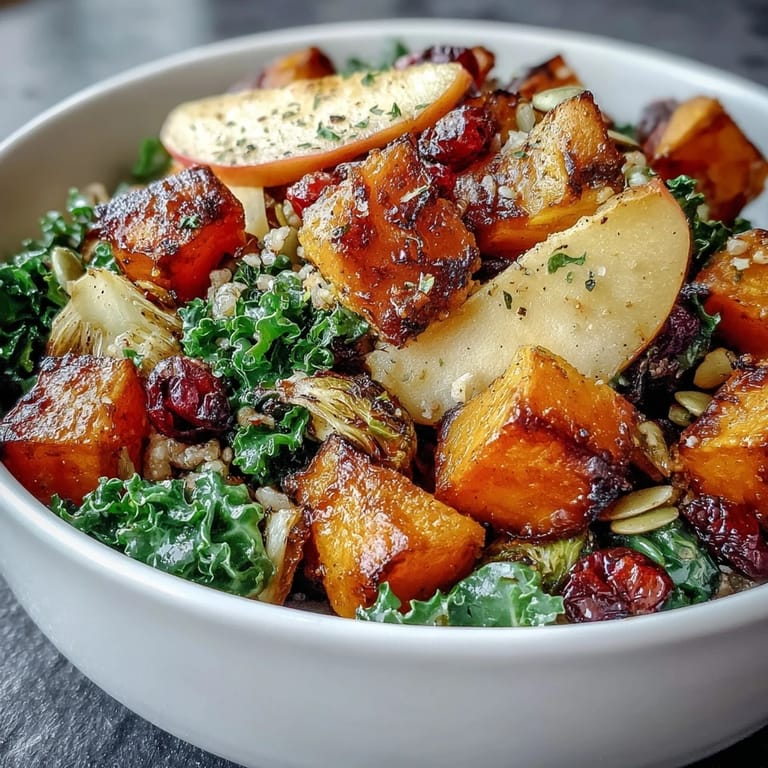
- Divide the cooked farro among four bowls, then arrange the roasted squash, Brussels sprouts, sautéed kale, and roasted apples on top in a way that looks generous and thoughtful. Top with pumpkin seeds, cranberries, and cheese if you're using it, then serve while everything is still warm.
 Save to Pinterest
 My partner came home to the smell of roasting vegetables and cinnamon one evening and just stood in the kitchen for a moment without saying anything, which somehow said everything. That's when I knew this wasn't just a recipe but a small act of care wrapped up in autumn flavors.
Why This Works as a Meal
A bowl like this works because it doesn't need much else to feel complete, and it actually tastes better the next day when all the flavors have had time to get friendly with each other in the container. The warm grain holds everything together while the roasted vegetables bring texture and the fresh kale keeps it from feeling heavy, and somehow it's both comforting and light at the same time.
Switching Things Up
After making this a few times, I started trading ingredients like I was mixing a playlist, and it never let me down. Pears instead of apples give it a different kind of sweetness, quinoa instead of farro makes it gluten-free and faster, and roasted chickpeas on top turn it into something that feels more substantial without needing meat.
Storage and Serving Ideas
This bowl lives beautifully in the fridge for three days, though I'd keep the pumpkin seeds separate so they don't get sad and soft by day three. Reheat gently on the stovetop with a splash of water rather than the microwave, and it tastes like you just made it fresh.
- Pack the components separately in containers and assemble the morning you eat it if you want maximum crispiness and maximum convenience.
- This pairs quietly with crisp white wine or apple cider if you're feeling like a proper evening of it.
- Leftover roasted vegetables work beautifully tossed into salads, scrambled into eggs, or eaten straight from the container as a secret snack.
 Save to Pinterest
 This fall vegetable bowl became the thing I make when I want my kitchen to feel warm and my stomach to feel taken care of, all at the same time. Return to it when the season turns crispy, and let it remind you that autumn eating can be simple, nourishing, and genuinely delicious.
Recipe FAQs
- → What grains work best for this bowl?
Farro provides a chewy, nutty foundation that pairs beautifully with roasted vegetables. Quinoa offers a lighter, protein-rich alternative, while brown rice adds a hearty, familiar texture. Each grain absorbs the seasonings differently while maintaining the bowl's comforting essence.
- → Can I prepare components ahead?
The roasted vegetables and cooked grains keep well for 3-4 days when stored separately in airtight containers. Reheat vegetables in a 375°F oven until warmed through, and refresh grains with a splash of water or broth. Assemble just before serving for best texture and flavor.
- → How do I prevent kale from becoming bitter?
Quick wilting over medium heat with a splash of water softens the leaves while preserving their vibrant color. Avoid overcooking, which can develop bitter notes. Massaging raw kale with olive oil before wilting also helps break down tough fibers and enhances natural sweetness.
- → What adds the most flavor impact?
The smoked paprika creates depth in roasted vegetables, while cinnamon on apples accentuates their natural caramelization during roasting. The combination of these warming spices transforms simple ingredients into something extraordinary. Don't skip the finishing toppings—pumpkin seeds add essential crunch.
- → Can I make this protein-rich?
Roasted chickpeas seasoned with the same spices as the vegetables add satisfying protein and texture. Cubed tofu or tempeh can be roasted alongside the vegetables. For additional protein, consider adding hemp seeds, chopped walnuts, or a dollop of white bean hummus.