 Save to Pinterest
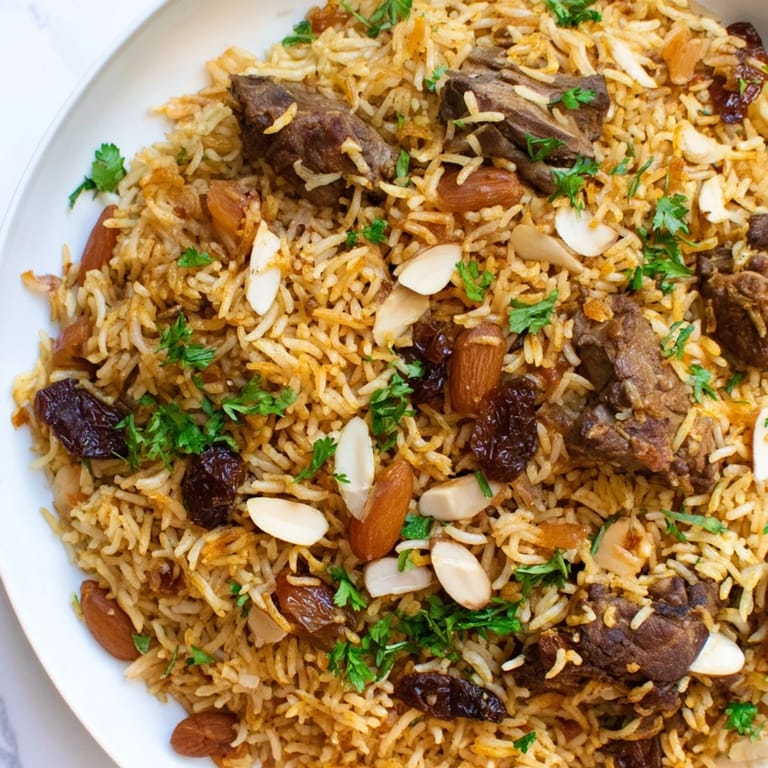
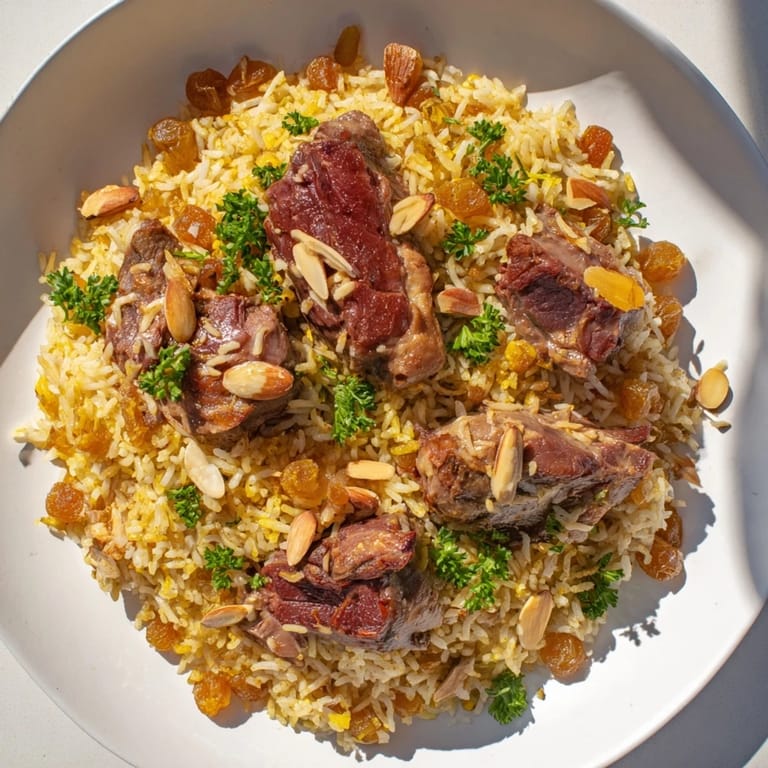
 The first time I truly understood the meaning of celebration through food was when my friend Fatima invited me to help her prepare kabsa for her family gathering. She moved gracefully through her kitchen, layering spices into hot oil while golden onions sizzled, and suddenly the entire apartment filled with this intoxicating aroma of cumin, cinnamon, and cardamom. I watched as she nestled tender meat into fluffy rice, scattered jewel-like raisins across the top, and toasted almonds until they were just golden enough. That day, I learned that kabsa isn't just rice with meat—it's an edible expression of hospitality and joy.
I remember cooking this for my partner on a cold evening when we both needed something that felt like a warm embrace. The house filled with that unmistakable Middle Eastern spice blend, and by the time the rice was ready, we were both standing at the kitchen counter unable to wait even five more minutes. We ate directly from the platter, passing it back and forth between us, and somehow that simple act of sharing made an ordinary Tuesday feel like the feast it truly was.
Ingredients
- Lamb or chicken pieces (1 kg, bone-in): Bone-in cuts release incredible depth and richness into the broth—don't skip them even if boneless seems easier.
- Vegetable oil (1 tbsp): Use a neutral oil that can handle high heat without burning the delicate spices.
- Large onion (1, finely sliced): Slice it thin so it melts into golden sweetness that becomes the flavor foundation.
- Garlic cloves (3, minced): Fresh garlic adds a brightness that bottled versions can't quite capture.
- Ground cumin (2 tsp): This is the backbone—don't measure with a heavy hand, but don't skimp either.
- Ground coriander (2 tsp): Coriander adds an almost floral lift that balances the deeper spices.
- Ground cinnamon (1½ tsp): The warmth that makes people close their eyes and smile when they taste it.
- Ground black pepper (1½ tsp): Use freshly ground if possible—pre-ground loses its bite too quickly.
- Ground turmeric (1 tsp): This gives the rice its characteristic golden hue and earthy undertones.
- Ground cardamom (1 tsp): Cardamom is the secret ingredient that makes people ask what that incredible flavor is.
- Ground cloves (½ tsp): Just a whisper of cloves—too much overwhelms everything else.
- Ground allspice (½ tsp): A subtle bridge between spices that ties the whole blend together.
- Dried bay leaves (2): They perfume the broth and must be removed before serving.
- Dried black lime or loomi (1, pierced): This is optional but absolutely worth seeking out—it adds an authentic sour-sweet complexity.
- Medium tomatoes (2, chopped): Fresh tomatoes add acidity and body to the cooking liquid.
- Medium carrot (1, grated): Grated carrot dissolves slightly, adding natural sweetness and color.
- Basmati rice (3 cups, rinsed and soaked): Soaking is essential—it prevents mushiness and ensures each grain stays separate and fluffy.
- Chicken or lamb stock (5 cups): Use homemade if you have it; if not, choose a quality brand with minimal sodium.
- Golden raisins (½ cup): They plump up during cooking and add bursts of sweetness.
- Slivered almonds (½ cup, toasted): Toast them yourself just before serving to preserve their crunch and nutty aroma.
- Fresh parsley (¼ cup, chopped): A final sprinkle of green adds color and a subtle herbaceous note.
- Salt: Taste and adjust at the end—the stock already contains salt.
Tired of Takeout? 🥡
Get 10 meals you can make faster than delivery arrives. Seriously.
One email. No spam. Unsubscribe anytime.
Instructions
- Start with the aromatics:
- Heat your oil in a large heavy-bottomed pot over medium-high heat until it shimmers slightly. Add your sliced onion and let it cook undisturbed for a minute before stirring—this creates those caramelized edges that build flavor.
- Brown the meat properly:
- Once the onion turns golden, add minced garlic and stir for just 30 seconds so it releases its fragrance without burning. Now add your meat pieces and let them sit for 2-3 minutes before stirring—you want those browned, crusty edges that tell you real flavor development is happening.
- Toast the spices:
- After the meat browns on all sides (about 8 minutes total), add every single spice along with the bay leaves and pierced black lime. Stir constantly for 1-2 minutes and breathe in deeply—this is when you'll know all those individual flavors are waking up and becoming one unified blend.
- Build the braising liquid:
- Add your chopped tomatoes and grated carrot, stirring occasionally as they begin to soften and release their juices. This happens quickly—just 4-5 minutes—and you'll see the oil turning a beautiful rust color from all the spice and tomato.
- Braise the meat until surrender:
- Pour in your stock and bring everything to a boil, then immediately lower the heat to the gentlest simmer you can manage. Cover and let time do the work: 35-40 minutes for chicken until it's fork-tender, or 60 minutes for lamb until it practically falls off the bone.
- Prepare the rice:
- While the meat cooks, rinse your basmati rice under cool water until the water runs clear, then soak it in fresh cold water for at least 20 minutes—this ensures fluffy, separated grains instead of a starchy paste.
- Combine meat and rice:
- When the meat is perfectly tender, carefully remove it to a warm plate, leaving all that precious broth behind. Drain your soaked rice and stir it directly into the hot broth along with a pinch of salt, then nestle the meat pieces back into the rice, pressing them down gently.
- Finish cooking covered:
- Scatter the raisins over the top, cover the pot tightly, and reduce the heat to low. Set a timer for 25-30 minutes and resist the urge to peek—the trapped steam is doing something magical inside.
- Rest and finish:
- Remove from heat and let it sit, still covered, for 5 minutes to allow any remaining steam to finish its work. Discard the bay leaves and black lime, then gently fluff the rice with a fork, being careful not to crush the grains or break up the meat.
- Plate with intention:
- Transfer everything to a serving platter, then scatter your freshly toasted almonds and bright parsley across the top just before serving—this adds both visual beauty and last-minute texture.
 Save to Pinterest
 There was a moment during one dinner party when someone took their first bite and went completely silent—the kind of silence that happens when food hits exactly right. Then they looked up and asked if I'd made this my whole life because it tasted like someone had captured tradition itself in a bowl. That's when I realized kabsa had become something more than a recipe for me; it had become a way to say "you matter enough for me to take time with this."
The Art of Spice Layering
What makes kabsa different from other spiced rice dishes is the way each spice is introduced to the oil at the same moment, creating a unified flavor profile rather than distinct notes competing for attention. When I first started making this, I'd add spices at different times, thinking more control meant better results—instead, I ended up with flavors that felt disjointed. Now I understand that the magic happens when cumin, coriander, and cinnamon all wake up together in hot oil, their aromatics mingling and creating something that tastes more harmonious than the sum of its parts. This isn't overthinking; it's about respecting the ingredients and the centuries of cooks who figured out what works best.
Stock Choices That Matter
The broth that cooks the meat and then becomes the rice-cooking liquid is arguably the most important ingredient, even though it's easy to overlook. Homemade stock is beautiful, but a quality store-bought option works perfectly well if you choose carefully—look for brands with real meat and bone listed first, and avoid anything with excessive sodium or suspicious additives. I once made this with vegetable stock thinking it would be lighter, and the result tasted flat and one-dimensional, missing the richness that makes every bite satisfying. The meat and stock have a conversation during cooking, and that dialogue is what creates depth.
Timing and Temperature Control
Patience is the real secret ingredient here, and I say that without irony. The difference between good kabsa and transcendent kabsa is respecting the process: letting onions actually caramelize instead of rushing through this step, allowing meat to brown properly before adding liquid, and most critically, maintaining a very gentle simmer rather than a rolling boil when the meat cooks. A rolling boil toughens meat and breaks it apart, while a low simmer allows it to become impossibly tender while the broth stays clear and flavorful. Watch the pot occasionally, listen for that gentle bubble rather than an aggressive gurgle, and you'll understand why this dish takes time but delivers incomparable results.
- Use a kitchen thermometer if you're unsure about heat levels—aim for the broth to barely bubble at the surface.
- If you're cooking lamb instead of chicken, add 20-25 extra minutes and check tenderness rather than watching the clock.
- The final 5-minute rest after cooking is non-negotiable because it allows the rice to set and the flavors to fully integrate before serving.
 Save to Pinterest
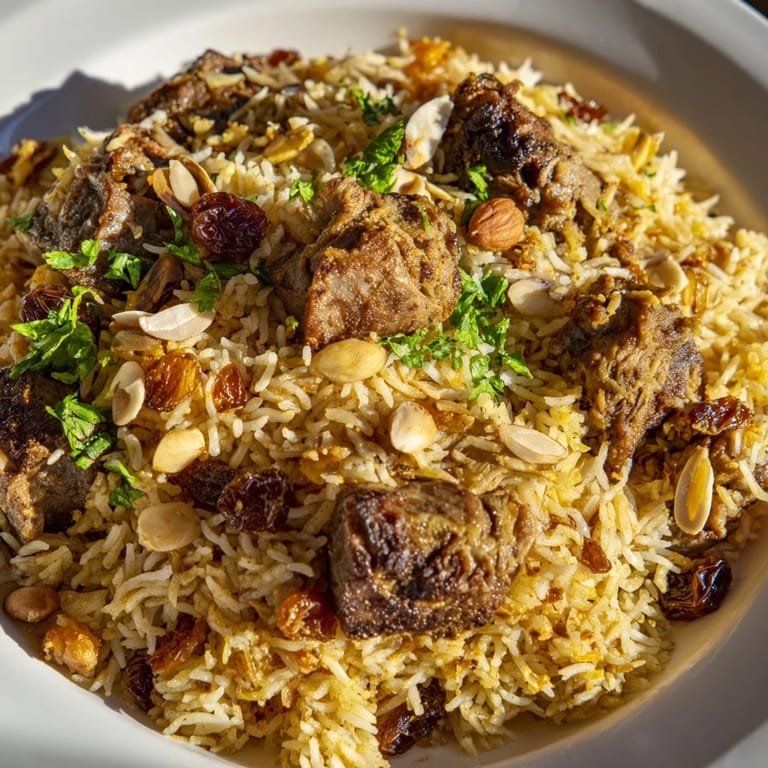
 Every time I make kabsa, I'm reminded that the best recipes are those that reward patience and attention. This is food meant to bring people together, so make it with intention and watch what happens.
Recipe FAQs
- → What spices are essential for authentic flavor?
Cumin, coriander, cinnamon, turmeric, cardamom, and cloves create the signature aromatic base.
- → Can I substitute the meat used?
Yes, chicken, lamb, or beef work well depending on preference.
- → What is the role of dried black lime (loomi)?
Loomi adds a unique citrusy depth but can be omitted if unavailable.
- → How should the rice be prepared before cooking?
Rinse basmati rice and soak for 20 minutes to ensure fluffy texture.
- → What garnishes complement the dish?
Golden raisins and toasted slivered almonds add sweetness and crunch.
- → Is this dish suitable for a festive occasion?
Yes, its rich flavors and aromatic spices make it ideal for celebrations.