 Save to Pinterest
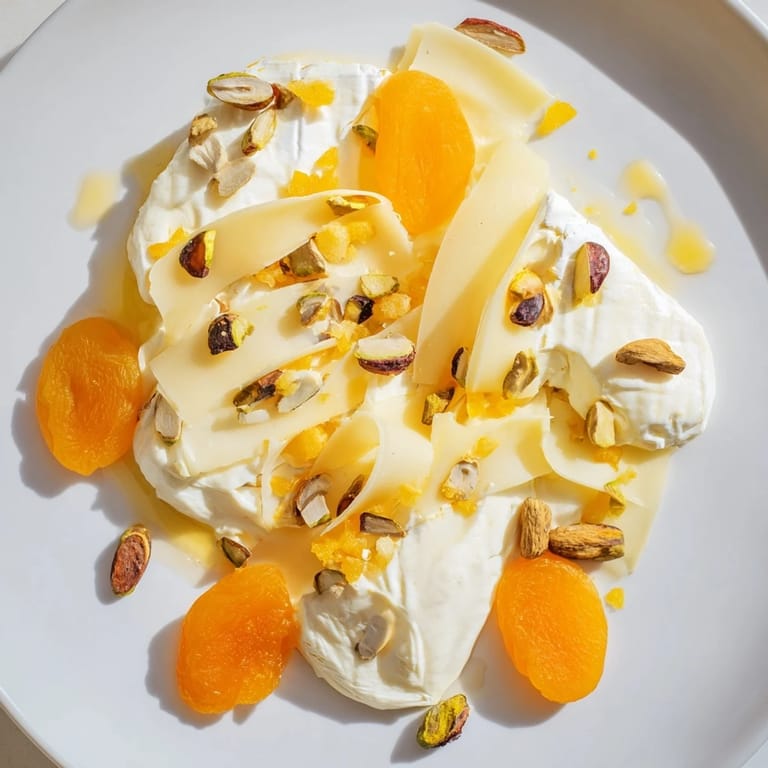
 I discovered the magic of a golden cheese board entirely by accident one autumn evening when a guest mentioned she couldn't eat anything red or orange. Rather than panic, I reached for the saffron in my spice rack and started tinting cheeses and spreads with warm yellows and golds. What emerged was so visually stunning—almost ethereal—that I realized I'd been arranging cheese boards the ordinary way my whole life. The soft, flowing patterns and silky textures felt less like a board and more like edible art. Now whenever I want to impress without stress, this is my go-to.
The first time I made this for my partner's family dinner, I was nervous about the color coordination, worried it might look too monochromatic. But when I stepped back and saw how the honeyed mascarpone caught the light against the aged gouda, creating these almost liquid shadows between the ribbons of fontina, I realized the simplicity was exactly the point. They spent more time photographing it than eating it—and I'll admit, that felt pretty good.
Ingredients
- Triple cream brie, lightly tinted with saffron or turmeric: This is your foundation—soft, yielding, and naturally pale enough to accept the gentle golden hue. Saffron adds subtle floral notes while turmeric is sharper; use it sparingly or it'll taste medicinal.
- Aged gouda, sliced thin: The nutty sweetness here anchors everything and those thin slices catch light beautifully. Slice it with a vegetable peeler for gossamer ribbons if you want to get fancy.
- Fontina, room temperature, cut into ribbons: Fontina's buttery texture is what creates that silk effect the name promises. Room temperature is non-negotiable—cold fontina snaps instead of flowing.
- Mimolette, shaved: This French-Dutch cheese has that natural golden color and a slightly sweet, caramel undertone. Shaving it (rather than slicing) makes it delicate enough to layer without dominating.
- Whipped ricotta, blended with saffron threads: Saffron-infused ricotta is the hero spread here—it's creamy, elegant, and carries the golden theme. Toast the saffron threads in a dry pan first; it blooms the flavor.
- Honeyed mascarpone: This is your sweet-savory bridge. Stir the honey in gently so it ribbons through rather than fully combining for visual texture.
- Lemon curd (optional): A small bowl of lemon curd adds brightness and gives people a second creamy option. If you don't make your own, quality store-bought works beautifully.
- Baguette, thinly sliced: Toast these lightly if you like a little crunch, but the beauty of this board is how well it works fresh.
- Seed crackers: Choose ones with visible seeds—they add both texture and visual interest without competing for attention.
- Dried apricots, halved: The citrus notes in apricots complement the saffron, and the fruit adds necessary brightness.
- Roasted, salted pistachios: Pistachios are the only green on the board, providing a subtle color contrast. Their earthiness balances all the richness.
Tired of Takeout? 🥡
Get 10 meals you can make faster than delivery arrives. Seriously.
One email. No spam. Unsubscribe anytime.
Instructions
- Create your creamy base:
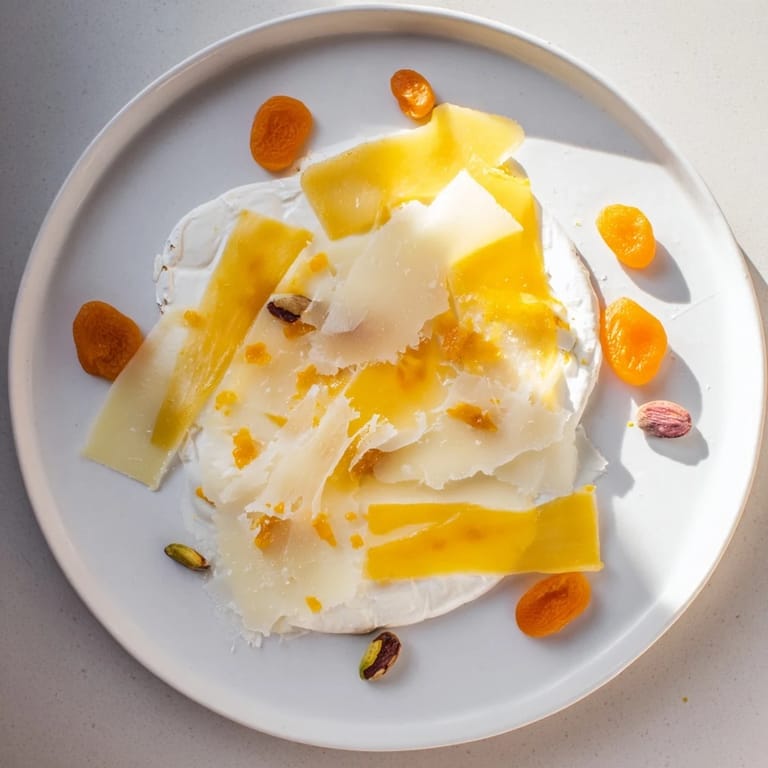
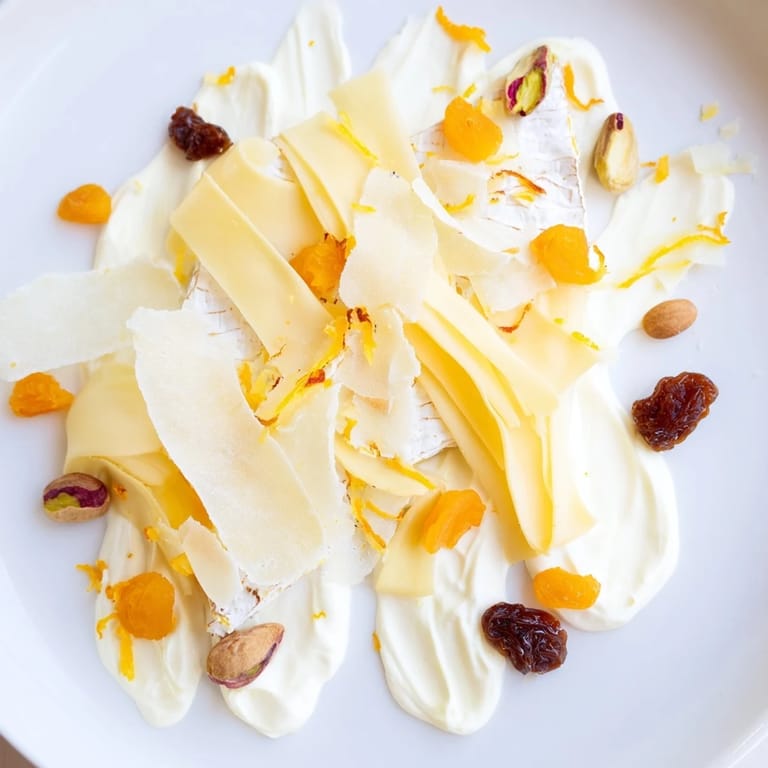
- Using an offset spatula or the back of a spoon, swoosh the saffron whipped ricotta across your platter in loose, puddle-like shapes. Think less precise and more intuitive—the imperfections are what make it look silk-like rather than architectural. Follow with the honeyed mascarpone, letting the two spreads intermingle at the edges.
- Layer the cheeses with intention:
- Arrange fontina ribbons in soft curves, letting them pool slightly into the spreads beneath. Place gouda slices in overlapping fans, and scatter mimolette shavings where you want catches of light. The goal is visual flow, not symmetry—imagine water moving across the board.
- Anchor with lemon curd:
- If using lemon curd, nestle a small bowl off to one side or gently swirl some directly onto the platter in one or two spots. Less is more here; you want it as an accent, not a distraction.
- Scatter the companions:
- Distribute baguette slices, crackers, apricots, and pistachios around and between the cheeses and spreads. Some should nestle into the creamy areas, others sit on the board itself for grabbing. This step is where you balance emptiness with abundance.
- Serve at the moment of completion:
- Bring everything to room temperature about 30 minutes before serving so the cheeses are yielding and the spreads soft enough to swirl onto crackers. This is the state where everything tastes and feels its absolute best.
 Save to Pinterest
 What surprised me most about this board is how often people come back for seconds of the spreads. Someone will eat a cracker with whipped ricotta, then return 10 minutes later just to eat a dollop straight, and suddenly the simple act of serving cheese becomes a moment where people slow down and actually taste things. That's when I know I've made something right.
The Art of the Golden Platter
The saffron and turmeric tinting isn't about flavor domination—it's about creating a visual story where every element feels intentional and connected. When I first experimented with this, I was so worried about the color being too artificial that I barely tinted anything, and it looked washed out. The second time, I was too generous and everything tasted like a spice cabinet. The sweet spot is when someone notices the color but can't quite place why it feels luxurious; they just know it does.
Pacing and Presence
There's something about a cheese board that naturally makes people pause and be present, unlike foods that disappear in a few bites. I've watched this particular arrangement encourage conversation because the beauty of it makes people want to savor the moment rather than rush through. The flowing patterns seem to have an almost meditative effect—less about consumption and more about appreciation. It's become my secret weapon for entertaining because it does most of the heavy lifting in terms of creating an atmosphere.
Flexibility and Substitution
The gorgeous thing about this board is how customizable it is while still maintaining its soul. I've made vegan versions using cashew ricotta and coconut whipped cream that were genuinely just as silky; I've swapped the mimolette for thin slices of smoked gouda when I wanted earthiness. Even the saffron is optional—turmeric alone creates the golden effect, or you can skip the tinting entirely and just use cheeses that are naturally yellow. The structure is what matters, not the exact ingredients. Some final thoughts to keep in mind:
- If you're serving this with wine, white and sparkling are your friends—dry Sancerre or Prosecco won't compete with the delicate flavors.
- Edible flowers scattered across the top (cornflowers, borage, calendula) add color and elegance without any extra work.
- Make this up to 30 minutes before serving, then let it sit at room temperature so textures reach their ideal state right when people gather around.
 Save to Pinterest
 This board has become my answer to the question: how do I entertain elegantly without spending hours cooking? It's proof that simplicity, when arranged with intention and served with care, feels just as impressive as anything that comes out of an oven.
Recipe FAQs
- → How do I achieve the saffron tint in the cheeses?
Lightly infuse triple cream brie or ricotta with saffron threads or a small pinch of turmeric to create a natural yellow hue without overpowering flavor.
- → What are the best accompaniments for this board?
Include thinly sliced baguette, seed crackers, dried apricots, and roasted salted pistachios to complement the creamy cheeses and add texture.
- → Can I prepare the board in advance?
Arrange the components shortly before serving to maintain freshness and texture, especially for delicate spreads and soft cheeses at room temperature.
- → Are there alternative spreads to use for a different flavor profile?
Honeyed mascarpone works beautifully, but lemon curd offers a silkier touch; you can also experiment with herb-infused ricotta or flavored nut butters.
- → How can I make this cheese board vegan-friendly?
Substitute dairy cheeses with plant-based alternatives, and replace whipped ricotta and mascarpone with coconut or nut-based spreads.