 Save to Pinterest
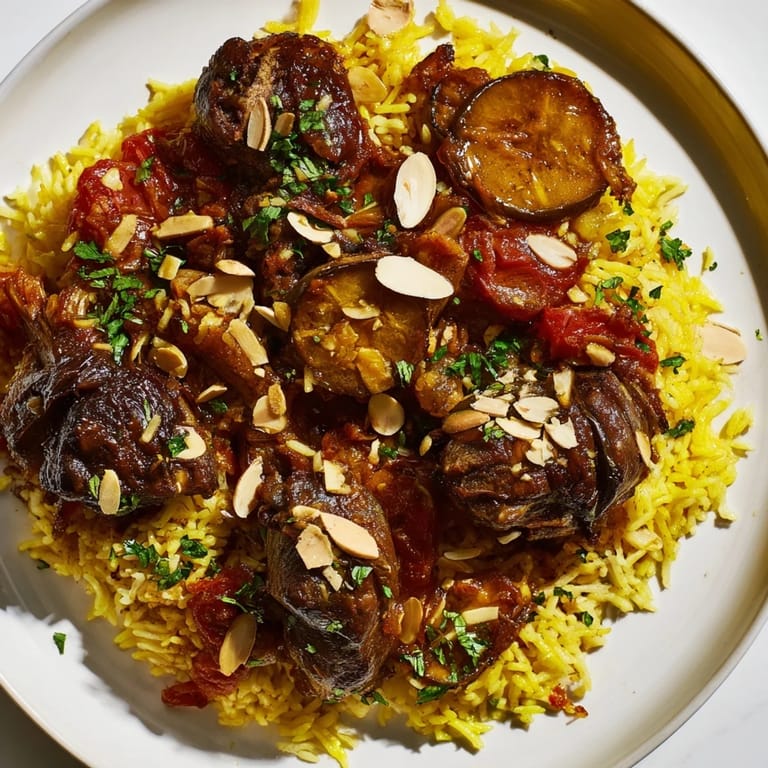
 The first time I watched someone flip a pot of maqluba onto a platter, I held my breath. One confident motion and there it was—a golden dome of rice studded with tender meat and vegetables, steam rising like something between dinner and theater. That moment convinced me this wasn't just food; it was a story told through layers. Now whenever I make it, I chase that same small thrill of the reveal.
I learned to make this properly when a friend's grandmother spent an afternoon in my kitchen, adjusting my layering technique with the gentleness of someone who'd done it a thousand times. She taught me that patience during the simmer is where the magic happens—you don't peek, you don't stir, you just trust. That quiet lesson changed how I cook all kinds of rice dishes.
Ingredients
- Bone-in lamb shanks or chicken pieces (900 g): The bones add depth to everything they touch, so don't skip them. Dark meat stays juicier through the long cook.
- Ground black pepper, allspice, cinnamon (1 tsp each), salt (1 tsp): Toast these in your mind as a whole—they're a team, not solo acts. The cinnamon should whisper, not shout.
- Long-grain basmati rice (2 cups): Rinsing until the water runs clear takes patience but rewards you with separate, fluffy grains instead of mush.
- Turmeric, cumin (1/2 tsp each), salt (1/2 tsp): These go into the broth and paint the rice with color and warmth from within.
- Eggplants (2 medium, peeled and sliced): Roasting first prevents them from staying soggy. The peeling matters—it lets them soften completely.
- Potatoes (2 medium, sliced): Waxy varieties hold their shape better than starchy ones. Slice them consistent so they cook evenly.
- Tomatoes (2 large, sliced), onion (1 medium, sliced): The tomato slices create a base that prevents sticking and adds gentle acidity.
- Vegetable oil (3 tbsp), slivered almonds or pine nuts, fresh parsley: Toast the nuts yourself if you can—it wakes them up. Fresh parsley at the end brings brightness to rich layers.
- Chicken or beef broth (3-4 cups): Homemade is best, but good store-bought works. You need enough to just cover the rice without drowning it.
Tired of Takeout? 🥡
Get 10 meals you can make faster than delivery arrives. Seriously.
One email. No spam. Unsubscribe anytime.
Instructions
- Rinse and soak the rice:
- Run cold water over the rice in a fine-mesh strainer, stirring gently until the water runs clear—this removes excess starch. Soak it in fresh water for 30 minutes so it absorbs moisture evenly and cooks to separate, tender grains.
- Season and sear the meat:
- Pat the lamb or chicken dry, then coat it thoroughly with pepper, allspice, cinnamon, and salt. Work in batches if your pot is crowded; you want a golden crust, not steam.
- Build the broth:
- Sear the meat hard until browned on all sides, then set it aside. Soften the onion slices in the same pot to pick up all those caramelized bits, then return the meat and add enough broth to nearly cover it. Let it simmer gently for 30-40 minutes until the meat is nearly tender—you want it cooked but not falling apart.
- Roast the vegetables:
- While meat simmers, brush your eggplant and potato slices with oil and spread them on baking sheets. Roast at 200°C (400°F) for 20-25 minutes until they're golden and soft inside—this prevents them from staying watery in the final dish.
- Layer with intention:
- This is where the magic lives. Start with tomato slices covering the bottom completely—they're your insurance against sticking. Layer potatoes next, then eggplant, then your cooked meat and onions, pressing gently so nothing shifts. Top with the drained rice, pressing very gently so the weight is distributed but the rice stays fluffy.
- Season the broth and add liquid:
- Stir turmeric, cumin, and salt into your reserved broth, then pour it over the rice until just covered—about 3-4 cups. You want moisture, not a soup.
- Weight and cover tightly:
- Place a heatproof plate or lid smaller than your pot directly on the rice to keep everything compact. Cover the whole pot tightly with its lid so steam stays trapped inside.
- Cook low and patient:
- Bring everything to a gentle simmer over medium heat, then drop to low immediately. Resist the urge to peek or stir—cook undisturbed for 35-40 minutes until the rice is tender and liquid is absorbed. You'll hear the occasional quiet crackle from the bottom, which is perfect.
- Rest before the reveal:
- Turn off the heat and let it sit, covered, for 15 minutes. This moment of rest lets everything set and makes the flip less likely to fall apart.
- The dramatic flip:
- Place a large serving platter over the pot and flip it confidently in one motion. Listen for the gentle sound of it releasing. Let it sit for a few seconds, then carefully lift the pot away.
- Finish and serve:
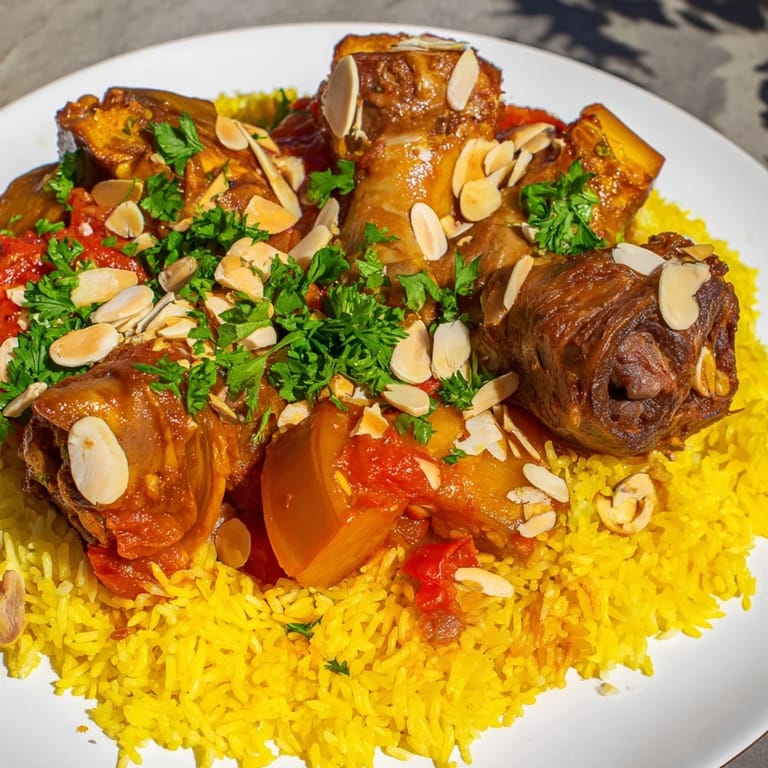
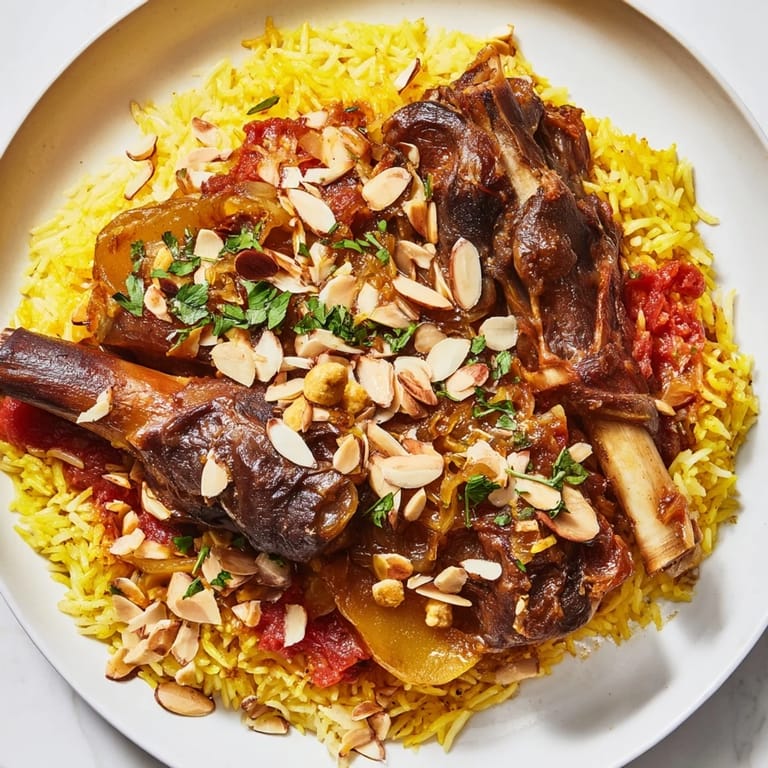
- Scatter toasted nuts and fresh parsley over the top. Bring it to the table with yogurt or a bright salad on the side.
 Save to Pinterest
 Years ago, a flip went wrong and the whole thing landed half on the platter, half on the counter. I was mortified until someone grabbed a spoon and ate it straight from the floor anyway, and suddenly everyone was laughing and reaching in. It tasted just as good broken, and that's when maqluba stopped being about perfection for me.
Choosing Your Meat
Lamb shanks are the traditional choice—they're forgiving, flavorful, and the bone-in aspect matters. But chicken thighs work beautifully too, especially if you're short on time. Dark meat is crucial; white meat dries out in this long, dry-ish cook. If you do use chicken, boneless thighs shave off 10 minutes of prep and still deliver richness.
The Vegetable Swap Game
Eggplant is traditional, but cauliflower florets bring a different kind of sweetness and hold up just as well when roasted. Zucchini works too if eggplant isn't calling to you. Potatoes are nearly non-negotiable—they add substance and absorb flavor. The point is to roast whatever you choose first, which concentrates sweetness and prevents a watery outcome.
Temperature and Timing
This dish moves slowly by design, and rushing it shows. The low simmer at the end is where patience becomes flavor—high heat leads to unevenly cooked rice and a burned bottom. Give yourself the full 2 hours from start to finish without cutting corners. Once you've made it once and felt how it builds, you'll understand why the timing matters so much.
- Always taste your broth before using it—if it's salty, dilute it slightly with water.
- The tomato layer at the bottom prevents sticking better than any oil ever could.
- Let guests see the whole unmolded dish before you cut into it; that moment is half the experience.
 Save to Pinterest
 Maqluba is the kind of dish that brings people together before anyone sits down. Serve it with yogurt or a bright cucumber salad, and watch it disappear like it was never there.
Recipe FAQs
- → What type of meat works best for Maqluba?
Lamb shanks with bone-in provide deep flavor and tenderness, but chicken pieces can also be used for a lighter option.
- → How do the spices enhance the dish?
Ground black pepper, allspice, cinnamon, cumin, and turmeric imbue the dish with warm, aromatic notes that complement the meat and rice.
- → Can the vegetables be replaced or varied?
Yes, eggplant and potatoes are traditional, but cauliflower florets can be used for a different texture and flavor.
- → Why is the dish flipped upside down when serving?
Flipping reveals the beautiful layered presentation, with golden roasted vegetables on top, and ensures the flavors meld perfectly.
- → What garnishes best complement Maqluba?
Toasted almonds or pine nuts with fresh chopped parsley add crunch and fresh herbal notes to finish the dish.
- → How should the broth be prepared for cooking?
The broth is used to simmer the meat and to cook the rice layers, enriched with a blend of spices for depth in flavor.