 Save to Pinterest
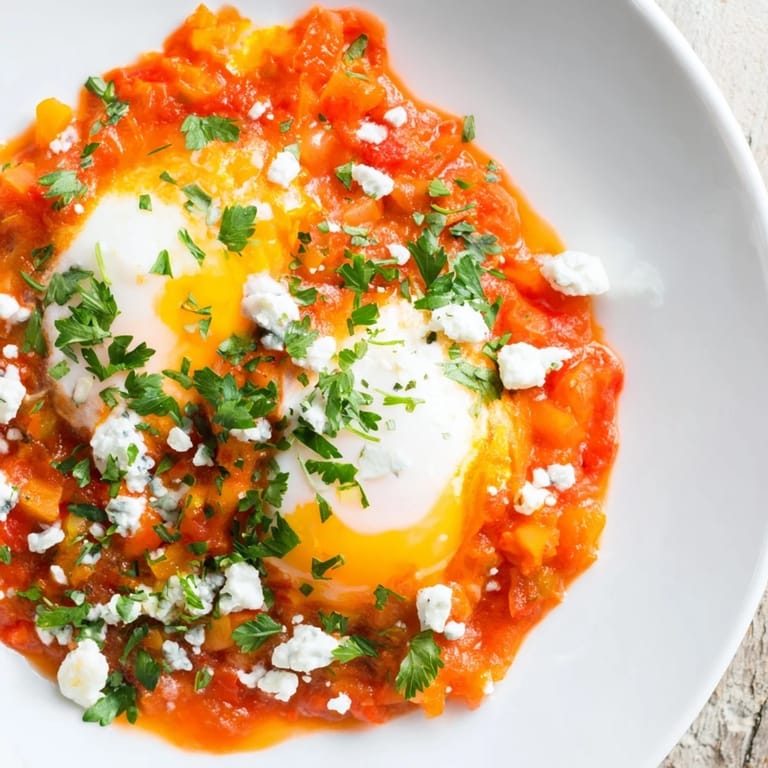
 There's something magical about the moment when a skillet full of spiced tomato sauce suddenly becomes a vessel for poached eggs. I discovered shakshuka late one night while scrolling through photos of Istanbul's breakfast tables, and the image stuck with me—all that vibrant red sauce with golden yolks breaking into it. When I finally made it, I understood why it's shared family-style, why people tear bread and pass the pan around, why it feels like breakfast but tastes like celebration.
I made this for friends on a Sunday morning when someone showed up hungry and I had almost nothing in the pantry. A can of tomatoes, an onion, some eggs, and what felt like half my spice cabinet—thirty minutes later, we were fighting over the last piece of bread to soak up the sauce. That's when I realized shakshuka isn't a recipe you follow; it's a recipe that invites you to trust your instincts and make it yours.
Ingredients
- Olive oil (2 tbsp): Use something you'd actually taste on bread—cheap oil disappears into the background, but good oil becomes part of the flavor story.
- Yellow onion (1 medium, finely chopped): The sweetness of yellow onions is essential here; red onions turn harsh when cooked down.
- Red bell pepper (1, diced): This adds body and natural sweetness that balances the spices.
- Garlic (3 cloves, minced): Don't skip the step of cooking it separately from the tomatoes or it tastes burnt and bitter.
- Red chili (1 small, finely chopped, optional): Fresh heat is different from cayenne—it's brighter and more alive.
- Crushed tomatoes (1 can, 400g): Canned tomatoes are actually perfect here because they're picked ripe and processed at their peak.
- Fresh tomatoes (2 medium, chopped): These add brightness that canned alone can't achieve.
- Tomato paste (1 tsp): A small amount deepens the umami without making the sauce taste artificial.
- Ground cumin (1 tsp): This is the backbone of the spice blend—warm, earthy, unmistakably Middle Eastern.
- Sweet paprika (1 tsp): The sweetness matters; hot paprika tastes sharp and one-dimensional by comparison.
- Ground cayenne pepper (¼ tsp, optional): This is heat with structure, different from fresh chili's scattered warmth.
- Ground coriander (½ tsp): A secret weapon that adds citrusy complexity without anyone knowing what it is.
- Salt and black pepper: Taste as you go; shakshuka is forgiving about seasoning until the very end.
- Large eggs (4): The fresher the better—older eggs spread more, newer eggs hold their shape better in the sauce.
- Fresh parsley and cilantro (2 tbsp each, chopped): These aren't decoration; they're the final breath of brightness that keeps the dish from feeling heavy.
- Feta cheese (crumbled, optional): If you add it, use real feta; it shatters in your mouth and tastes like salt and civilization.
Tired of Takeout? 🥡
Get 10 meals you can make faster than delivery arrives. Seriously.
One email. No spam. Unsubscribe anytime.
Instructions
- Heat your base:
- Pour olive oil into a large skillet and let it warm over medium heat until it shimmers and smells alive. This is the moment your kitchen starts to feel like somewhere good is about to happen.
- Build your aromatic foundation:
- Add the chopped onion and diced red pepper, letting them soften for 5 to 7 minutes until they're translucent and the onion starts to turn golden at the edges. This isn't rushing—take your time here.
- Wake up the spices:
- Stir in the minced garlic and red chili, cooking just until fragrant—about a minute. You'll smell the moment it's ready; don't linger past that or the garlic turns harsh.
- Build the sauce:
- Pour in the crushed tomatoes, fresh tomatoes, and tomato paste, stirring everything together until there are no streaks of paste left. The mixture will look loose and slightly watery; this is exactly right.
- Season and simmer:
- Sprinkle in the cumin, paprika, cayenne, and coriander, then add salt and pepper. Turn the heat down slightly and let it bubble gently for 10 to 12 minutes, stirring every couple of minutes. The sauce will deepen in color and thicken just enough that the spoon leaves a brief trail when you drag it through.
- Make wells for the eggs:
- Using the back of a wooden spoon, gently push the sauce aside to create four small wells—you're making little nests. This keeps the eggs from sliding around and getting lost in the sauce.
- Nestle in the eggs:
- Crack one egg into each well, being careful not to break the yolk. The moment those raw eggs hit the hot sauce is meditative; you're about to transform three simple ingredients into something rich.
- Cook covered until set:
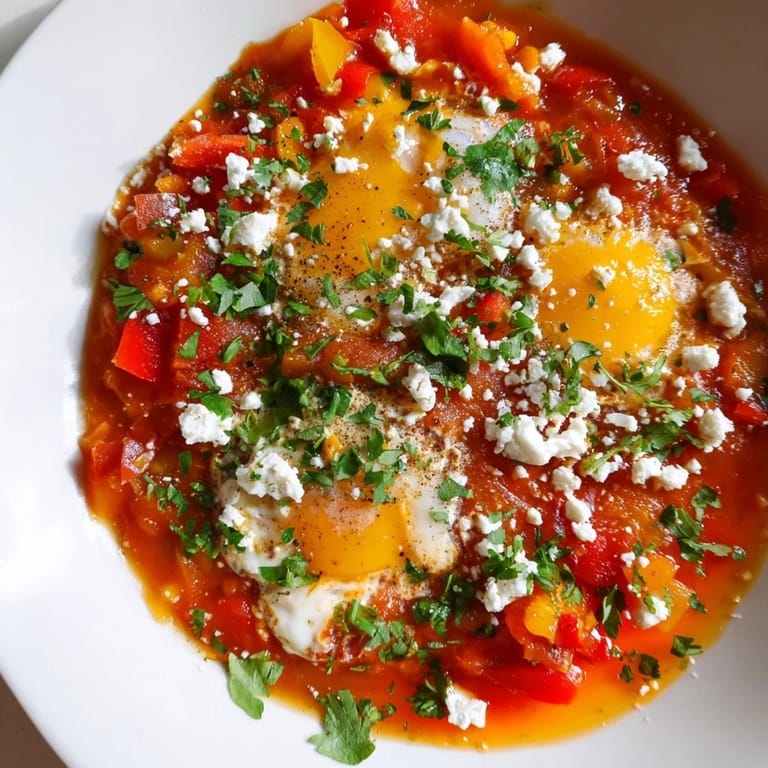
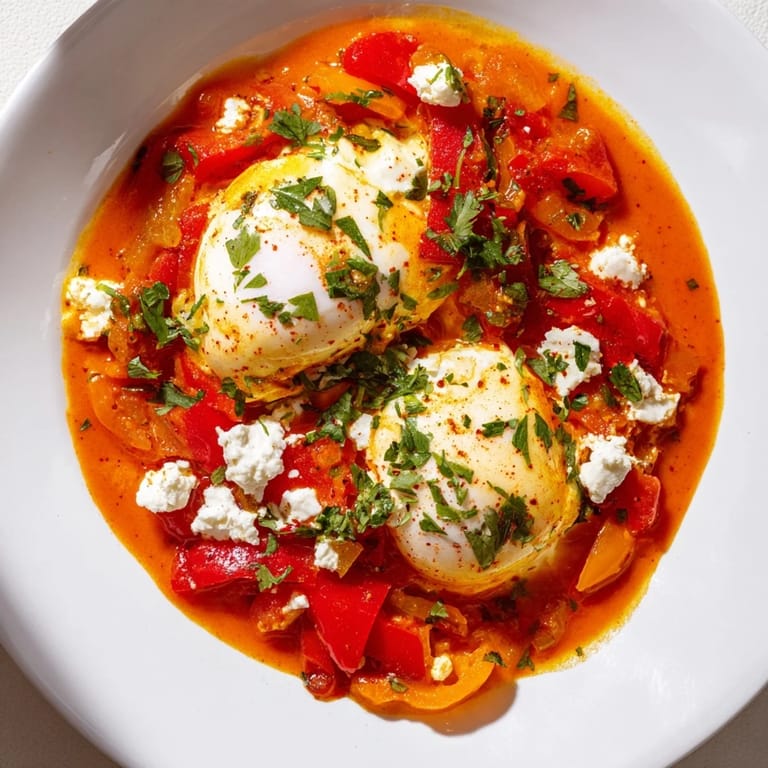
- Cover the skillet and let it cook for 6 to 8 minutes, or until the egg whites are opaque and set but the yolks still jiggle slightly when you gently shake the pan. This is the magic moment—if you overcook it, the yolks turn chalky and you've lost half the appeal.
- Finish with fresh herbs:
- Remove from heat, shower the top with fresh parsley and cilantro, and add crumbled feta if you're using it. These aren't flourishes; they're the final truth of the dish.
 Save to Pinterest
 I've served this dish countless ways, but the moment it stopped being just food was when my grandmother tasted it and immediately started making plans to teach me her own version. She didn't critique or improve; she just sat with that yolk breaking into the sauce, and something passed between us that had nothing to do with cooking.
Why This Works
Shakshuka is a masterclass in the power of building flavors in layers. You're not dumping ingredients into a pot and hoping; you're making a foundation with the onion and pepper, waking the spices with garlic, building body with tomatoes, and letting those flavors marry and deepen. By the time the eggs arrive, the sauce is already incredible, and the eggs just become the vehicle for it. The yolk especially—that liquid gold is the final grace note that makes everything richer and more luxurious.
Variations That Work
The most interesting part of shakshuka is that it invites you to adapt it without ever losing its identity. Some mornings call for heat and you add more cayenne; other times you want gentleness and cayenne doesn't show up. I've made versions with sautéed spinach stirred into the sauce at the last moment—the green against the red is stunning and it adds substance. Eggplant works too, roasted first until it's soft and then folded in. Even the cheese is negotiable; labneh (that tangy Lebanese yogurt) stirred in at the end creates a completely different texture than feta.
Serving and Pairing
This dish is meant to be shared, meant to be torn into with bread, meant to slow you down. Warm pita is the classic choice—soft enough to become almost a second sauce vehicle. Crusty bread works differently; it holds the weight of the egg and sauce without dissolving. I've even served it with labneh or thick Greek yogurt on the side, and the cool tang against the warm spice is a revelation. Everything tastes better when it's shared family-style from a single skillet in the middle of the table.
- The pan stays warm longer if you cover it with a kitchen towel after you remove it from heat.
- If you're serving this to guests, you can make the sauce up to 2 hours ahead and just reheat gently before adding eggs.
- Leftover sauce (without eggs) keeps for 3 days in the refrigerator and makes an incredible base for other dishes.
 Save to Pinterest
 Shakshuka is proof that some of the best meals are the simplest ones, the ones where a few good ingredients and a little patience transform into something that tastes like home. Make it, share it, watch people's faces when they break into that yolk.
Recipe FAQs
- → What ingredients make the sauce flavorful?
The sauce is built from sautéed onion, red bell pepper, garlic, and chili, combined with crushed and fresh tomatoes, tomato paste, and spices like cumin, paprika, cayenne, coriander, salt, and pepper.
- → How do you achieve perfectly cooked eggs in the sauce?
Create small wells in the simmered sauce, crack eggs into each, then cover and cook on low heat until the whites are set but yolks remain soft.
- → Can the spice level be adjusted?
Yes, the heat comes from optional red chili and cayenne pepper, which can be omitted or increased according to taste.
- → What garnishes complement this dish?
Fresh chopped parsley and cilantro add brightness, while crumbled feta cheese brings a creamy, salty contrast.
- → What are suitable accompaniments for serving?
Warm pita bread or crusty bread are ideal for scooping, and sides like labneh or Greek yogurt add creaminess.