 Save to Pinterest
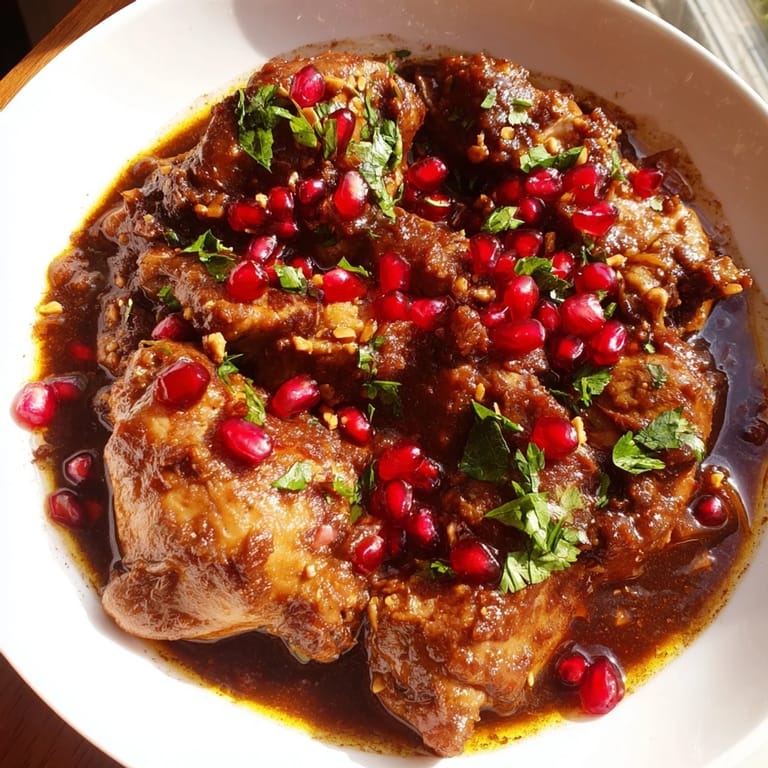
 My first taste of fesenjan came on a rainy Tehran evening at my aunt's table, the kind of meal that makes you stop mid-bite to really pay attention. The sauce was glossy and dark, with this unexpected sweetness that melted into something savory and almost vinegary by the time it hit my tongue. She told me fesenjan was what you made when you wanted someone to feel truly cared for, and watching her stir that walnut-pomegranate mixture with such focus, I understood exactly what she meant.
I made fesenjan for my partner the first winter we lived together, nervous that I'd mess up something so important. The apartment filled with the smell of toasting walnuts and caramel-dark pomegranate molasses, and by the time we sat down, I knew the food would speak better than any words could. He went quiet for a moment after the first bite, and that silence was everything.
Ingredients
- Boneless chicken thighs or duck (700g): Thighs stay tender through the long simmer, their fat enriching the sauce rather than drying out like breast meat would. Duck is the traditional choice and offers deeper flavor, but chicken is forgiving and accessible.
- Vegetable oil (2 tbsp): Use a neutral oil that won't compete with the sauce—nothing too strongly flavored.
- Large onion (1): The onion dissolves into the sauce, creating the base for everything else, so chop it fine and let it caramelize properly.
- Ground walnuts (250g): Grind them as finely as you can; they thicken the sauce and add an earthiness that defines fesenjan. Pre-ground walnut flour works too.
- Pomegranate molasses (500ml): This is the soul of the dish—tangy, slightly sweet, with a complexity that fresh pomegranate juice can't replicate. Find it in Middle Eastern or Iranian markets, never substitute lightly.
- Water (500ml): This dilutes the sauce to a silky consistency, letting flavors meld rather than overwhelm.
- Sugar (2 tbsp): Start here, but taste as you go; you're looking for balance between the tang and sweetness, not dessert.
- Ground cinnamon, turmeric, cardamom (1/2 tsp, 1/4 tsp, 1/4 tsp): These warm spices tie the whole thing together, adding depth without shouting. Toast them lightly in your palm first if you buy whole spices.
- Pomegranate seeds and fresh parsley (optional): A burst of brightness and color on top, almost like a little reminder of where these flavors come from.
Tired of Takeout? 🥡
Get 10 meals you can make faster than delivery arrives. Seriously.
One email. No spam. Unsubscribe anytime.
Instructions
- Season your meat:
- Pat the chicken thighs or duck pieces dry with paper towels and scatter salt and pepper over them. This isn't just seasoning; it helps the meat brown properly rather than steam.
- Caramelize the onion:
- Heat your oil over medium heat until it shimmers, then add the chopped onion and let it sit undisturbed for a couple minutes before stirring. You want it to turn a deep golden brown, almost amber in places—this takes about 8 to 10 minutes and is worth the patience.
- Brown the meat:
- Add your pieces to the pot in a single layer, resisting the urge to move them around for the first 2 to 3 minutes. You're building a crust, not stewing yet. Flip and brown the other sides, then set the meat aside on a plate.
- Toast the walnuts:
- Return the pot to medium heat and stir in your ground walnuts, pushing them around constantly for 2 to 3 minutes. The sound will change from a gentle scatter to something more cohesive as they start releasing their oils, and the aroma will shift from raw to nutty.
- Build the sauce:
- Pour in the pomegranate molasses, water, sugar, cinnamon, turmeric, and cardamom. Stir everything together and let it come to a gentle boil, then return your meat to the pot, nestling the pieces into the sauce.
- Simmer low and slow:
- Cover the pot and turn the heat down to low, aiming for small, lazy bubbles at the edges. Stir every 15 minutes or so, checking that nothing's sticking to the bottom. After an hour, the meat should be fork-tender and the sauce should look less liquid than it did.
- Finish and thicken:
- Uncover the pot and let it simmer for another 30 minutes, stirring more often now as the sauce reduces and concentrates. You'll see a thin layer of walnut oil rise to the surface—this is good, it's flavor. The sauce should coat the back of a spoon by the end.
- Taste and adjust:
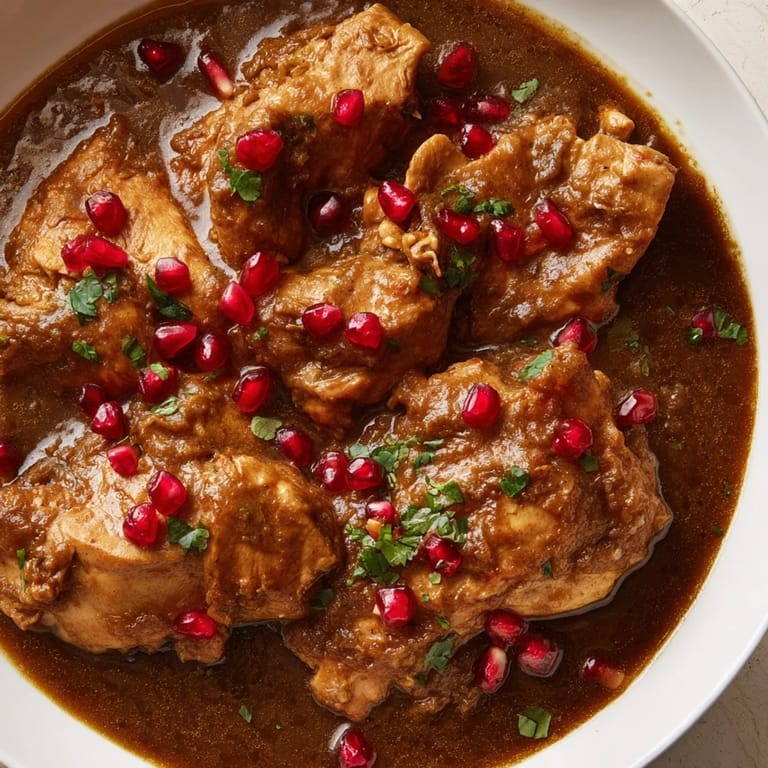
- This is where your judgment matters. A teaspoon more sugar if it tastes too sour, a pinch more pomegranate molasses if it feels one-note. Serve hot over steamed rice, scattered with pomegranate seeds and parsley if you have them.
 Save to Pinterest
 There's a moment about 45 minutes into the cooking when you lift the lid and the steam hits your face carrying that dark, complex aroma of pomegranate and walnuts and warm spices, and you realize you're about to make something remarkable. That's when the dish stops being ingredients and becomes something alive.
The Story of Fesenjan
Fesenjan belongs to Iran's royal culinary tradition, the kind of dish that would have appeared on tables when people wanted to express respect and affection through food. The combination of sweet and sour is quintessentially Persian, tied to the philosophy that a meal should be balanced and layered, never obvious. You won't find fesenjan in rushed kitchens or hurried meals; it's a dish that asks for presence and a willingness to tend to it.
Finding Your Balance
Every bottle of pomegranate molasses tastes slightly different depending on where it's from and how old it is, which means your first batch might need more or less sugar than the recipe suggests. This isn't a failure; it's you getting to know your ingredients and learning to trust your palate. Keep tasting as you cook, and the sauce will tell you what it needs. Once you've made it once and found your balance, you'll remake it the same way every time, and it'll be exactly right.
Variations and Substitutions
Duck is traditional and richer if you can find it, but chicken thighs are reliable and absorb the sauce beautifully. For vegetarian versions, large chunks of eggplant or mushroom (cremini or portobello) work because they have enough body not to disappear into the sauce. Some cooks add a handful of pomegranate seeds during the last few minutes of cooking so they burst slightly and add little pockets of tartness. The beauty of fesenjan is that it's forgiving once you understand its core logic—balance the sweet against the sour, develop the aromatics early, and let the sauce thicken naturally.
- Try duck breast cut into thick pieces for a more elegant presentation and richer sauce.
- Add pomegranate seeds in the last minute of cooking if you want bright bursts of tartness rather than just garnish.
- A pinch of dried lime (loomi) can add another layer if you have it, though it's not essential.
 Save to Pinterest
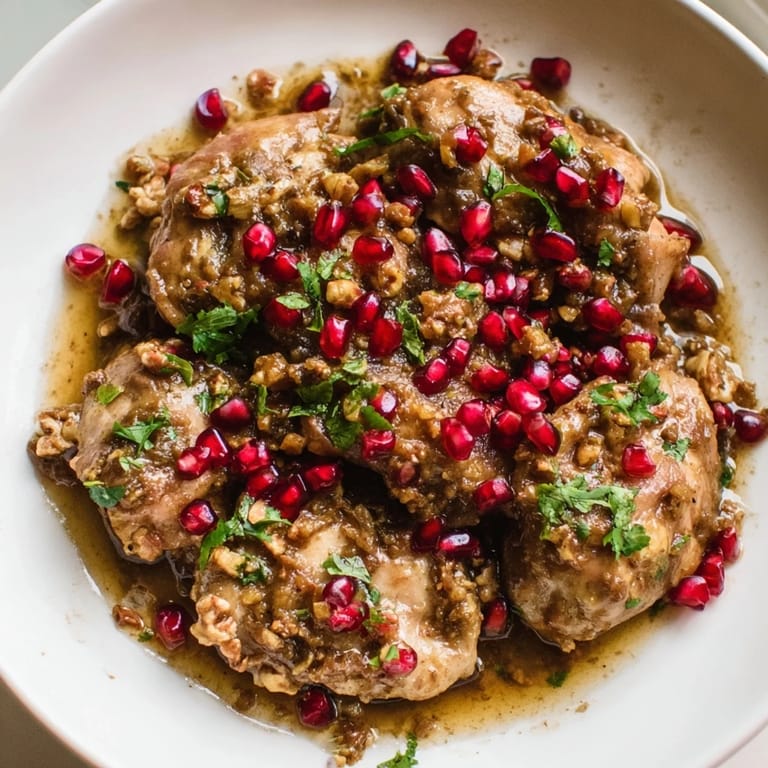
 Fesenjan is the kind of dish that lingers in memory long after the meal ends, tasting better in recollection than almost anything else you've cooked. Make it for someone who matters, and it becomes part of your story together.
Recipe FAQs
- → What type of meat works best for this stew?
Boneless chicken thighs or duck provide rich flavor and tenderness when slow-cooked in the sauce.
- → Can the sauce be adjusted for sweetness?
Yes, sugar quantities can be modified to balance the natural tartness of pomegranate molasses.
- → Are there vegetarian alternatives for this dish?
Mushrooms or eggplant can replace meat for a vegetarian-friendly version with similar texture.
- → Why are walnuts used in this preparation?
Ground walnuts thicken the sauce and add a nutty richness that complements the tart pomegranate.
- → What spices enhance the flavor profile?
Cinnamon, turmeric, and optional cardamom bring warmth and aromatic depth to the sauce.