 Save to Pinterest
 I discovered this dish on a rainy Tuesday evening when my roommate came home with a jar of gochujang and insisted we experiment with tofu for once. We'd never paid much attention to how sauce could transform something as plain as pressed tofu into something genuinely craveable, but that first batch—with the kitchen filling with that warm, spicy-sweet aroma—changed everything. The crispy edges caught the glaze just right, and suddenly we understood why this simple combination had become a weeknight staple for so many people.
I made this for my parents last month, and my mom—who is notoriously skeptical about tofu—went back for thirds. She kept asking what the secret was, and honestly, it's just about giving the tofu the respect it deserves through proper pressing and that moment when it hits the hot pan and you hear that satisfying sizzle. Watching her pick up piece after piece, eyes closed like she was savoring something, reminded me that the best meals are the ones that surprise people.
Ingredients
- Firm tofu (400g): Press it well—this is non-negotiable if you want crispy edges that actually crisp and aren't soggy.
- Cornstarch (2 tbsp): This is your secret weapon for crispiness; it creates that golden coating that catches the glaze beautifully.
- Neutral oil (2 tbsp): Canola or sunflower works best; avoid anything with a low smoke point.
- Gochujang (2 tbsp): The heart of the dish—find it in the Asian aisle or online, and don't skip it for something else.
- Honey (2 tbsp): Balances the heat with genuine sweetness; maple syrup works if you're vegan.
- Soy sauce, rice vinegar, and sesame oil: This trio brings depth and keeps the sauce from being one-dimensional.
- Fresh garlic and ginger: Mince these yourself if you can; the flavor difference is worth those extra 30 seconds.
- Sesame seeds and green onions: These aren't just garnish—they add texture and brightness that complete the dish.
Tired of Takeout? 🥡
Get 10 meals you can make faster than delivery arrives. Seriously.
One email. No spam. Unsubscribe anytime.
Instructions
- Press your tofu properly:
- Wrap the block in clean kitchen towels and place it on a plate with something heavy on top for at least 10 minutes. This step determines everything; wetter tofu won't crisp, so take your time.
- Cut and coat:
- Slice the pressed tofu into roughly 2 cm cubes and toss them with cornstarch and salt until every surface is lightly dusted. This coating is what gives you that golden crust.
- Crisp the tofu:
- Heat your skillet over medium-high heat until it's properly hot, then add the oil and let it shimmer before adding tofu. Turn the pieces occasionally over 8–10 minutes until all sides are golden and you can hear them crackling slightly.
- Make the sauce:
- Whisk gochujang with honey, soy sauce, rice vinegar, sesame oil, minced garlic, ginger, and water in a small bowl. The sauce should look thick but pourable, and you should smell that intoxicating gochujang aroma rising up.
- Simmer and coat:
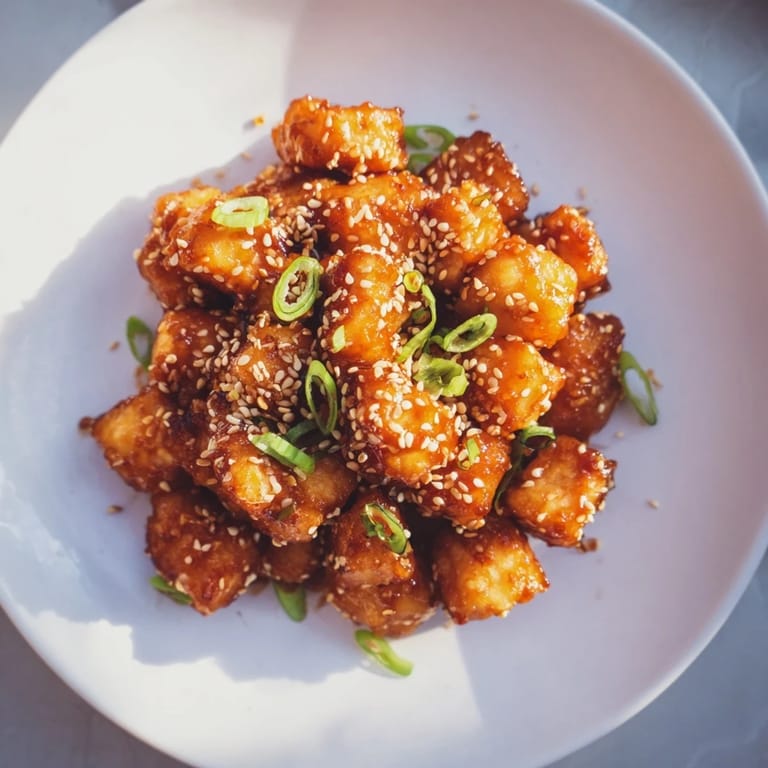
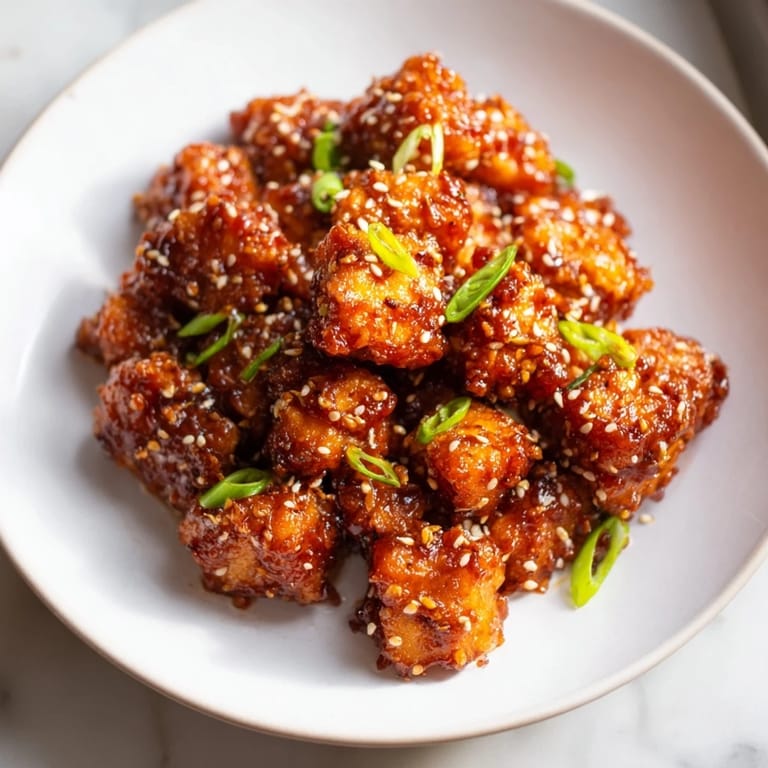
- Pour the sauce into the same skillet and let it bubble gently for 2–3 minutes until it thickens slightly, then return the crispy tofu and toss everything together. The tofu will absorb the sauce and become glossy and sticky.
- Finish and serve:
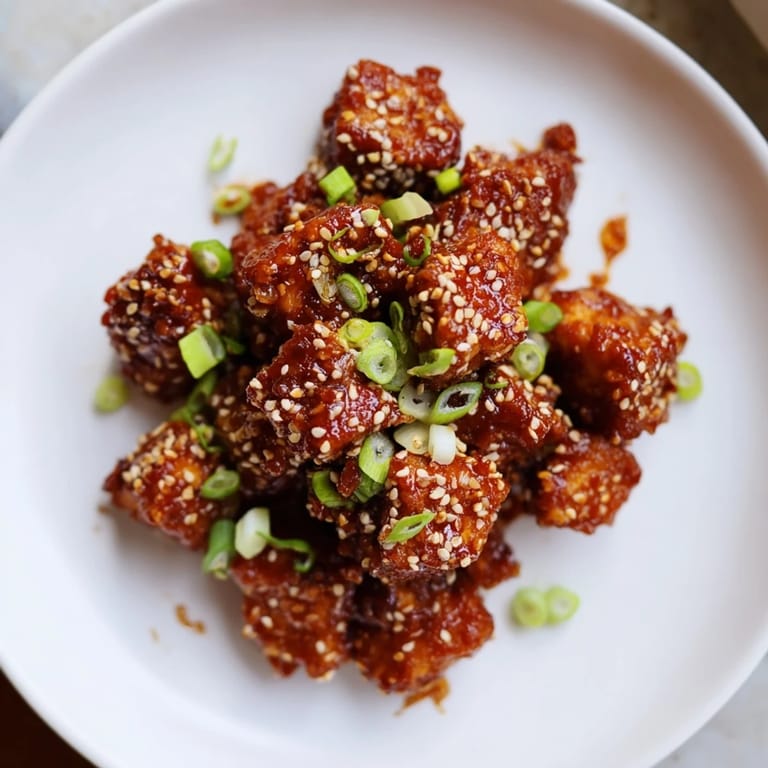
- Transfer to a plate, scatter sesame seeds and green onions over the top, and serve while it's still warm, either as an appetizer or over steamed rice.
 Save to Pinterest
 There's a moment right when you toss the crispy tofu into that simmering sauce where everything shifts—the heat brings out the depth of the gochujang, and suddenly you're holding this warm, sticky-glazed thing that tastes absolutely nothing like plain tofu. It's the moment I remember why I keep coming back to this recipe.
Building Flavor Layers
This dish works because you're layering textures and flavors rather than throwing everything together. The crispiness of the tofu contrasts with the sticky glaze, the sweetness of honey against the heat of gochujang, and the depth of sesame oil beneath everything else. Each ingredient earns its place, and that's why even with just a handful of components, the result feels complex and crave-worthy.
Serving Suggestions That Actually Work
Over steamed jasmine rice is the obvious choice and genuinely the best one, because the rice soaks up the extra sauce. But I've also served it in lettuce wraps at parties, over cauliflower rice for something lighter, and even cold the next day straight from the fridge as a snack—which sounds strange but is somehow delicious. The flexibility is part of what makes this recipe feel like a real weeknight solution rather than just another dish.
Common Mistakes and How to Avoid Them
The biggest error is rushing the tofu-pressing step or not using enough cornstarch, which means you get that mushy texture instead of the satisfying crunch. Another common one is adding too much gochujang at once if you're new to it—you can always add more spice, but you can't take it back. Start with the amount listed and taste as you go, especially if you're cooking for people who don't love heat.
- Use medium-high heat for crisping, not high—medium-high gives you golden edges without the outside burning before the inside warms through.
- Have all your sauce ingredients measured and ready before you start cooking; once the tofu is crisping, you won't have time to hunt for the rice vinegar.
- Don't crowd the pan when crisping the tofu or they'll steam instead of fry; work in batches if needed, though one batch usually fits fine.
 Save to Pinterest
 This is one of those recipes that proves how far proper technique and a few good ingredients can take you. Come back to it whenever you need something satisfying that doesn't require much planning.
Recipe FAQs
- → How do I achieve crispy tofu cubes?
Press the tofu to remove moisture, then toss with cornstarch before pan-frying in hot oil until all sides turn golden and crisp.
- → Can the honey be replaced for a vegan option?
Yes, maple syrup or agave nectar makes a great vegan-friendly substitute for honey without affecting the glaze’s stickiness.
- → How spicy is this gochujang-based sauce?
The sauce balances heat and sweetness, but you can adjust the amount of gochujang to suit your preferred spice level.
- → What sides complement this tofu dish best?
Steamed rice, quinoa, or fresh lettuce wraps pair well; adding steamed broccoli or sautéed peppers provides extra texture and nutrients.
- → Are there common allergens in this dish?
Yes, it contains soy (tofu and soy sauce) and sesame (oil and seeds). Check gochujang labels for possible gluten content if needed.