 Save to Pinterest
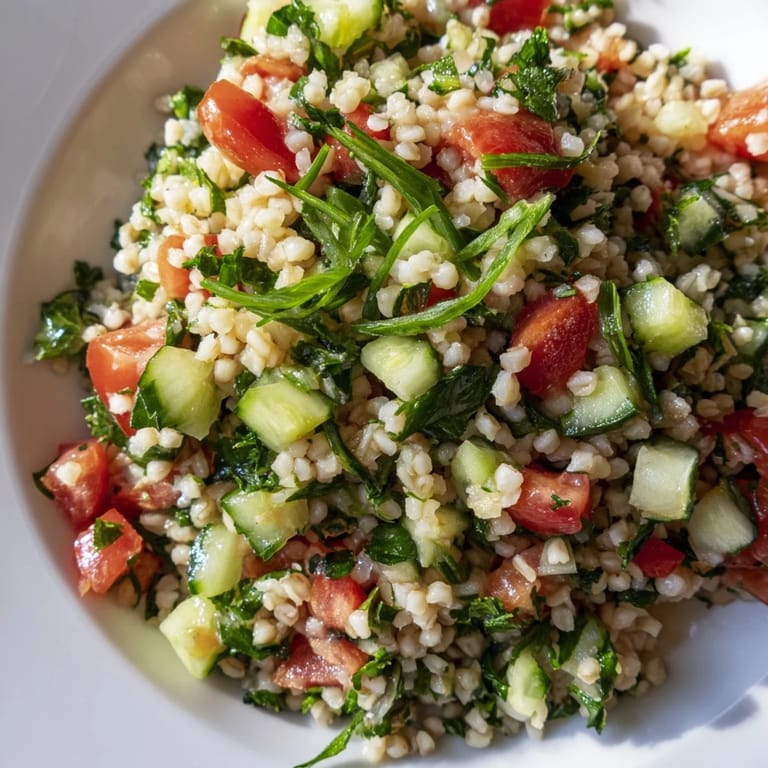
 I first tasted tabbouleh during a sweltering summer afternoon when nothing else would satisfy. The kitchen windows were thrown open, and I was craving something fresh and vibrant that wouldn't weigh me down. Chopping parsley with abandon, I found myself mesmerized by how the herbs perfumed my cutting board with each slice of the knife. That first forkful – bright with lemon and herbs – instantly transported me somewhere breezy and Mediterranean.
Last summer during a neighborhood potluck, I arrived with this bulgur salad tucked into my favorite blue ceramic bowl. The porch was crowded with pasta salads and potato dishes, but within minutes, three different people asked me for the recipe. One elderly neighbor confessed shed never tasted fresh mint in a savory dish before and couldnt stop coming back for more. By the end of the evening, my bowl was scraped clean and I had promised to bring it to every gathering thereafter.
Ingredients
- Fine bulgur wheat: I prefer the fine grind for tabbouleh as it absorbs water quickly and creates that perfect fluffy texture without having to actually cook it on the stove.
- Fresh parsley and mint: These arent just garnishes but the true stars of tabbouleh – I once tried making it with less herbs to save chopping time and immediately regretted cutting corners.
- Ripe tomatoes: Look for ones with tight, glossy skin that feel heavy for their size – the juicier they are, the more flavor theyll contribute to the final dish.
- Extra virgin olive oil: This is where that bottle you brought back from vacation or splurged on at the specialty store truly shines – youll taste every note of it.
- Fresh lemon juice: The bottled stuff simply wont do here – the brightness of freshly squeezed lemon transforms this from grain salad to something transcendent.
Tired of Takeout? 🥡
Get 10 meals you can make faster than delivery arrives. Seriously.
One email. No spam. Unsubscribe anytime.
Instructions
- Prepare the bulgur:
- Pour boiling water over the bulgur in a large bowl, then cover and let it do its magic for about 10-15 minutes. Youll know its ready when all the water is absorbed and the grains have softened but still maintain a slight chew.
- Chop like you mean it:
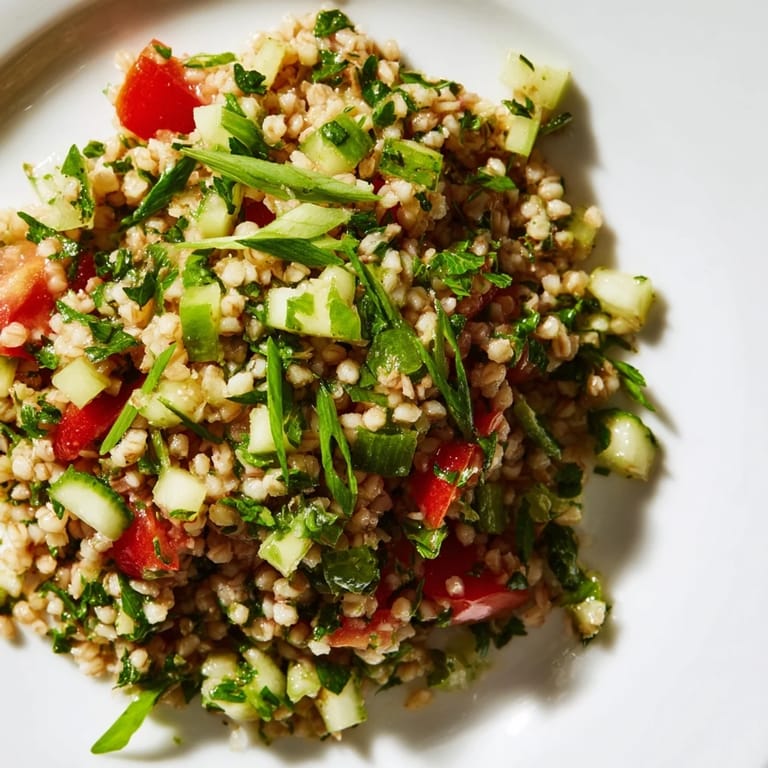
- The secret to great tabbouleh is finely chopping the herbs – not so fine they turn to mush, but enough that you get bursts of herby freshness in every bite. I find a rhythmic rocking motion with a sharp knife works wonders.
- Build the rainbow:
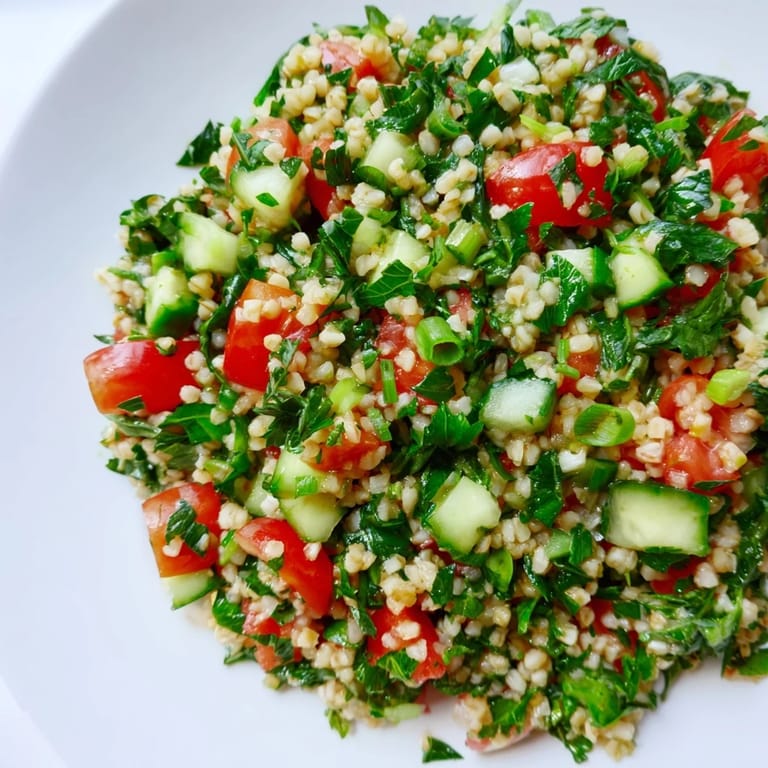
- Add your jewel-toned tomatoes, cool cucumber, and sliced scallions to the fluffy bulgur. The contrast of textures and colors is half the pleasure of this dish.
- Dress it up:
- Whisk your olive oil, lemon juice, and garlic until they become a unified, fragrant dressing. The emulsion should look slightly cloudy and smell bright enough to make your mouth water.
- Gentle tossing:
- Combine everything with a light hand, using a folding motion rather than aggressive stirring. You want each grain coated with dressing but the vegetables and herbs to maintain their distinct textures.
- Patience pays off:
- Let it all mingle in the refrigerator for at least 20 minutes, though honestly, its at its peak after about 2 hours. The waiting is the hardest part, but absolutely worth it.
 Save to Pinterest
 My neighbor Rachel, who grew up in Beirut, stopped by one afternoon while I was making a batch of tabbouleh. She watched me work for a moment before gently taking the knife from my hand to demonstrate how her mother had taught her to chop parsley – gathering it into a tight bundle and slicing with swift, precise movements. We spent the next hour sharing stories over bowls of tabbouleh, her memories of family meals blending with mine in that simple act of breaking bread together. The salad became a bridge between our different worlds.
Serving Suggestions
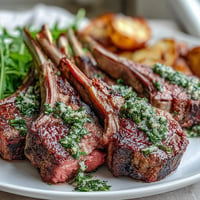
Tabbouleh isnt just a side dish – its versatile enough to play many roles in your meal planning. I love scooping it into lettuce cups for a light lunch, or serving it alongside grilled chicken or lamb for dinner. One particularly memorable meal involved stuffing it into warm pita bread with hummus and falafel, creating a portable feast we enjoyed during an impromptu picnic when the power went out during a summer storm.
Storage Tips
Unlike many dressed salads that quickly wilt, tabbouleh holds up remarkably well in the refrigerator. Ive discovered it actually improves after a day, as the flavors have more time to mingle and deepen. The lemon in the dressing keeps the herbs vibrant and prevents the parsley from darkening too quickly. Just be sure to give it a quick toss before serving, as the dressing tends to settle at the bottom of the container.
Creative Variations
While classic tabbouleh will always have my heart, Ive found joy in seasonal adaptations that keep this staple feeling fresh year-round. Winter tabbouleh with pomegranate seeds and orange segments brings color to dark days, while summer versions with sweet corn and diced bell peppers celebrate the gardens bounty. The fundamental formula remains the same – fresh herbs, chewy grain, bright acid, and quality oil – but the details can flex with your pantry and produce drawer.
- For a protein boost, add chickpeas or crumbled feta cheese – the creaminess of the cheese particularly complements the zesty lemon dressing.
- Substitute the bulgur with quinoa or cauliflower rice for a grain-free version that maintains the essential texture and flavor profile.
- Switch up the herbs occasionally – while parsley is non-negotiable, try adding a handful of dill or cilantro for an unexpected twist that keeps the dish evolving.
 Save to Pinterest
 This humble grain salad has taught me that sometimes the simplest combinations yield the most satisfaction. Whether shared at a crowded table or enjoyed alone on a quiet evening, tabbouleh reminds us that good food needs little embellishment beyond fresh ingredients and a bit of care.
Recipe FAQs
- → Can I make tabbouleh ahead of time?
Yes, tabbouleh actually tastes better after chilling for at least 20 minutes to allow the flavors to meld. You can prepare it up to 24 hours in advance and store it covered in the refrigerator. Just give it a gentle toss before serving.
- → What can I substitute for bulgur wheat?
For a gluten-free version, substitute cooked quinoa or millet for the bulgur wheat. Use the same quantity and ensure it's cooled to room temperature before mixing with the fresh vegetables and herbs.
- → How do I store leftover tabbouleh?
Store leftover tabbouleh in an airtight container in the refrigerator for up to 3 days. The herbs may darken slightly over time, but the flavors will remain delicious. Bring to room temperature or serve chilled.
- → Why is my tabbouleh too wet or soggy?
Make sure to drain excess moisture from the diced tomatoes and cucumber before adding them to the bulgur. Also, ensure the bulgur has fully absorbed the water and is cooled before mixing. If it's too wet, let it sit uncovered for a few minutes to dry out.
- → Can I reduce the amount of parsley in tabbouleh?
Traditional tabbouleh is herb-forward with parsley as the star ingredient. However, you can adjust to your taste by using slightly less parsley and increasing the bulgur or adding more vegetables. Keep in mind this changes the authentic flavor profile.
- → What should I serve with tabbouleh?
Tabbouleh pairs beautifully with grilled meats, falafel, hummus, baba ganoush, or pita bread. It's also delicious as part of a mezze platter or as a fresh side dish for kebabs and roasted chicken.