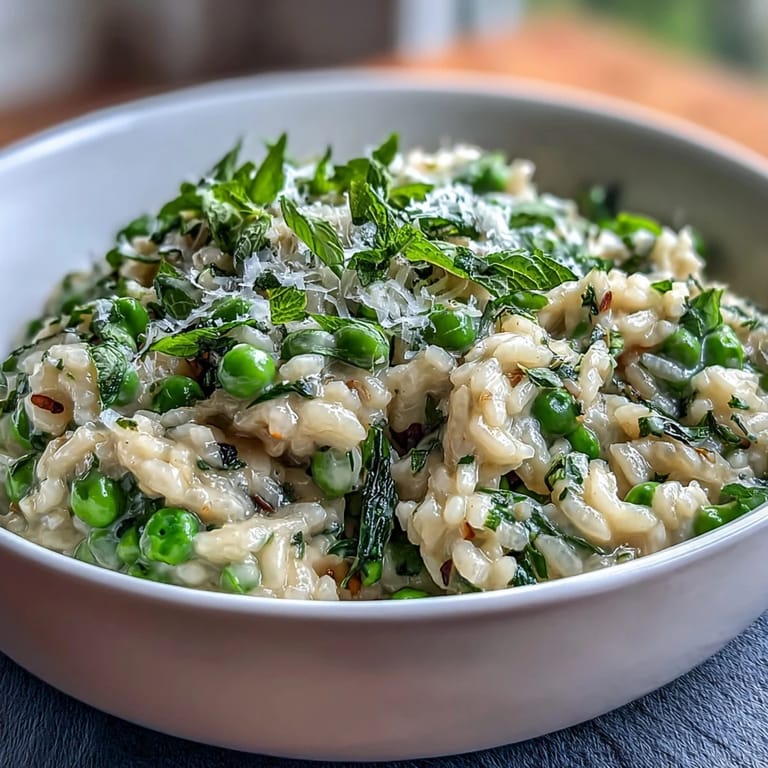
 Save to Pinterest
 My neighbor knocked on the kitchen door one April afternoon with a basket of the first fresh peas from her garden, and suddenly I was standing there at the stove, stirring rice while spring light poured through the window. That single gesture—her generosity, the tender peas still warm from the earth—made me want to create something that honored both the ingredient and the moment. This risotto became my answer, a dish that captures that exact feeling of renewal you get when the seasons finally turn.
I made this for the first time when I was trying to impress someone I really wanted to cook for, and halfway through stirring I realized I was smiling at nothing—just genuinely happy to be making something with my hands. They asked for seconds, and later told me the mint flavor made them think of their grandmother's garden. That's when I understood: this dish doesn't just feed people, it gives them a moment to remember.
Ingredients
- Fresh or frozen green peas (1 cup, 150 g): If you can find them fresh and sweet, use them—they'll add a delicate flavor that frozen peas can't quite match, though frozen ones work beautifully and save you prep time.
- Arborio rice (1 1/2 cups, 300 g): This short-grain Italian rice is essential because its high starch content creates that creamy texture that defines proper risotto.
- Vegetable stock (4 cups, 1 L): Keep it warm in a separate pot so each ladle you add actually cooks the rice instead of shocking it with cold liquid.
- Dry white wine (1/2 cup, 120 ml): The acidity cuts through the richness and adds a subtle complexity that makes people ask what your secret ingredient is.
- Unsalted butter (3 tbsp, divided): Using unsalted lets you control the salt level, and butter—not olive oil—is what gives risotto its signature silky finish.
- Freshly grated Parmesan (1/2 cup, 40 g, plus extra for serving): Grate it yourself right before you need it; pre-grated cheese has anti-caking agents that prevent it from melting into the rice as smoothly.
- Fresh mint (1/4 cup, 10 g, finely chopped): Add this at the very end so it stays vibrant and aromatic rather than turning dark and muted.
- Lemon zest: One strip brightens the entire dish and reminds your palate that this is spring, not autumn.
- Salt and freshly ground black pepper: Season in layers as you cook rather than all at once, so flavors develop properly.
Tired of Takeout? 🥡
Get 10 meals you can make faster than delivery arrives. Seriously.
One email. No spam. Unsubscribe anytime.
Instructions
- Toast the aromatics:
- Melt 2 tablespoons of butter in your large saucepan over medium heat and watch it foam slightly—that's when you know it's ready. Add your finely chopped onion and cook gently until it softens and turns translucent, about 4 minutes, then stir in the garlic for just 1 minute more so it doesn't burn and turn bitter on you.
- Toast the rice:
- Add the Arborio rice and stir it constantly for about 2 minutes until each grain is coated in butter and smells slightly nutty and toasted. This step matters more than you'd think—it helps the rice hold its shape while it cooks and absorbs liquid.
- Deglaze with wine:
- Pour in your dry white wine and stir until the rice has absorbed most of it, which takes about 1 or 2 minutes. You'll notice the liquid becomes creamy looking even though you haven't added stock yet.
- Build the creamy texture:
- Now begins the meditative part: add your warm stock one ladle at a time, stirring frequently and waiting until most of the liquid is absorbed before adding the next ladle. This slow process over about 18 to 20 minutes is what transforms the rice into something genuinely creamy rather than soupy.
- Add the peas at the right moment:
- About 5 minutes before the rice finishes cooking, stir in your peas so they stay bright green and tender rather than turning gray and mushy. If you're using frozen peas, there's no need to thaw them first.
- Finish with richness:
- Remove the pan from heat and stir in the remaining tablespoon of butter, the freshly grated Parmesan, chopped mint, lemon zest, salt, and pepper. The residual heat will melt everything into a silky, cohesive dish that tastes like springtime and comfort all at once.
- Taste and serve immediately:
- Give it a final taste and adjust the seasoning because risotto is forgiving right up until you plate it. Serve right away into shallow bowls, topped with extra Parmesan and a few fresh mint leaves because presentation matters when you're trying to make someone happy.
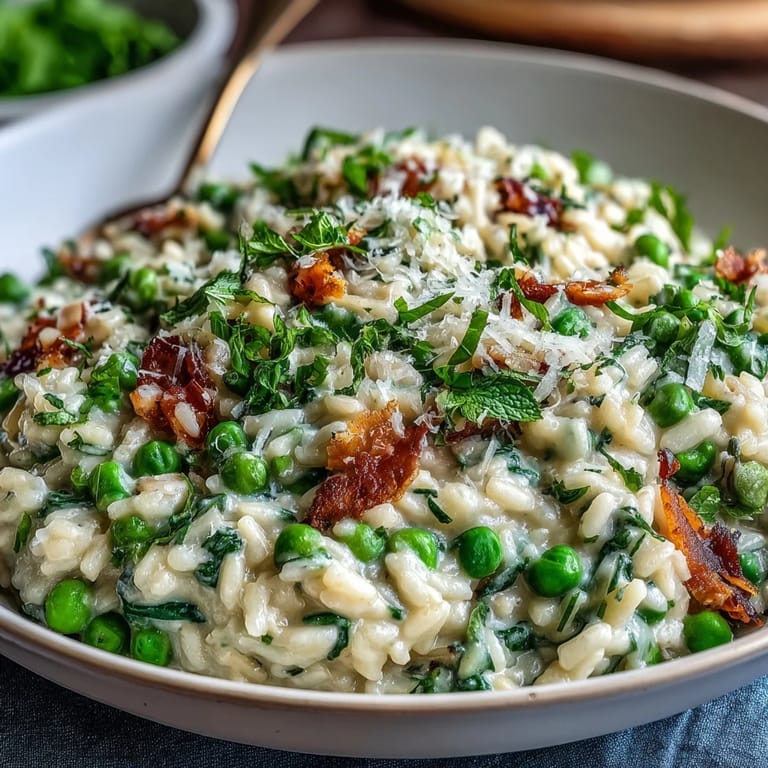 Save to Pinterest
 The first time someone told me they'd made this dish and added their own fresh herbs from a balcony garden, I felt like the recipe had grown beyond my kitchen and into their own story. That's the moment you know you've created something worth sharing—when it becomes less about following instructions and more about someone bringing their own love to it.
The Importance of Warm Stock
This detail might seem small, but it genuinely matters: keeping your vegetable stock warm in a separate pot means each ladle you add continues the cooking process instead of dropping the temperature and halting everything. Cold stock from the fridge will shock the rice and create an uneven texture where some grains are creamy and others are chalky. I learned this the hard way during a dinner party when I got lazy and grabbed stock straight from the refrigerator, and the risotto took ages to cook and never achieved that silky consistency I was aiming for. Now I always keep a small pot simmering on the back burner, and it makes a noticeable difference.
Timing Your Mint Addition
Fresh herbs are the soul of this dish, but they're also delicate, and timing matters more than you'd think. If you add the mint too early, the heat will turn it dark and muted, and you lose that bright, fresh flavor that makes people suddenly remember spring. If you add it at the very end—which is what I do—it stays vibrant and aromatic, and that first spoonful will make someone pause and actually taste the dish instead of just eating it. The same goes for the lemon zest: add it just before serving so it keeps its fragrance and doesn't lose its punch to heat.
Wine, Parmesan, and Why They Matter
The white wine serves a purpose beyond just adding liquid to the rice—it contributes acidity and subtle flavor complexity that makes you wonder what secret ingredient went into the dish. A crisp Sauvignon Blanc or Pinot Grigio works beautifully both in the risotto and in the glass alongside it, creating a kind of harmony on the palate. For the Parmesan, freshly grating it yourself makes all the difference because pre-grated cheese contains anti-caking agents that prevent it from melting smoothly into the creamy rice, and you'll end up with little grainy bits instead of that luxurious silky finish everyone loves.
- If you don't have fresh Parmesan, good-quality aged Parmesan works just as well—the younger, fresher versions are too mild for risotto.
- Taste the dish before serving and adjust salt carefully because the Parmesan and stock already contribute quite a bit of sodium.
- Make this dish right before you want to eat it because risotto is best served immediately while it's still creamy and warm.
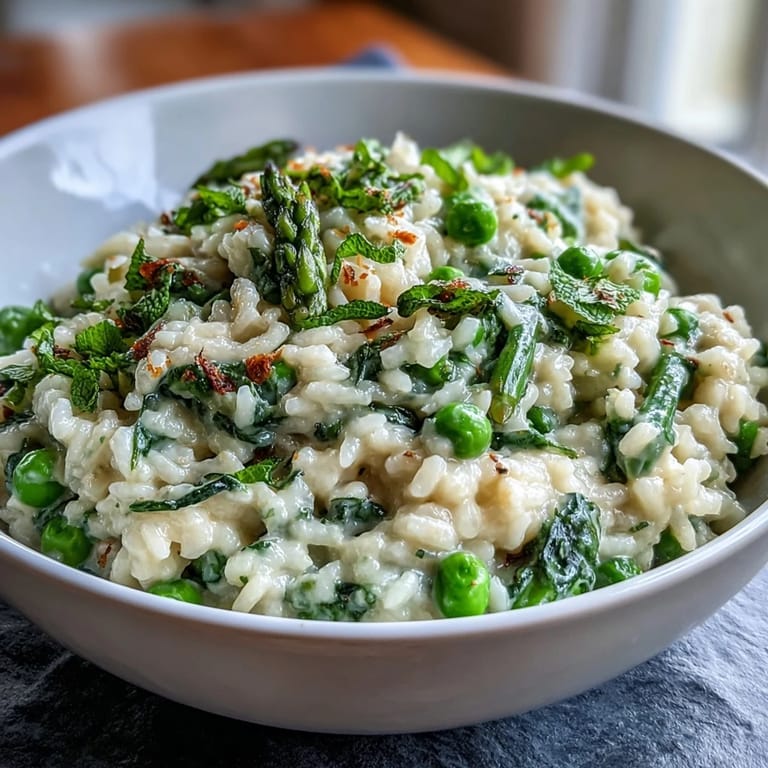 Save to Pinterest
 This risotto has become one of those dishes I make when I want to turn an ordinary evening into something memorable, and I hope it does the same for you. Every time someone asks for the recipe, I'm reminded that the best meals are the ones we make for people we care about.
Recipe FAQs
- → What is the best rice for this dish?
Arborio rice is ideal due to its high starch content, which creates a creamy texture without becoming mushy.
- → Can I use frozen peas instead of fresh?
Yes, frozen peas work well and can be added directly during the last cooking minutes to preserve color and texture.
- → How do I achieve the creamy consistency?
Gradually adding warm vegetable stock while stirring releases starch from the rice, resulting in a smooth, creamy texture.
- → What role does the white wine play?
White wine adds depth and subtle acidity that balances richness and enhances overall flavor.
- → How should I store leftovers?
Cool leftovers promptly, store in an airtight container in the fridge, and gently reheat with a splash of stock to restore creaminess.