 Save to Pinterest
 Tuesday night, the kids were asking what was for dinner before I'd even thought about it. I pulled open the fridge, saw a pound of ground beef and a box of pasta, and realized I could make something warm and filling without turning on the oven or dirtying three pans. That's when this skillet became my secret weapon—one pot, thirty-five minutes, and suddenly everyone's happy at the table.
I made this for a potluck once, and someone asked if I'd picked it up from a restaurant. That moment stuck with me—the realization that simple doesn't mean forgettable, and that a skillet this full of flavor could actually impress people when they weren't expecting much.
Ingredients
- Ground beef (1 lb, 85% lean preferred): The 85% lean keeps things flavorful without leaving a pool of grease sitting on top; too lean and it gets dry.
- Yellow onion (1 small, finely chopped): Chopping it fine helps it disappear into the beef and add sweetness as it cooks down.
- Garlic (2 cloves, minced): Minced rather than sliced gives you that even flavor throughout without bits of raw garlic.
- Taco seasoning (1 packet or 2½ tbsp homemade): The packet version saves time, but homemade lets you skip the sodium and added ingredients if that matters to you.
- Salt and black pepper (½ tsp and ¼ tsp): Taste as you go; every brand of taco seasoning has different saltiness.
- Short pasta (8 oz rotini, penne, or shells): Shorter shapes hold onto the sauce better than long noodles and fit the one-skillet vibe.
- Low-sodium beef broth (2 cups): The broth cooks the pasta right in the skillet and becomes the sauce, so don't skip it or substitute with water.
- Diced tomatoes (1 can, 14.5 oz, undrained): Keep the juice in the can; it adds moisture and tang that rounds out the flavors.
- Shredded cheddar cheese (1½ cups): Sharp cheddar melts faster and tastes more pronounced than mild, but use what you prefer.
- Sour cream (½ cup, optional for serving): A cool dollop on top balances the heat from the spices and adds richness.
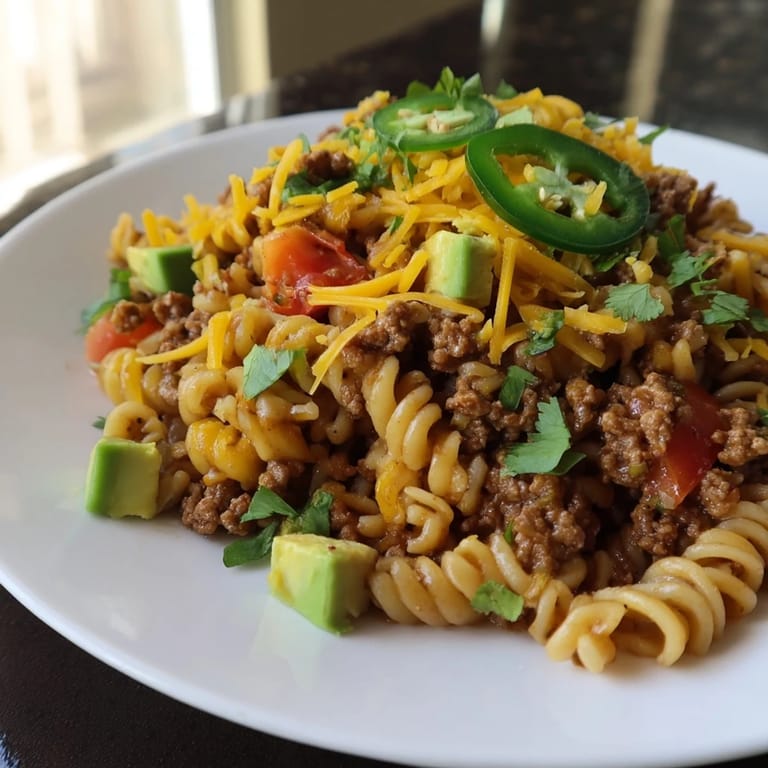
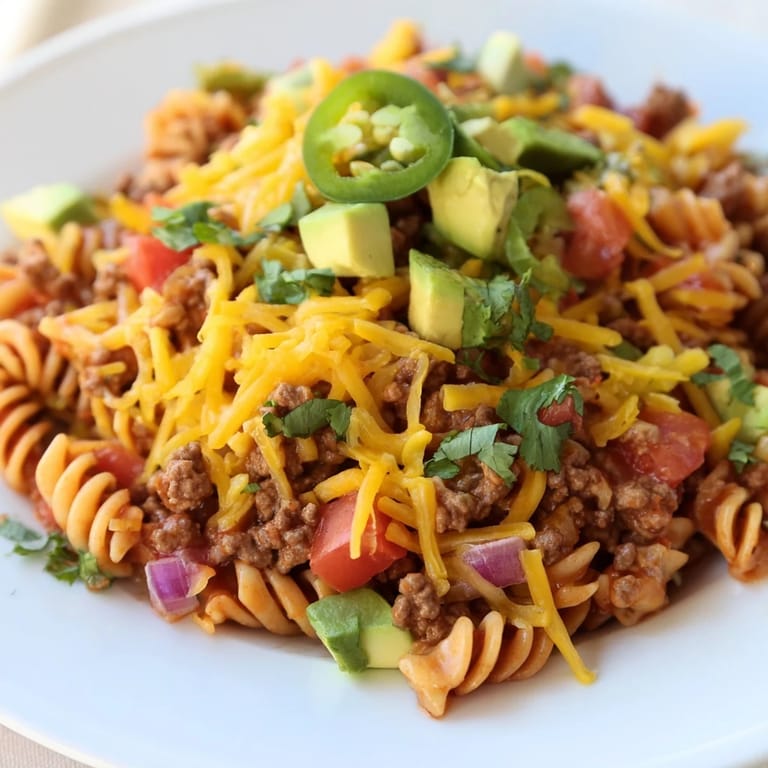
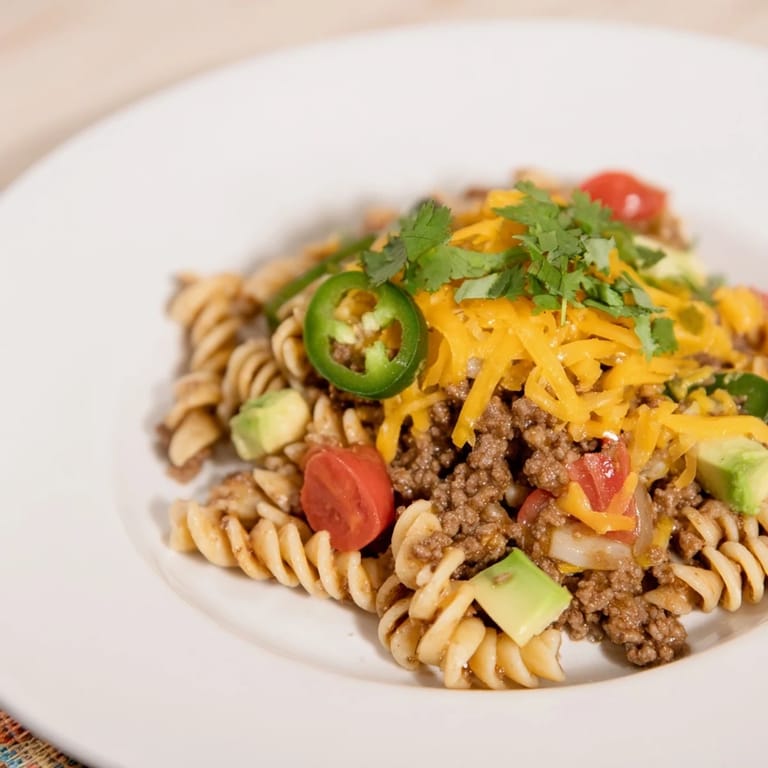
- Cilantro, jalapeño, and avocado (optional garnishes): These are the moment when a weeknight dinner feels a little special.
Tired of Takeout? 🥡
Get 10 meals you can make faster than delivery arrives. Seriously.
One email. No spam. Unsubscribe anytime.
Instructions
- Brown the beef and soften the aromatics:
- Heat your skillet over medium-high heat until it's hot enough that a drop of water sizzles. Add the ground beef and break it up with a spoon as it cooks—you're looking for no pink left, about five to six minutes. Pour off excess fat if there's more than a thin layer, then add the onion and cook until it's soft and starting to turn translucent, roughly two to three minutes. Stir in the garlic and let it bloom for just a minute; any longer and it starts to brown.
- Season and build the base:
- Sprinkle the taco seasoning, salt, and pepper over the beef mixture and stir until every piece is coated in that spice. You should smell the cumin and chili powder coming alive in the heat.
- Add pasta and liquid:
- Pour in the uncooked pasta, beef broth, and diced tomatoes with all their juice. Give everything a good stir so the pasta isn't clumped together and bring the whole thing to a boil over medium-high heat.
- Simmer until tender:
- Reduce the heat to medium-low, cover the skillet, and let it simmer for twelve to fifteen minutes, stirring every few minutes so nothing sticks to the bottom. The pasta should be tender and most of the liquid should have been absorbed; if there's still a lot of liquid, cook uncovered for another couple of minutes.
- Melt the cheese and finish:
- Remove from heat and sprinkle the shredded cheddar evenly over the top. Cover and let it sit for two to three minutes; the residual heat melts the cheese into creamy pockets throughout.
 Save to Pinterest
 My daughter once asked why this tasted different from other beef and pasta dishes, and I realized it was because the pasta cooked directly in the seasoned broth instead of plain water. That one detail—treating the pasta as part of the whole rather than a separate component—changed how I thought about cooking.
Why This Works as a Weeknight Dinner
There's something about a meal that doesn't require hunting through multiple cabinets or waiting for a pot of water to boil. This skillet sits on one burner and does all the work for you. The browning beef builds the foundation, the broth and tomatoes create the sauce while cooking the pasta, and the cheese brings everything together into something that feels intentional, not thrown together.
Variations Worth Trying
Ground turkey or chicken works if you want something lighter, though the flavor will be milder so taste your seasoning. Monterey Jack or a Mexican cheese blend brings a different character than cheddar. Some nights I add a pinch of cayenne when I stir in the onion, or a chopped fresh chili if I'm in the mood for real heat.
Serving and Storage Tips
Serve it straight from the skillet if you want that casual, family-style feel, or spoon it into bowls and top with sour cream, fresh cilantro, sliced jalapeño, and diced avocado. Leftovers keep in the refrigerator for three days and actually taste good reheated gently on the stove with a splash of broth stirred back in.
- Let any leftovers cool completely before covering them; trapping steam makes the pasta mushy.
- If the skillet seems too full, remember that pasta expands as it cooks—don't overfill before simmering.
- A squeeze of fresh lime over everything at the end brings the whole dish into focus.
 Save to Pinterest
 This meal became a regular in my rotation because it asks so little and delivers so much. It's the kind of food that feels like you put in more effort than you actually did.
Recipe FAQs
- → Can I use a different meat in this dish?
Yes, ground turkey or chicken can be used as lighter alternatives, keeping the flavors balanced and delicious.
- → How can I make the dish spicier?
Add a pinch of cayenne pepper or include chopped fresh chili with the onions during cooking to boost heat.
- → What pasta shapes work best for this skillet?
Short pasta varieties like rotini, penne, or shells hold the sauce well and are ideal for this preparation.
- → Is it necessary to drain the fat from the cooked beef?
Draining excess fat after browning the beef helps keep the dish from becoming too greasy and balances the flavors.
- → Can I substitute cheddar cheese with other types?
Monterey Jack or a Mexican cheese blend can be used for a different but complementary creamy texture and flavor.