 Save to Pinterest
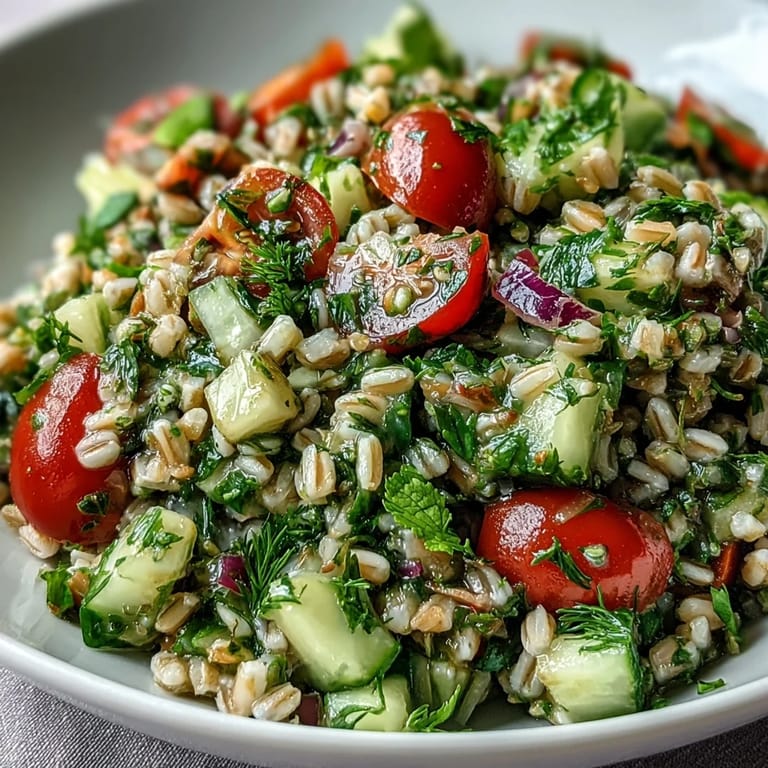
 My neighbor stopped by one summer afternoon with an armful of herbs from her garden—parsley, mint, and dill spilling over—and insisted I do something with them before they wilted. That evening, I remembered a barley salad I'd tasted years ago and thought, why not? The result was so bright and satisfying that I've made it constantly ever since, always keeping those fresh herbs front and center.
I brought this to a potluck once, convinced nobody would touch it—everyone eats rice salad, right? But watching people come back for seconds while barely touching the store-bought pasta dish next to it was quietly vindicating. That's when I realized barley had a fan club I didn't know about.
Ingredients
- Pearl barley, 1 cup rinsed: This grain is the foundation—it cooks tender without turning mushy and has a slight chew that makes every bite interesting. Rinsing removes excess starch so the salad won't feel gummy.
- Water, 3 cups: The cooking liquid should cover the barley generously; too little and you'll end up with crunchy bits.
- Salt for cooking, 1/2 teaspoon: Season the cooking water properly or the barley itself will taste flat no matter what you add later.
- Fresh parsley, 1/2 cup finely chopped: This is the loud voice in the salad—use flat-leaf parsley if you can find it because it tastes cleaner than curly.
- Fresh mint, 1/4 cup finely chopped: Don't skip this; it sounds fancy but it's what makes people ask for the recipe.
- Fresh dill, 1/4 cup finely chopped: A little goes a long way—too much dill and everything tastes like a pickle jar, but the right amount is pure magic.
- Red onion, 1/2 small finely diced: The raw bite cuts through the earthiness of the barley and keeps everything from tasting one-note.
- Cherry tomatoes, 1 cup halved: These add brightness and juice; if they're mealy, the whole salad suffers, so pick good ones.
- Cucumber, 1 small diced: Keeps things refreshing and adds a cool crunch that happens whether you chill it or not.
- Extra-virgin olive oil, 1/4 cup: Don't cheap out here—this is tasted directly, and good oil makes the difference between okay and memorable.
- Fresh lemon juice, 2 tablespoons: Bottled works in a pinch, but fresh is noticeably brighter and worth squeezing.
- Dijon mustard, 1 teaspoon: This emulsifies the dressing and adds a subtle sharpness that brings everything together.
- Garlic clove, 1 minced: One clove is enough—raw garlic can turn bitter if you add too much or let it sit too long.
- Salt and pepper to taste: These are your final adjusters; taste as you go because what seemed right before dressing might need tweaking.
Tired of Takeout? 🥡
Get 10 meals you can make faster than delivery arrives. Seriously.
One email. No spam. Unsubscribe anytime.
Instructions
- Boil and simmer the barley:
- Bring water and salt to a rolling boil, add your rinsed barley, then drop the heat down so it simmers gently—not a furious bubble, just quiet and steady. After about 25 to 30 minutes, taste a grain; it should be tender but not falling apart, with just a tiny bit of chew at the center.
- Cool the grain:
- Drain it in a colander if there's excess water, then spread it on a plate or leave it in a bowl for about 10 minutes. Warm barley will wilt your herbs, so patience here matters.
- Combine everything:
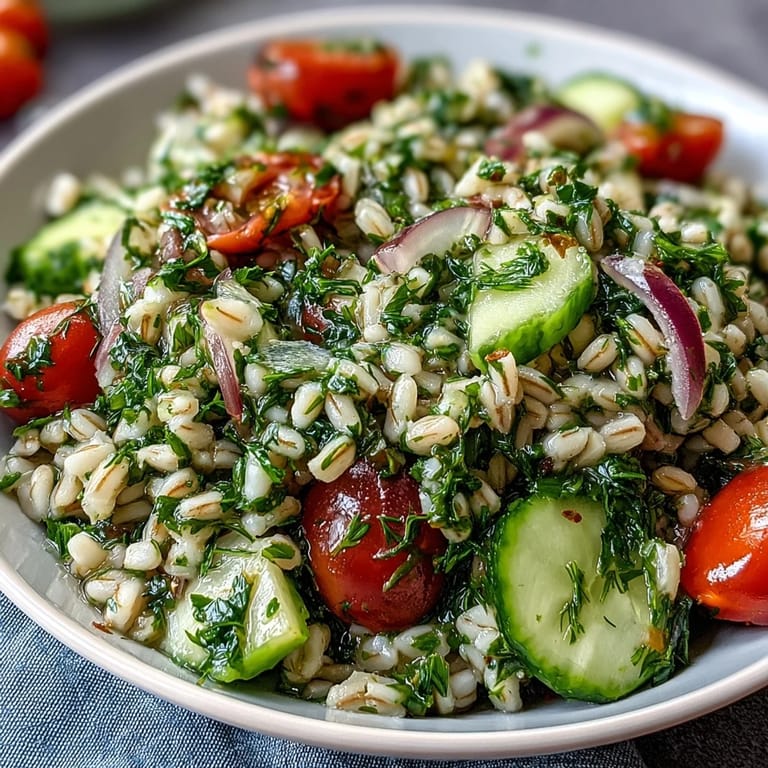
- In a large bowl, toss the cooled barley with all your chopped herbs, diced red onion, halved tomatoes, and cucumber—this is where the salad comes alive in color. Use your hands if you want to feel it all come together.
- Whisk the dressing:
- In a small bowl, add oil, lemon juice, mustard, minced garlic, salt, and pepper, then whisk until it looks creamy and emulsified rather than separated. This takes about 30 seconds of steady whisking and creates a dressing that clings to each grain.
- Dress and taste:
- Pour the dressing over everything and toss gently so nothing gets crushed, then taste a spoonful. Barley is forgiving—if it needs more salt, more lemon, or more pepper, now's the time to adjust while it's still unbiased.
- Chill or serve:
- You can eat this warm, at room temperature, or chilled—all three versions taste good, though chilled is the most refreshing. If you're making it ahead, hold off on the dressing for an hour and add it just before serving to keep everything crisp.
 Save to Pinterest
 This salad taught me that sometimes the simplest dishes—just grains, herbs, and lemon—can feel elegant without any fussing. It's the kind of food that makes you feel nourished and light at the same time.
Why Barley Changes Everything
Most people think salad means greens, but barley salads sit in a different category altogether. The grain absorbs the vinaigrette while keeping its own identity, so by the next day it tastes more like itself, not less. This is what makes it genuinely better as leftovers instead of sadder—a quality you don't find in lettuce-based salads.
The Herb Ratio Secret
The amount of herbs here isn't random—it's generous enough to make them the main event, not a garnish. If you're someone who's usually timid with fresh herbs, this recipe will change your mind about how much is actually delicious. Start here and adjust next time if your palate wants different proportions.
Variations and Add-Ons
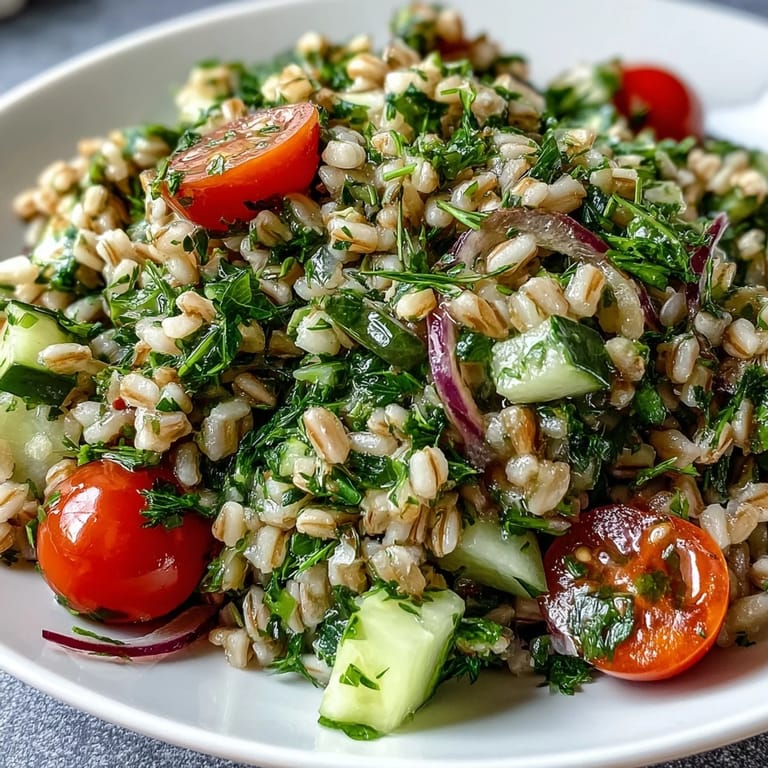
This salad is a blank canvas that welcomes additions without losing its identity. Toast some almonds or pumpkin seeds until golden and scatter them on top for a texture shift that catches people's attention. Crumbled feta cheese brings a salty creaminess that feels Mediterranean and luxurious, though the salad stands beautifully on its own if you keep it vegetarian.
- Swap the lemon juice for red wine vinegar if you want a deeper, tangier flavor that pairs differently with the herbs.
- Add cubed roasted beets or roasted red peppers for earthiness and color that feels more substantial.
- Keep this dressed in the fridge for up to two days, though the herbs taste freshest within the first day.
 Save to Pinterest
 This is the kind of salad that reminds you why cooking is worth the small effort—it feeds you well and tastes genuinely good. Make it once and you'll understand why it keeps showing up in my kitchen.
Recipe FAQs
- → Can I make this ahead of time?
Yes, this salad actually improves after sitting. The grains absorb the dressing and flavors meld together. Store in an airtight container for up to 2 days in the refrigerator.
- → Is barley gluten-free?
No, barley contains gluten. For a gluten-free version, substitute quinoa, brown rice, or millet in equal amounts and adjust cooking time accordingly.
- → What other herbs work well?
Basil, cilantro, or fresh oregano make excellent additions or substitutions. Use what you have available—any combination of fresh herbs will create a delicious result.
- → Can I use quick-cooking barley?
Quick barley works in a pinch, though pearl barley has a superior nutty texture. If using quick barley, reduce cooking time to about 10-12 minutes and watch closely to prevent mushiness.
- → What proteins pair nicely?
Grilled chicken, chickpeas, white beans, or shredded salmon complement the flavors beautifully. Crumbled feta or halloumi also adds protein and rich Mediterranean flair.
- → Should barley be served hot or cold?
This versatile dish works at any temperature. Serve chilled for summer picnics, room temperature for potlucks, or slightly warm as a hearty side alongside roasted meats or vegetables.