 Save to Pinterest
 The first time I opened a jar of homemade sloe gin, I knew it needed something more than just a glass and ice. My neighbor had given me venison from a winter hunt, dark and lean, wrapped in butcher paper. I stood in the kitchen that cold afternoon, staring at both gifts, and thought: why not marry them? The stew that bubbled away that evening filled the house with a scent so deep and winey, my partner came home early just to see what was happening.
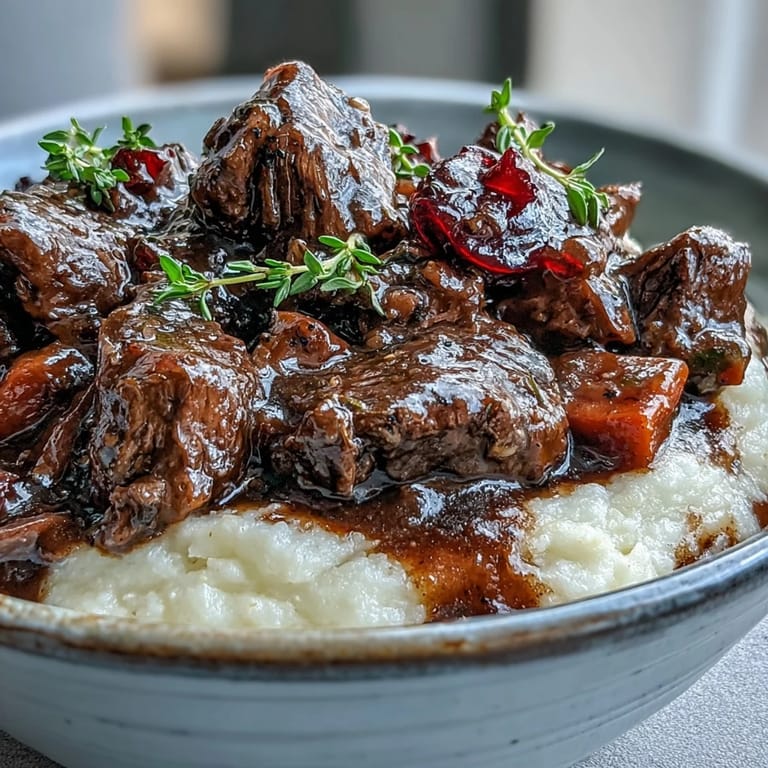
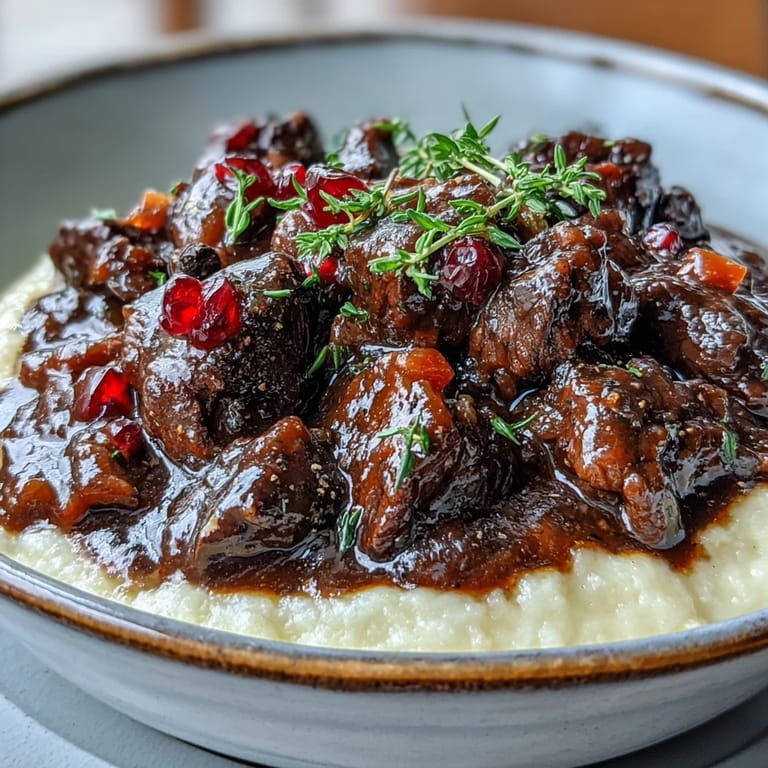
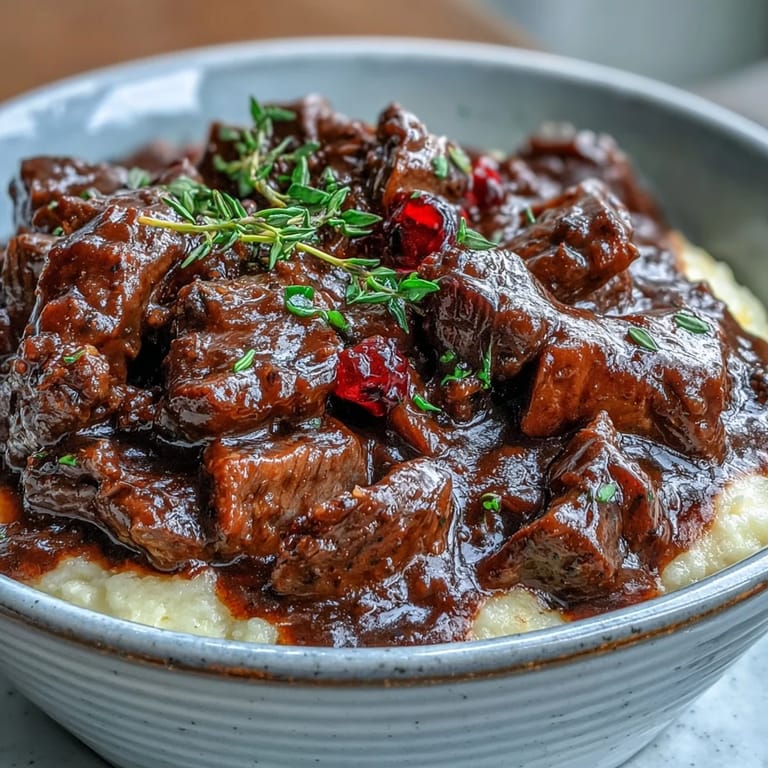
I made this for a small dinner party once, nervous because venison can be polarizing. But when I ladled that glossy, garnet stew over the polenta and garnished it with thyme, the table went quiet. Someone said it tasted like a forest in winter. I have never forgotten that compliment.
Ingredients
- Venison shoulder or stewing venison (800 g, cubed): Look for well-marbled cuts if possible, they stay juiciest during the long braise and do not dry out like leaner pieces can.
- Olive oil (2 tbsp): Use this for browning, it handles high heat without burning and adds a subtle fruity note that complements game beautifully.
- Onion, carrots, celery: The holy trinity of stew bases, they release natural sugars as they soften and create the backbone of flavor you will taste in every spoonful.
- Garlic (2 cloves, minced): Fresh is essential here, it mellows into sweetness during the long simmer and harmonizes with the juniper and thyme.
- Tomato paste (2 tbsp): This thickens the sauce and adds umami depth, cook it briefly to caramelize and lose any tinny aftertaste.
- Sloe gin (150 ml): The star, bringing berry tartness and botanical complexity, if you cannot find it, a good port or cassis works in a pinch.
- Beef or game stock (400 ml): Homemade is ideal, but a quality store-bought works fine, just check for gluten if needed.
- Redcurrant jelly (1 tbsp): A classic British trick for game, it balances the richness with a touch of sweetness and helps the sauce cling to the meat.
- Bay leaves, thyme, juniper berries: These aromatics are non-negotiable, they make venison taste like itself, earthy and wild, not gamey.
- Polenta (150 g): Quick-cooking is fine for weeknights, traditional takes longer but has a slightly better texture, either way it becomes lusciously creamy.
- Milk, water, butter, Parmesan: The dairy makes polenta rich and silky, do not skip the butter or cheese, they turn it from porridge into something you want to eat with a spoon.
Tired of Takeout? 🥡
Get 10 meals you can make faster than delivery arrives. Seriously.
One email. No spam. Unsubscribe anytime.
Instructions
- Brown the venison:
- Heat olive oil over medium-high heat until shimmering, then sear the venison cubes in batches without crowding the pan. You want a deep, caramel crust on each piece, this step builds the foundation of flavor for the entire stew.
- Soften the vegetables:
- Add onion, carrots, and celery to the same pan, scraping up all those browned bits stuck to the bottom. Cook until the vegetables begin to soften and turn golden at the edges, about 5 to 7 minutes, then stir in garlic and tomato paste for another minute.
- Deglaze with sloe gin:
- Return the venison to the pan and pour in the sloe gin, letting it bubble and reduce slightly for 2 minutes. The alcohol will cook off, leaving behind a fruity, floral essence that clings to the meat.
- Add stock and aromatics:
- Pour in the stock, then stir in redcurrant jelly, bay leaves, thyme, and lightly crushed juniper berries. Season generously with salt and pepper, then bring everything to a gentle simmer.
- Braise low and slow:
- Cover the pot and let it cook on the lowest heat for 2 hours, stirring occasionally. The venison should become fork-tender, almost falling apart, and the sauce will thicken into a glossy, aromatic gravy.
- Make the polenta:
- While the stew simmers, heat milk and water in a saucepan until just steaming. Whisk in the polenta in a steady stream, then cook over low heat, stirring constantly, until thick and creamy, about 5 to 10 minutes depending on the type.
- Finish the polenta:
- Stir in butter and grated Parmesan, then taste and adjust salt. The texture should be soft and pourable, not stiff, add a splash more milk if needed.
- Serve:
- Remove bay leaves and thyme sprigs from the stew, then ladle it generously over bowls of warm polenta. Garnish with fresh parsley or a sprig of thyme if you like.
 Save to Pinterest
 One winter evening, I served this to my father, who grew up eating game but had never tried it with sloe gin. He finished his bowl, looked up, and said it reminded him of something his grandmother used to make, but better. That is when I knew this recipe was a keeper.
Choosing Your Venison
Shoulder or stewing cuts are ideal because they have enough connective tissue to become tender and succulent during the long braise. Avoid lean cuts like loin or tenderloin, they will dry out and turn tough. If you can only find diced venison at the store, check that the pieces are evenly sized so they cook at the same rate. Fresh or properly thawed venison should smell clean and slightly metallic, never sour or overly gamey.
Working with Sloe Gin
Sloe gin is not actually gin, it is a liqueur made by steeping sloe berries in gin with sugar, giving it a tart, fruity flavor with a hint of almond. If you cannot find it, try a berry liqueur like cassis or a good ruby port, both bring sweetness and complexity. I once used a homemade damson gin and it was equally stunning, just adjust the sugar if your substitute is sweeter.
Perfecting Your Polenta
The key to creamy polenta is constant stirring and low heat, rushing it will leave you with lumps and a gritty texture. Use a whisk at first to prevent clumping, then switch to a wooden spoon as it thickens. If you are making traditional polenta instead of quick-cooking, expect to stir for 30 to 40 minutes, but the result is worth it, silky and rich.
- Add a splash of cream at the end for extra luxury.
- Leftover polenta firms up in the fridge and can be sliced and grilled the next day.
- Always taste before serving, polenta needs more salt than you think.
 Save to Pinterest
 This dish is comfort and elegance in one pot, the kind of meal that makes a cold night feel like an occasion. Serve it to people you love, and watch them lean back in their chairs, satisfied and quiet.
Recipe FAQs
- → Can I substitute the venison with another meat?
Yes, you can use beef chuck, lamb shoulder, or wild boar as alternatives. Adjust cooking time as needed to ensure the meat becomes tender.
- → What can I use instead of sloe gin?
Port, red wine, or berry liqueurs like cassis work well as substitutes. Each will add a slightly different flavor profile but maintain the dish's richness.
- → Can I make this stew ahead of time?
Absolutely. The stew tastes even better the next day as flavors meld. Reheat gently and prepare fresh polenta when ready to serve.
- → How do I prevent the polenta from becoming lumpy?
Whisk constantly while adding polenta to simmering liquid in a steady stream. Continue stirring throughout cooking to maintain a smooth, creamy consistency.
- → Can I cook this stew in a slow cooker?
Yes, brown the meat and vegetables first, then transfer everything to a slow cooker. Cook on low for 6-8 hours until the venison is tender.
- → What wine pairs best with this dish?
Full-bodied reds like Shiraz, Cabernet Sauvignon, or Côtes du Rhône complement the rich game flavors and sloe gin beautifully.