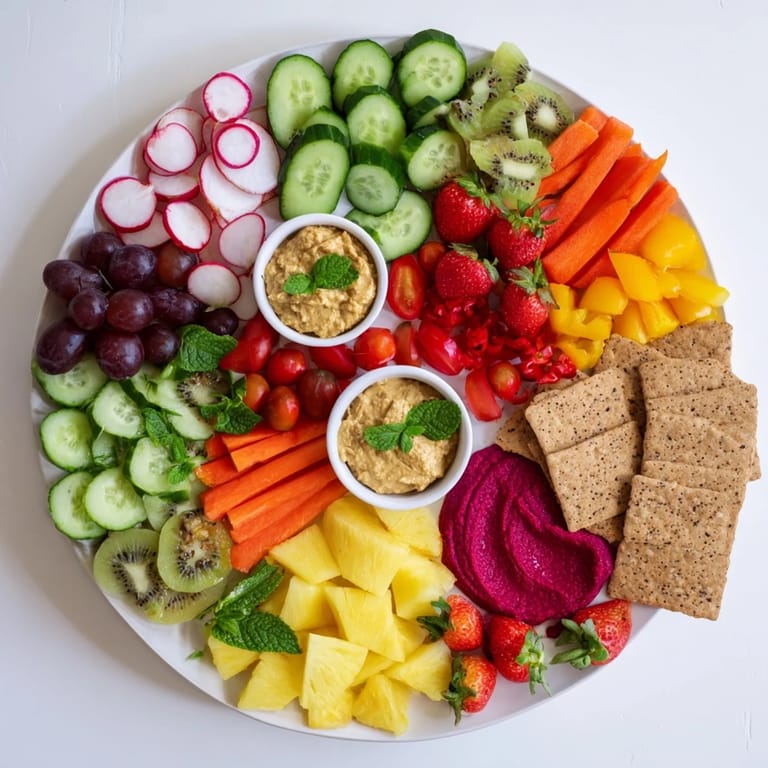
 Save to Pinterest
 I'll never forget the first time I assembled a sprawling vegetable platter for a dinner party at my apartment. I'd always thought these arrangements were reserved for catering companies and fancy events, but that evening, as I arranged jewel-toned vegetables in careful arcs across my grandmother's old wooden board, something magical happened. The colors seemed to glow under the kitchen lights, and my guests didn't just eat—they lingered, returning again and again to create little combinations of vegetables and dips. That's when I realized a vegan platter wasn't just food; it was an invitation to slow down and savor.
I made this platter for my partner's birthday last spring, and I watched their face light up when they saw it. They called it "a garden on a plate," and I realized that this simple arrangement had somehow captured the joy of abundance—that feeling of having enough of everything good, all at once.
Ingredients
- Rainbow carrots, sliced into coins: These are the showstoppers of your platter. They add natural sweetness and that satisfying crunch. I slice mine about a quarter-inch thick—thin enough to be elegant, thick enough to actually hold the dip without breaking.
- Baby cucumbers, sliced or quartered: They stay crisp for hours and have a refreshing quality that keeps people coming back. I quarter mine lengthwise so they're substantial enough to load with dip.
- Cherry tomatoes, assorted colors: Get a mix of red, yellow, and orange if you can find them. They're little bursts of umami sweetness and add visual texture that regular tomatoes just can't match.
- Radishes, thinly sliced: The secret weapon of the platter. Their peppery bite and jewel-red color create contrast that makes everything else taste better.
- Baby bell peppers, sliced: Sweet, crisp, and come in those gorgeous reds, yellows, and oranges. I've learned to keep the stem end together so they hold their shape better on the board.
- Snap peas: Leave them whole—they're almost sweet enough to be a snack on their own, and their pod shape adds textural variety to all the sliced vegetables.
- Seedless grapes, mixed colors: The sweetness here is intentional. They balance the savory vegetables and create color zones that organize the platter visually.
- Strawberries, halved: I learned the hard way to only halve them right before serving; otherwise, they weep into everything. But that bright red against the greens is absolutely worth it.
- Pineapple chunks: A touch of tropical sweetness that surprises people. The natural acid brightens everything around it.
- Kiwi, peeled and sliced: That vivid green is almost neon and creates stunning visual contrast. Slice it just before serving to prevent browning.
- Classic hummus: The foundation dip—creamy, familiar, and a perfect vehicle for the vegetables. Make or buy your favorite; this is no time to compromise on something you'll eat a lot of.
- Beetroot hummus: This is the one that draws people in. That hot-pink color is irresistible, and the earthy sweetness pairs beautifully with the sharp vegetables.
- Guacamole: Fresh, creamy, and honestly the dip that disappears first. Use ripe avocados and don't make it too far in advance—it browns quickly.
- Cashew tzatziki: This was a revelation to me—cashews blend into something almost yogurt-like when you know the trick. The cucumber and herbs make it bright and cooling.
- Pomegranate seeds: These are your jewels. They add a tart pop and fill visual gaps while looking intentional and luxurious.
- Fresh herbs (mint, basil, parsley): A small handful of whichever you have on hand. They add aroma and final freshness that lifts the entire platter.
- Gluten-free crackers or pita chips: Choose ones you actually enjoy eating, because you'll definitely taste-test them while arranging. They fill gaps and give people options beyond just vegetables.
Tired of Takeout? 🥡
Get 10 meals you can make faster than delivery arrives. Seriously.
One email. No spam. Unsubscribe anytime.
Instructions
- Gather and prepare your canvas:
- Find the largest platter or board you own—this is the moment to go bigger than you think you need. I use a wooden board that belonged to my grandmother, and there's something grounding about cooking on something with history. Lay out your small bowls for dips in a pattern that feels natural to you. I usually place them at the four corners and one in the center, like anchors on a map.
- Wash and dry everything thoroughly:
- This step is non-negotiable. Wet vegetables slip everywhere and muddy your colors. Dry them completely with clean towels—I use a salad spinner for leafy items and pat everything else by hand. There's something meditative about this part, almost like a ritual that prepares you for the creation ahead.
- Slice with intention:
- Use a sharp knife and take your time. Even thickness isn't just about looks; it's about making it easier for people to eat. As you slice, arrange some pieces directly on the board in a trial arrangement. This helps you see what you're working with before committing to the full layout.
- Create your color zones:
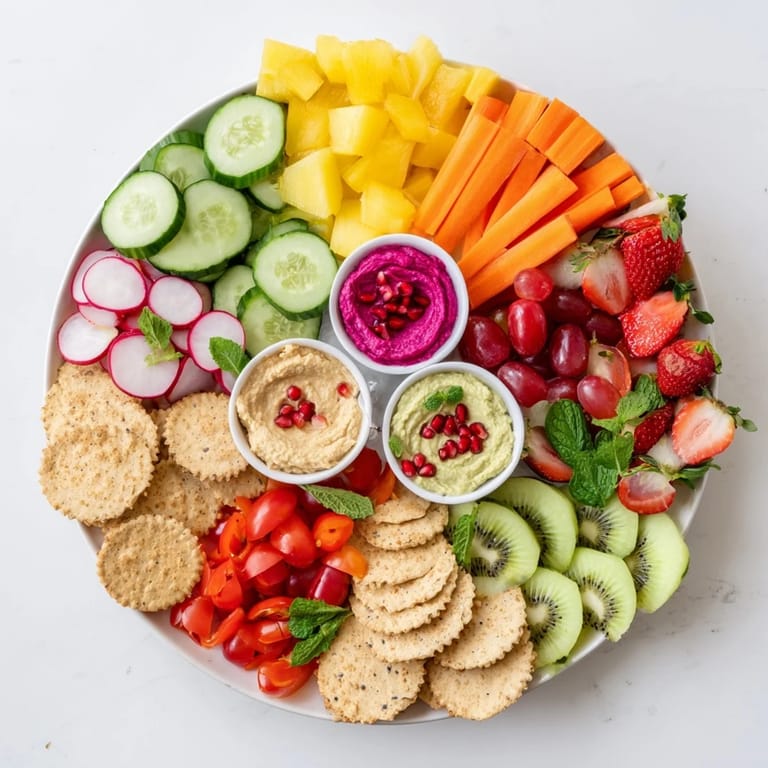
- Start by grouping similar colors together, but don't make it too matchy-matchy. I think of it like painting—you want distinct blocks of color that somehow feel harmonious. Alternate your warm tones (oranges, reds, yellows) with cool ones (greens, purples). Fill the space around your dip bowls first, then work outward.
- Fill the gaps with personality:
- Here's where your platter becomes a work of art. Scatter pomegranate seeds into any gaps, tuck fresh herbs between sections, add edible flowers if you have them. This isn't just filling space—it's the finishing touch that makes people believe you spent hours on this, even though you didn't.
- Serve or store strategically:
- If serving immediately, there's a particular magic to presenting it fresh. If you're preparing ahead, cover loosely with a damp paper towel and refrigerate for up to a few hours. The vegetables stay crisp and the colors actually deepen slightly when cold.
 Save to Pinterest
 There was a moment during that birthday celebration when my partner's 8-year-old niece carefully selected a strawberry, dipped it in guacamole, and declared it the best thing she'd ever eaten. In that moment, I understood something about cooking: sometimes the most beautiful meals aren't complicated; they're just celebrations of what the earth already gives us.
The Art of Color and Contrast
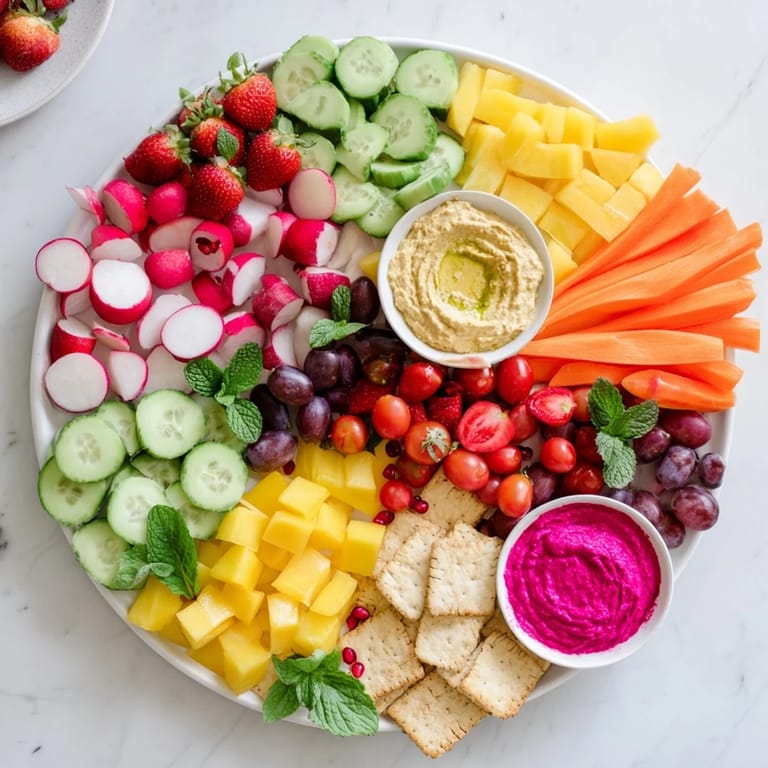
What I've discovered through making these platters repeatedly is that color isn't just beautiful—it's actually a form of communication. When you look at a platter arranged with intention, your eye knows exactly where to go and what to try next. The bright magenta of beetroot hummus next to pale green snap peas creates a kind of visual music. I've learned to think like a painter when arranging vegetables: warm colors recede slightly, cool colors pop forward, and contrast makes everything taste better because your brain has already decided it wants to eat something beautiful.
Building Flavor Combinations That Work
The real magic of a global gardener platter is that you're not just serving vegetables—you're offering a flavor journey. I noticed that people naturally create combinations they wouldn't think to make on their own. A radish with guacamole becomes something special. A slice of pineapple dipped in cashew tzatziki tastes like a completely different dish. The key is having enough variety that people feel like they're discovering rather than just eating what's in front of them. When you serve this, you're essentially giving permission for the kind of playful eating that reminds people why they loved snacking as children.
Make It Your Own with Seasonal Abundance
The most exciting thing about this platter is that it changes with the seasons and whatever your local farmers market offers that day. In summer, I might add heirloom tomatoes and fresh corn. In fall, I've used roasted chickpeas and marinated olives. The structure stays the same, but the platter becomes a map of where you are and what's growing near you. This flexibility means you can make this dish a hundred times and it will never feel repetitive. It becomes less of a recipe and more of a way of thinking about celebration.
- When you spot something beautiful at the market, buy it and build the platter around it, rather than shopping from a strict list
- Edible flowers aren't just decoration—varieties like nasturtiums and pansies add subtle flavor and make guests feel like they're eating something special
- Don't forget texture: add something crispy like nuts or seeds, something creamy in the dips, and the natural crunch of fresh vegetables creates a complete sensory experience
 Save to Pinterest
 This platter is really about abundance in its most genuine form—not showing off, but sharing. Every time I make one, someone tells me it's too pretty to eat, and I love that moment before they dive in anyway.
Recipe FAQs
- → What fresh vegetables are included in the platter?
The platter features rainbow carrots, baby cucumbers, cherry tomatoes, radishes, baby bell peppers, and snap peas, all sliced for easy dipping.
- → Which fruits complement the vegetables on this platter?
Seedless grapes, strawberries, pineapple chunks, and peeled sliced kiwi add sweet and tangy notes to balance the fresh vegetables.
- → What types of dips are served with the platter?
Four plant-based dips are arranged in small bowls: classic hummus, beetroot hummus, guacamole, and cashew tzatziki, offering a variety of flavors.
- → How can the platter be customized for different seasons?
Seasonal vegetables or fruits can be swapped in as desired, and additions like roasted chickpeas or marinated olives provide extra variety.
- → Are there any allergen considerations to keep in mind?
The cashew tzatziki contains nuts and hummus may have sesame. Gluten-free crackers are recommended, and ingredient labels should be checked for allergies.
- → What is the best way to arrange the platter for visual appeal?
Arrange dips in small bowls spaced around the platter and group vegetables and fruits in bright color blocks, filling gaps with crackers, herbs, pomegranate seeds, and edible flowers.