 Save to Pinterest
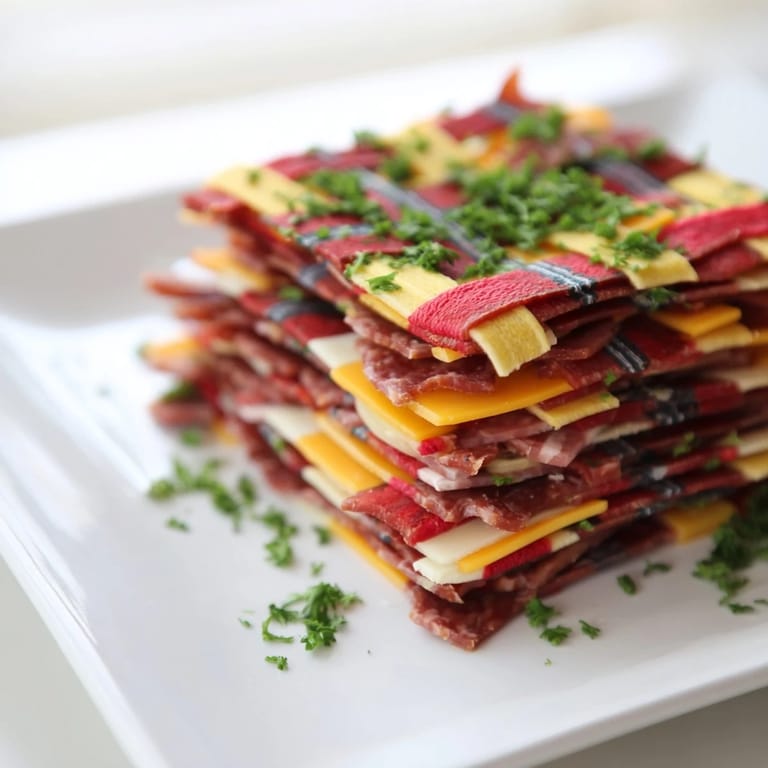
 I discovered The Tartan Plaid at a Scottish-themed dinner party where my friend challenged guests to bring something that celebrated pattern and flavor. I showed up with this woven masterpiece of jerky and cheese, and honestly, I was more nervous about whether it would hold together than about how it would taste. The moment I started layering those strips, something clicked—it felt like edible architecture, and everyone immediately wanted to know how I'd done it. Now it's become my secret weapon for impressing people without actually cooking.
I remember bringing this to a potluck where someone asked if I'd actually woven it or just arranged it cleverly—the fact that it looked almost too perfect to eat made the whole thing feel special. My coworker cut into it right there at the table and suddenly everyone wanted to try it, and I watched that plaid pattern disappear in real time. That's when I realized this wasn't just a snack; it was a conversation starter.
Ingredients
- Beef jerky: The hearty backbone of your plaid—look for strips that are pliable enough to handle but still have that satisfying chew.
- Turkey jerky: Milder and slightly lighter in color, it creates visual contrast and adds a different flavor dimension.
- Pork jerky: The wildcard that ties everything together with a subtle smokiness.
- Sharp cheddar cheese: Don't skimp here; the tanginess cuts through the saltiness of the jerky beautifully.
- Monterey Jack cheese: Creamy and mild, it balances the sharper cheese and provides a different texture.
- Smoked gouda: This is your flavor secret—its depth makes people wonder what you added.
- Fresh parsley or chives: Optional but worth it; the green garnish transforms this from snack to showstopper.
Tired of Takeout? 🥡
Get 10 meals you can make faster than delivery arrives. Seriously.
One email. No spam. Unsubscribe anytime.
Instructions
- Prep your strips:
- Cut all your jerky and cheese into thin, uniform strips about the width of a drinking straw. Even sizing makes the weaving so much easier and gives that intentional, polished look.
- Create your foundation:
- Lay half your jerky strips vertically on your platter or board, alternating between beef, turkey, and pork as you go. Space them evenly—you'll thank yourself when you start threading cheese through.
- Begin the horizontal weave:
- Starting at the top edge, take a strip of cheddar and weave it over one jerky strip, under the next, over the next, creating that classic over-under pattern. Each cheese strip locks everything in place.
- Build the pattern:
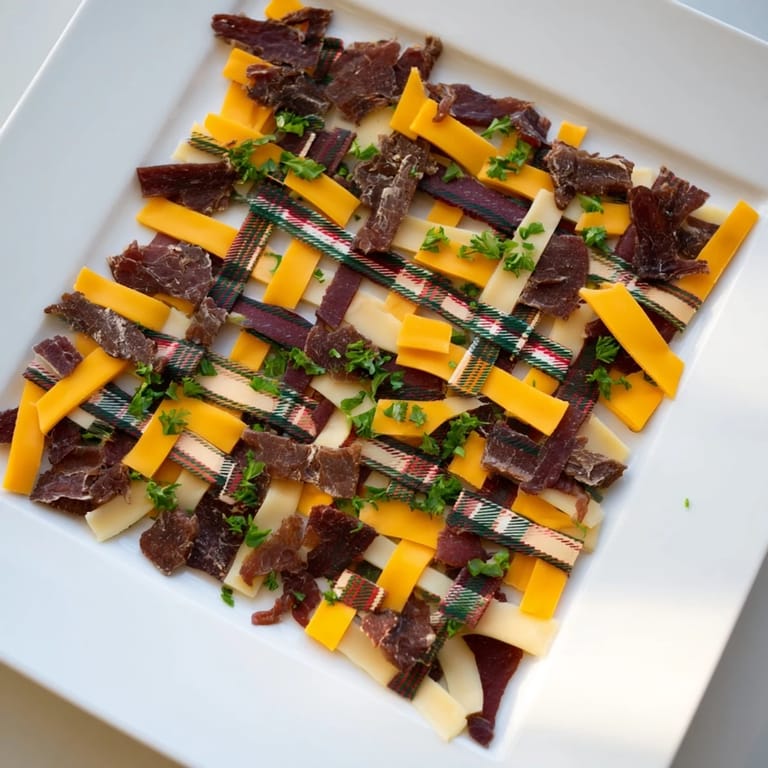
- Continue weaving, alternating your cheese types (cheddar, Jack, gouda) and making sure each new row goes the opposite direction (under-over-under instead of over-under-over). This alternation is what creates the authentic plaid effect.
- Layer the remaining jerky:
- Once your cheese is woven through, carefully lay your remaining jerky strips horizontally across everything, continuing the alternating pattern. The whole structure should feel sturdy but still flexible.
- Set and finish:
- Gently press the entire arrangement to help it hold together, then trim any ragged edges if you want that clean, intentional look. Sprinkle your fresh herbs over the top for color and a hint of freshness.
 Save to Pinterest
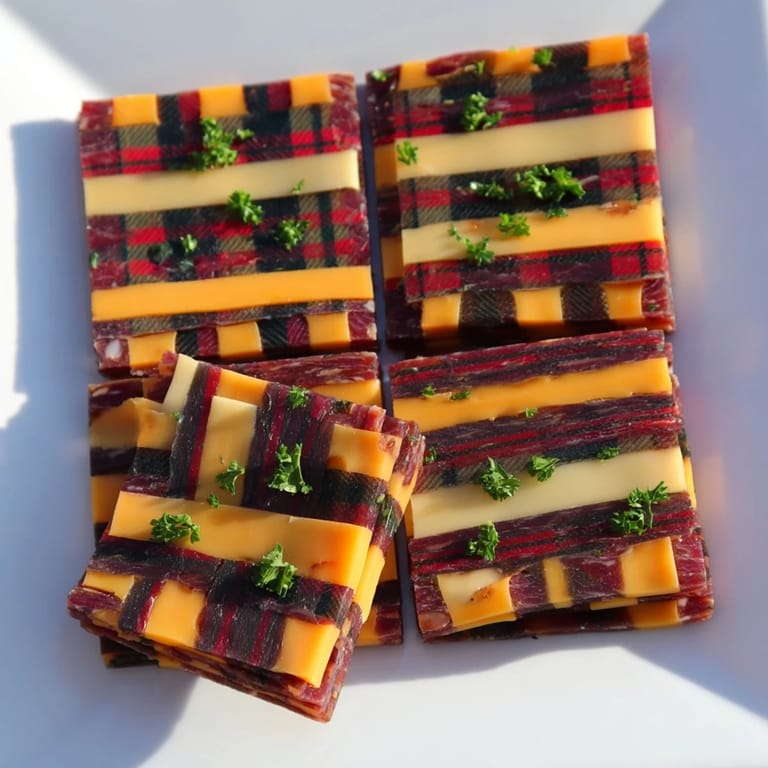
 There was a moment when I finished that first plaid and just stared at it, realizing I'd accidentally created something that tasted as good as it looked. My partner walked past, stopped, and said, 'You're not serving that, are you?' in that tone that meant she absolutely wanted me to—and somehow, feeding people something beautiful changed how they experienced it.
The Art of the Weave
Weaving sounds fancier than it is, but the rhythm of it is almost meditative once you get started. The key is not overthinking it—yes, you're going over and under, but the real magic happens when you embrace the imperfections. A slightly crooked line or a cheese strip that's a millimeter off makes it feel handmade and genuine, not factory-produced. That's exactly what makes people lean in and really look at what you've made.
Flavor Pairings That Work
The combination of three jerkies with three cheeses isn't random; each pairing was born from trial and error at my kitchen counter. Beef and cheddar is the classic duo, but pairing turkey with Monterey Jack creates this unexpected lightness, and smoked gouda with pork jerky? That's where the depth comes from. Think of it like building a flavor conversation where each ingredient has something to say, and they're all listening to each other.
Making It Your Own
This recipe is genuinely a playground for creativity, and that's part of what makes it so fun. Once you understand the weaving principle, you can swap in any jerky flavors or cheese combinations that excite you. I've made versions with spicy jerky and smoked cheddar, and another time I added thin slices of smoked salmon just to see what would happen—turns out, it was incredible.
- Try different jerky flavors like teriyaki, peppered, or hickory-smoked for entirely different visual and taste profiles.
- If you're shopping at a good cheese counter, ask the person behind it what they'd recommend weaving; they always know the best combinations.
- Make this no more than a couple hours ahead and keep it covered loosely so it stays fresh but doesn't sweat under plastic wrap.
 Save to Pinterest
 The Tartan Plaid taught me that sometimes the most memorable food moments come from doing something a little unexpected and weird in the kitchen. It's a reminder that feeding people is partly about nourishing them and partly about delighting them with something they didn't know they needed.
Recipe FAQs
- → What types of jerky work best?
Using a mix of beef, turkey, and pork jerky provides varied flavors and colors, enhancing the plaid effect and taste.
- → Can I substitute the cheese varieties?
Yes, any firm, sliceable cheeses like cheddar, Monterey Jack, or gouda work well to create the woven pattern.
- → How long can this appetizer be stored?
Cover tightly and refrigerate up to 2 hours for freshness and optimal texture before serving.
- → Is this dish suitable for vegetarians?
Replace jerky with vegetarian alternatives or smoked tofu strips to maintain the plaid design and flavor.
- → What beverages pair well with this dish?
Dry white wine, light beer, or apple cider complement the savory and creamy layers perfectly.