 Save to Pinterest
 The first time I watched my neighbor Maria make this, I thought she was bluffing. Three ingredients? She laughed at my skepticism and said Rome had been proving people wrong for centuries. When she twirled that first forkful and the creamy sauce clung to every strand, I realized simplicity wasn't laziness—it was confidence. I've been chasing that same silky texture ever since, and some nights I get it just right.
I made this for my brother's birthday last spring, and he went silent after the first bite. That's rare for him. He asked if I'd taken a cooking class, and I told him I'd just learned to trust the process. We finished the whole pot between the two of us, standing at the counter with forks, laughing about how something so plain-sounding could feel like a celebration.
Ingredients
- Spaghetti (400 g): Use good quality pasta because it holds the sauce better, and cook it just shy of tender since it finishes in the skillet.
- Pecorino Romano cheese (120 g, finely grated): This is the star, so grate it fresh right before you cook—pre-grated stuff won't melt the same way and you'll end up with clumps instead of silk.
- Freshly cracked black pepper (2 tsp, plus extra): Toasting it in the pan wakes up the oils and makes the whole dish smell like a trattoria, so don't skip that step.
- Salt: For the pasta water only, because the cheese brings all the salt you need to the sauce.
Tired of Takeout? 🥡
Get 10 meals you can make faster than delivery arrives. Seriously.
One email. No spam. Unsubscribe anytime.
Instructions
- Boil the Pasta:
- Bring a large pot of salted water to a rolling boil, drop in the spaghetti, and cook it until it's just al dente. Before you drain it, scoop out a full cup of that starchy pasta water—it's the secret to making everything come together.
- Toast the Pepper:
- While the pasta cooks, heat a large skillet over low heat and add the black pepper, stirring it around for a minute or two until it smells warm and toasty. This step transforms the pepper from sharp to complex.
- Add Pasta Water:
- Pour about half a cup of the hot reserved pasta water into the skillet with the toasted pepper and let it bubble gently. The water will pick up all that peppery flavor.
- Toss the Pasta:
- Add the drained spaghetti to the skillet and toss it around so every strand gets coated in that peppery liquid. Work quickly here so the pan stays hot enough to help the cheese melt smoothly.
- Add the Cheese:
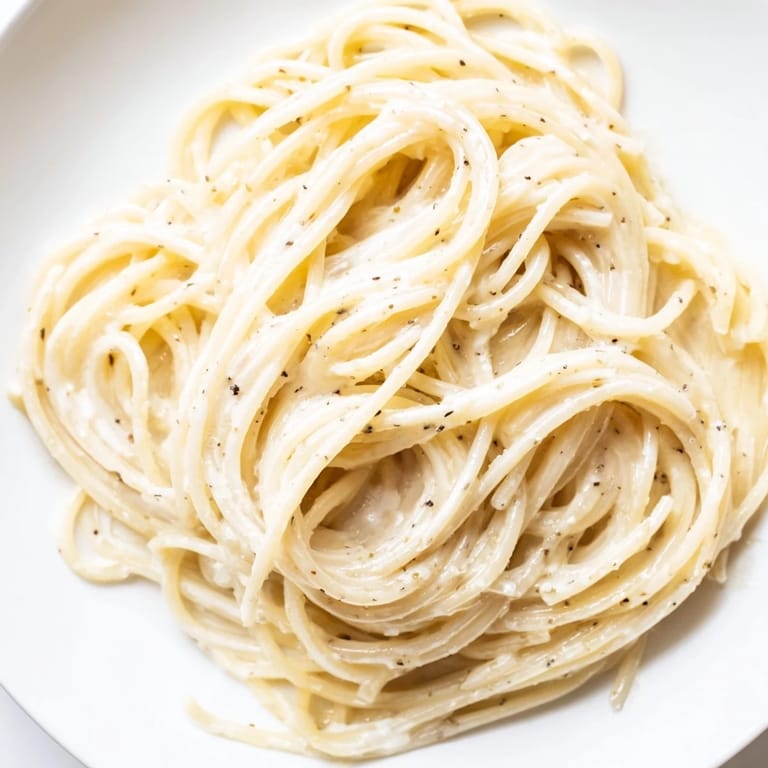
- Sprinkle in the Pecorino Romano a little at a time, tossing and stirring constantly until it melts into a creamy sauce. Add more reserved pasta water bit by bit if it looks too thick—you want it glossy and silky, not clumpy.
- Serve:
- Plate it up right away, finish with extra cheese and a few twists of black pepper, and eat it while it's hot. Cacio e pepe waits for no one.
 Save to Pinterest
 One rainy Tuesday, I made this for myself after a long day and ate it curled up on the couch. It wasn't fancy or shared, just me and a bowl of spaghetti that tasted like care. Sometimes the best meals are the ones you make when no one's watching, and this one reminded me that comfort doesn't need a crowd.
Choosing Your Cheese
Pecorino Romano is traditional and sharp, with a salty bite that defines the dish. If you can't find it or want something gentler, Parmigiano Reggiano works too, though it'll be milder and a little sweeter. I've tried mixing the two, and honestly, it's a lovely compromise—just make sure whatever you use is freshly grated, because the pre-shredded stuff has anti-caking agents that ruin the texture.
Getting the Sauce Just Right
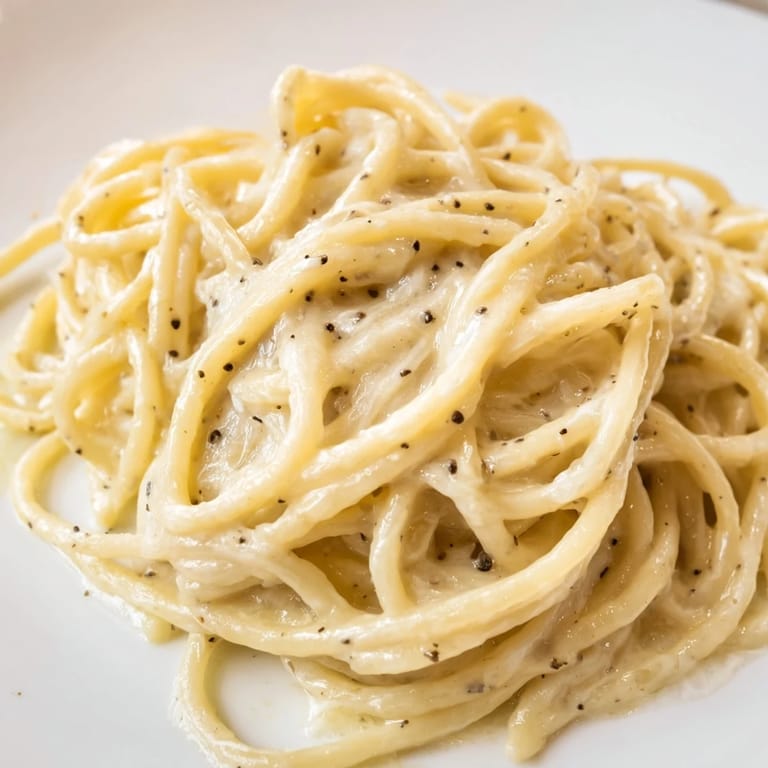
The magic happens in the marriage of hot pasta water and grated cheese, whisked together off direct heat. I learned this the hard way after scrambling my first batch into rubbery bits. Now I pull the pan off the burner for a few seconds while I add the cheese, tossing like my life depends on it. The result is a sauce that clings without feeling heavy, coating each strand like a whisper.
Serving and Pairing Ideas
This dish is best enjoyed immediately, straight from the pan if you're feeling casual. A crisp white wine like Vermentino or Pinot Grigio cuts through the richness beautifully, and a simple arugula salad with lemon on the side keeps things balanced. I've also served it as a side to roasted chicken, and it holds its own without competing.
- Finish each plate with an extra crack of pepper for a little heat and visual flair.
- If you have leftover cheese, save it for round two—this reheats better than you'd think with a splash of water.
- Don't overthink it; this is Roman street food at heart, meant to be easy and satisfying.
 Save to Pinterest
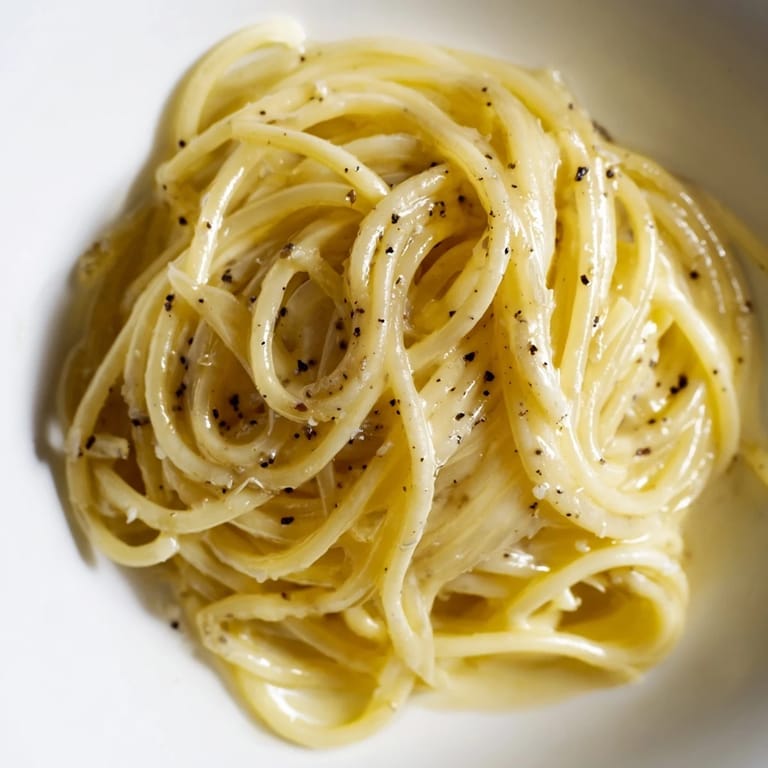
 Every time I make cacio e pepe, I'm reminded that the best cooking isn't about fancy techniques or long ingredient lists. It's about respecting a few good things and letting them shine together.
Recipe FAQs
- → Can I use Parmigiano Reggiano instead of Pecorino Romano?
Yes, Parmigiano Reggiano works as a substitute, though it will provide a milder, less sharp flavor compared to the traditional salty intensity of Pecorino Romano.
- → Why is my cheese clumping instead of creating a creamy sauce?
Clumping occurs when cheese is added too quickly or the heat is too high. Add cheese gradually while tossing vigorously, and maintain low heat. Work quickly but methodically to allow the cheese to melt evenly into the pasta water.
- → What type of black pepper should I use?
Freshly cracked black pepper is essential for this dish. Fresh peppercorns ground just before cooking release more aromatic oils than pre-ground pepper, creating the authentic peppery flavor this classic requires.
- → How much pasta water should I reserve?
Reserve at least 1 cup of pasta cooking water before draining. Start with about ½ cup in the skillet, then add more as needed to achieve a silky, creamy consistency without making the sauce too thin.
- → Can I make this dish ahead of time?
This dish is best served immediately after preparation. The sauce can separate if held for extended periods. However, you can prepare ingredients in advance and combine them just before serving for optimal texture and flavor.
- → What wine pairs well with this pasta?
Crisp white wines complement the rich, peppery sauce beautifully. Try Vermentino or Pinot Grigio, which cut through the saltiness of the cheese and balance the black pepper's spice.