 Save to Pinterest
 There's something about the smell of ginger hitting hot broth that makes everything feel manageable, even on the greyest January afternoons. My neighbor brought over a thermos of this soup when I was stuck in bed with a cold, and I remember thinking how it tasted like someone had distilled warmth into a bowl. The miso adds this subtle umami depth that sneaks up on you, while the ginger cuts through with just enough presence to remind you that you're alive. Since then, I've made it dozens of times, sometimes with whatever vegetables I have on hand, sometimes when I just need ten minutes of quiet in the kitchen before everything else demands attention.
I made this for my partner after they mentioned feeling run down mid-February, and they ate three bowls without saying much, which for them meant everything. There's something about offering someone something warm and simple that tastes thoughtful without being fussy. They still ask for it now whenever the weather turns cold, which is probably the best compliment a recipe can get.
Ingredients
- Low-sodium vegetable broth, 6 cups: This is your foundation, so don't skip on quality here; a good broth makes the whole soup sing, and low-sodium lets you control the salt instead of fighting it.
- Fresh ginger, 2-inch piece peeled and thinly sliced: The thin slices infuse better than chunks and release their heat gradually, which is exactly what you want for a soup that warms you from the inside.
- Garlic, 2 cloves thinly sliced: Don't mince it or it will disappear entirely; slices stay visible and release flavor more gently.
- White or yellow miso paste, 2 tablespoons: This is the soul of the soup, so taste your miso first if you can; some pastes are saltier than others.
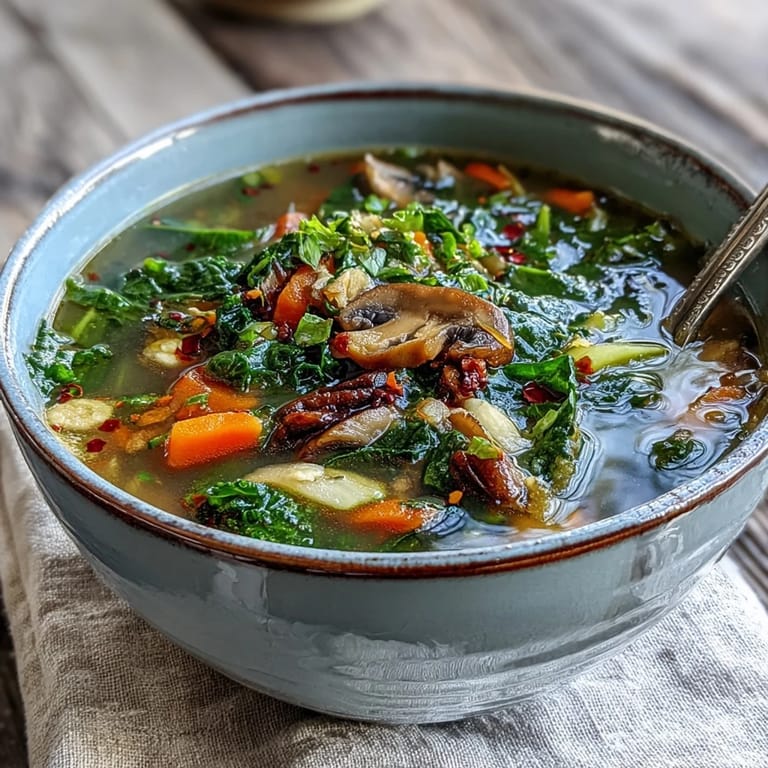
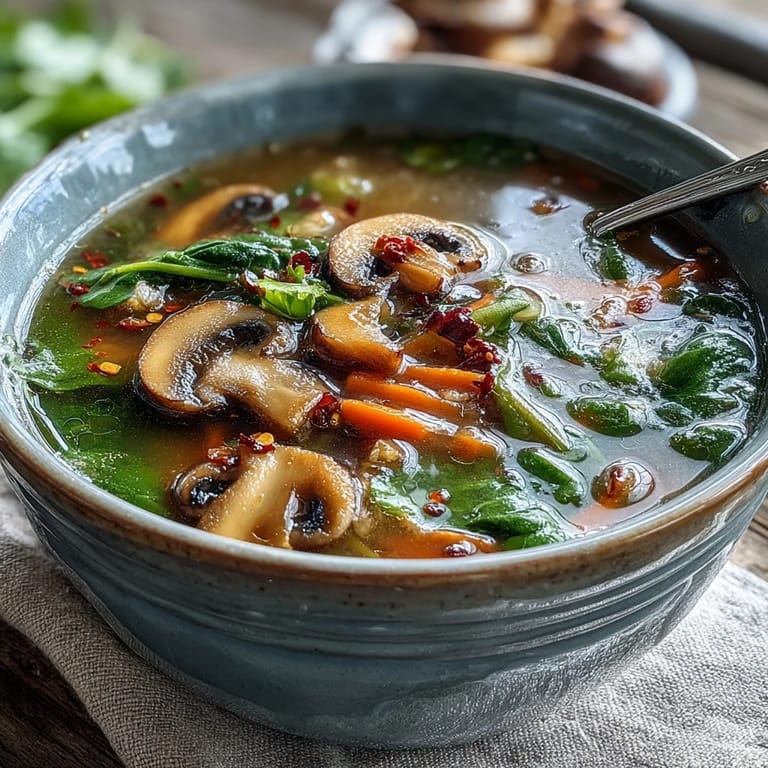
- Shiitake mushrooms, 1 cup thinly sliced: They add earthiness and a slight chewiness that makes the soup feel substantial without being heavy.
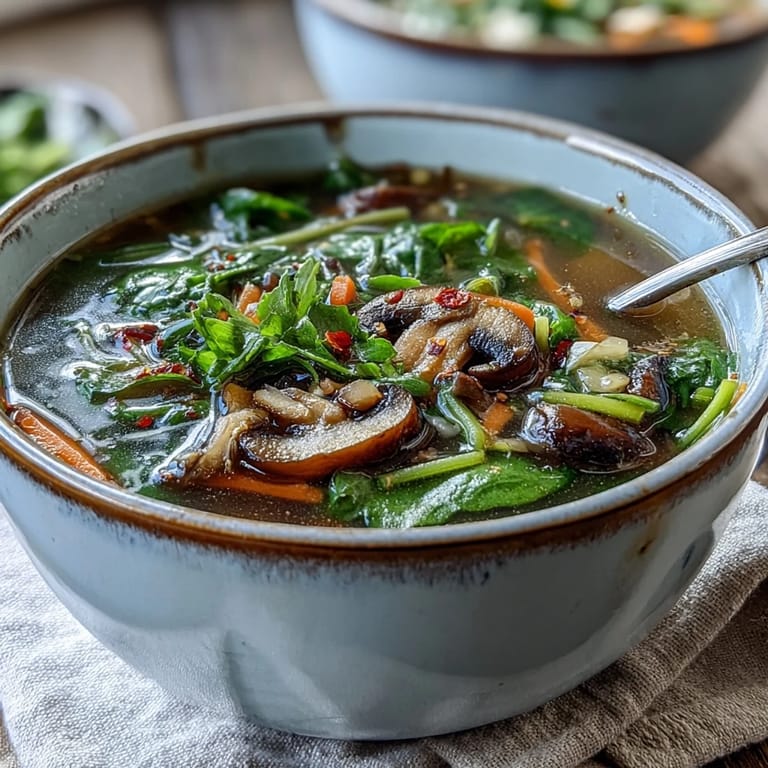
- Baby spinach or bok choy, 1 cup roughly chopped: Spinach wilts almost instantly, while bok choy holds its shape a bit longer, so pick based on what texture you're craving.
- Carrot, 1 medium julienned or thinly sliced: The thin cuts matter here because they cook in five minutes, which keeps them slightly crisp and sweet.
- Green onions, 2 sliced: Use both white and green parts, and add them at the very end so they stay bright and fresh.
- Toasted sesame seeds, 1 tablespoon for garnish: The toasting makes them nutty and more flavorful than raw seeds, so take thirty seconds to do it yourself if you can.
- Fresh cilantro, 1 tablespoon chopped (optional): It adds a herbal note that surprised me the first time I added it, and now I can't imagine the soup without it.
- Chili oil or red pepper flakes, 1 teaspoon (optional): A small drizzle at the end gives you a gentle heat that wakes up all the other flavors.
Tired of Takeout? 🥡
Get 10 meals you can make faster than delivery arrives. Seriously.
One email. No spam. Unsubscribe anytime.
Instructions
- Warm your broth gently:
- Pour the vegetable broth into a large saucepan and bring it to a gentle simmer over medium heat. You want to hear a quiet bubbling, not an aggressive boil, because you're about to infuse it with delicate aromatics.
- Build your flavor base:
- Add the sliced ginger and garlic to the simmering broth and let them float there for ten minutes. This is the most important step because it gives those flavors time to release their oils and perfume everything around them; you'll actually see the broth change color slightly as it steeps.
- Add the hearty vegetables:
- Toss in the mushroom slices and carrot, letting them cook for about five minutes until they're just tender enough to bite through easily but still have some resistance. The timing here is crucial because overcooked vegetables turn mushy and disappear into the background.
- Dissolve the miso correctly:
- This is the step people get wrong, so listen carefully: remove a ladleful of the hot broth into a small bowl, then whisk the miso paste into it until it's completely smooth and creamy. This prevents lumps and ensures the miso distributes evenly throughout the soup.
- Preserve the probiotics:
- Lower the heat to low, then stir the miso mixture back into the pot slowly and gently. Never let the soup boil after the miso goes in because high heat kills the good bacteria you're trying to keep alive.
- Finish with fresh greens:
- Add the spinach or bok choy and green onions, stirring just until everything wilts, which takes about a minute. You'll see the leaves go from crinkled to glossy, and that's your signal to move on.
- Taste and adjust:
- Take a spoonful and really taste it, then decide if it needs more miso for depth or a splash of soy sauce for saltiness. This is your soup, so make it taste exactly like what you want.
- Serve with intention:
- Ladle the soup into bowls and top each one with sesame seeds, cilantro, and a few drops of chili oil if you want that final spark of heat.
 Save to Pinterest
 Last winter my daughter helped me make this, and she was fascinated by how the miso dissolved into clouds in the broth before mixing together. She called it magic, and honestly, watching her care about where ingredients came from and how they transformed made the whole thirty minutes feel like the most important cooking I'd done in a long time.
Variations That Work
Once you understand the basic structure of this soup, you can improvise freely without losing what makes it work. I've added cubed silken tofu for a protein boost on nights when I'm hungry, swapped red miso for white miso when I wanted deeper, earthier notes, and thrown in soba noodles to turn it into something closer to a full meal. The vegetables are flexible too, so if you have kale instead of spinach, or want to use daikon radish instead of carrot, the soup adjusts beautifully and doesn't seem to mind.
The Ginger Question
The amount of ginger in this recipe is moderate, which means the soup tastes like ginger but doesn't punch you in the face with it. If you're someone who loves aggressive ginger heat, add a three-inch piece instead and let it simmer the full ten minutes. If you're more timid about ginger, start with an inch and work your way up as you get braver, because ginger flavor builds slowly and you can always add more next time.
Making It Part of Your Rhythm
This soup has become my cold-weather default because I can make it without thinking and it always tastes like care. Some people have emergency pasta, some have frozen dumplings; I have the ingredients for this soup in my pantry at all times because I know it will get me through the grey months. The beauty of it is that it's humble enough to make for yourself on a tired Tuesday, but thoughtful enough to offer to someone who needs comfort.
- Keep miso paste in the fridge once it's opened, and it will last for months if you cover it properly.
- Prep your vegetables before you start cooking so you can move quickly once the broth is simmering.
- Double the batch and freeze half in containers, but wait to add the miso until you reheat it so the probiotics survive the freeze.
 Save to Pinterest
 This soup taught me that the most restorative meals are often the simplest ones, made with ingredients you actually understand. Make it once and you'll see why it's become something people ask for by name.
Recipe FAQs
- → Can I make this soup ahead of time?
Yes, prepare the base broth and vegetables in advance. Add the miso paste and fresh greens just before serving to maintain optimal texture and probiotic benefits.
- → What type of miso works best?
White or yellow miso provides a milder, sweeter flavor perfect for this light soup. Red miso offers a deeper, more intense taste if you prefer stronger umami notes.
- → Can I add protein to make it more filling?
Cubed silken tofu absorbs the savory broth beautifully while adding protein. You can also add edamame or serve alongside grilled tempeh for a complete meal.
- → Why shouldn't I boil the miso?
High heat destroys the beneficial probiotics in miso paste. Always dissolve miso in warm liquid off-heat and simmer gently to preserve both nutrients and delicate flavor.
- → Can I use other vegetables?
Kale, swiss chard, or napa cabbage work well instead of spinach. Add winter vegetables like daikon radish or sweet potato during simmering for extra heartiness.