 Save to Pinterest
 I remember the first time I put together a proper charcuterie board for my family—it was meant to be quick, but somewhere between arranging the first slice of prosciutto and discovering how the colors played against each other, I realized I was creating something that felt almost artistic. That day, watching everyone reach for different combinations, building their own little bites, I understood that the best meals aren't always cooked. Sometimes they're composed. The Keto Power Plate is that realization taken further, a celebration of quality ingredients arranged with intention, designed to nourish without compromise.
The moment I truly got this right was when my partner looked at the finished platter and said, 'This looks like something from a restaurant,' and I realized they were right. But what made it special wasn't the ingredients—it was understanding how to arrange them so the colors sang and every visual section invited you in. That's when I knew this wasn't just about eating keto; it was about making keto feel abundant and intentional.
Ingredients
- Sliced roast beef (120 g): Choose a high-quality cut with good marbling; it stays tender and develops better flavor. If you're buying pre-sliced, look for beef that's deep red and vacuum-sealed for freshness.
- Sliced smoked turkey (120 g): This brings a subtle smokiness and pairs beautifully with sharp cheeses. Quality matters here—avoid the overly processed deli versions if you can.
- Prosciutto (120 g): The silky, delicate meat that feels luxurious. Buy from a good butcher counter and ask them to slice it paper-thin; it makes all the difference in texture.
- Sliced salami (100 g): Choose a variety you love—whether it's spicy, fennel-forward, or more subtle. This is where personality comes in.
- Aged cheddar, cubed (100 g): Aged versions have sharper, more complex flavors than young cheddar. The cubes offer a different texture than slices and help balance the plate visually.
- Gruyère, sliced (100 g): Nutty and slightly sweet, Gruyère bridges flavors beautifully. Its pale golden color adds warmth to the board.
- Manchego, sliced (100 g): A Spanish classic that's firmer than others on this board, with a slightly caramel-forward taste. It's the ingredient that made me realize Spanish cheeses belong at every table.
- Cherry tomatoes, halved (1 cup): These burst with brightness and provide essential acidity that cuts through the richness. Halving them rather than leaving whole makes them easier to grab and eat.
- Cucumber, sliced (1 cup): Cool and crisp, cucumber is your palate cleanser. I learned to slice these not too thin or they become watery; aim for quarter-inch thickness.
- Radishes, sliced (1 cup): Their peppery bite surprised me the first time someone told me they belonged on a platter. Now I can't imagine one without them.
- Baby bell peppers, sliced (1 cup): Sweet and colorful, they add visual interest and natural sweetness. Red, yellow, and orange create the most appealing palette.
- Celery sticks (1 cup): The classic crunch that keeps everything fresh tasting. Cut them into sticks about three inches long for easy grabbing.
- Green olives (1/4 cup): Their briny, slightly bitter character creates complexity. I prefer ones stuffed with garlic or almonds.
- Black olives (1/4 cup): More subtle than green, they provide a different visual and flavor moment. Choose ones you actually like to eat.
- Fresh parsley, chopped (2 tbsp): Don't skip this; green garnish transforms a good platter into one that looks alive and intentional.
- Extra virgin olive oil (2 tbsp): A light drizzle adds richness and helps flavors bloom. Quality matters; use one you'd actually taste on bread.
- Freshly ground black pepper: Fresh-ground is non-negotiable. Pre-ground pepper tastes like dust compared to what a few cranks of the mill will give you.
Tired of Takeout? 🥡
Get 10 meals you can make faster than delivery arrives. Seriously.
One email. No spam. Unsubscribe anytime.
Instructions
- Start with your base:
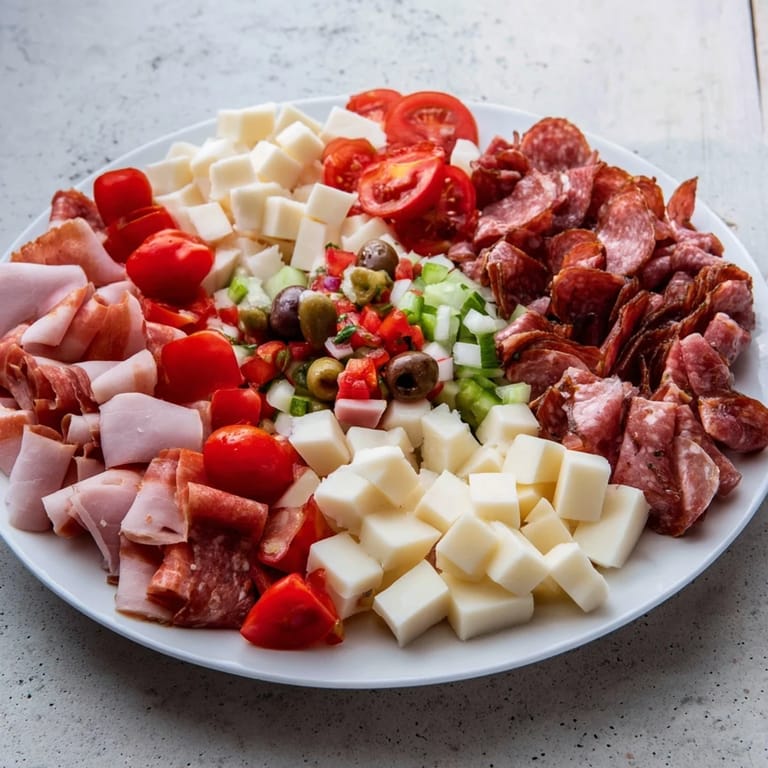
- Place your large platter in front of you and take a breath. You're not plating in a rush; you're composing. Begin by arranging all the meats in clusters, grouping each type together. Dense clusters look more intentional than scattered pieces. Lean back and look at the negative space you've created—you should see room to work with.
- Build the cheese architecture:
- Now place your cheeses in the remaining spaces, thinking about color contrast. I like to alternate the pale Gruyère with the golden Manchego, and let the darker cheddar cubes create visual depth. Group like items together but ensure colors dance across the platter. This is where it stops being just food and starts being beautiful.
- Fill with vegetables thoughtfully:
- With meats and cheeses as your foundation, fill the remaining spaces with vegetables. Keep similar items clustered—all the tomatoes together, all the cucumber together—this creates visual order that somehow feels more generous than scattered pieces. Leave a little breathing room; overcrowding makes it feel chaotic rather than abundant.
- Scatter your olives:
- Distribute both green and black olives throughout the platter, using them as visual punctuation marks. They fill gaps and add dark pops of color. Think of them like garnish even though they're fully functional ingredients.
- Finish with oil and pepper:
- Drizzle the olive oil very lightly over the vegetables—you want a glistening effect, not a puddle. A good drizzle is two light passes over half the platter. Then crack fresh pepper over everything with a generous hand. This final step transforms it from assembled to finished.
- Crown with parsley:
- Scatter the chopped parsley over the top, focusing on the darker elements and gaps. Green against cured meat and cheese—this final garnish is what makes people say 'oh' when they first see it.
 Save to Pinterest
 I'll never forget the moment my teenage nephew, who usually pushes vegetables to the side of his plate, kept reaching for the radishes and cucumber. His comment—'why haven't we done this before?'—made me understand that sometimes the most sophisticated dish is just high-quality ingredients arranged with respect and care. The platter wasn't about impressing anyone; it was about making good food impossible to ignore.
The Art of Arrangement
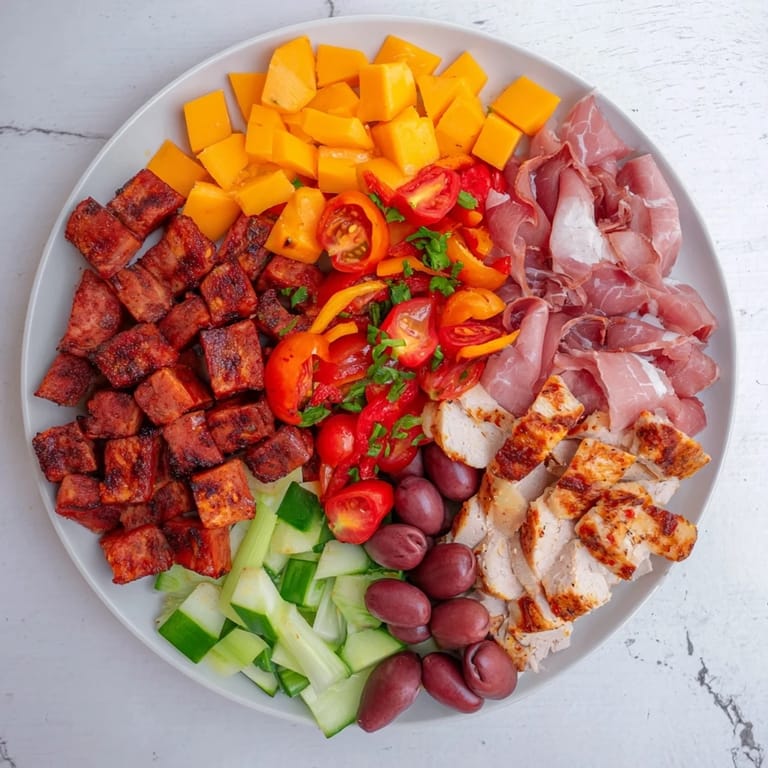
The secret to a truly striking platter is understanding negative space and color rhythm. When I first started building these, I'd cram everything in until it looked like abundance. Then I learned that leaving small gaps actually creates the appearance of more generous portions and makes it easier for people to grab what they want. Think about the colors as a painter would: the deep reds of the beef and salami, the pale yellows of the cheeses, the bright reds of tomatoes, the green of cucumber and parsley. When you arrange them in sequence rather than randomly, your eye travels across the platter with pleasure instead of confusion. The arrangement is as much about creating an experience as it is about feeding people.
Why This Matters for Keto
The keto diet often gets a reputation for being restrictive, but a platter like this rewrites that story. Every ingredient here is nutrient-dense and deliberately chosen. The proteins keep you satiated for hours. The cheeses provide healthy fats and satisfaction. The vegetables offer fiber and micronutrients without spiking blood sugar. What surprised me most when I started eating this way wasn't what I was missing—it was how abundant everything became. A single platter becomes a complete meal, and the ritual of building your own combinations from beautiful ingredients makes you feel cared for by yourself.
Serving Moments and Pairings
This platter is endlessly flexible, which is part of why I keep coming back to it. Serve it as part of a larger meal, or let it be the entire dinner on a warm evening. I've learned that pairing it with something to sip makes the entire experience feel more intentional—a dry white wine with good acidity cuts through the richness, or if you're not drinking alcohol, sparkling water with fresh lemon offers similar brightness. The beauty is that everyone builds their own experience; one person might create roast beef and cheddar combinations while another discovers that prosciutto and radish is their unexpected favorite.
- Consider offering a simple dip—whether it's a mustard-based aioli or herbed cream cheese—to give people another flavor dimension to play with.
- Remember that this platter is best served immediately after assembly, when everything is at its freshest and the vegetables are still properly crisp.
- Don't be afraid to add or substitute based on the season or what moves you at the market; a summer platter might lean toward more vegetables, while a winter version could emphasize richer cheeses and cured meats.
 Save to Pinterest
 At its heart, this platter is an invitation to slow down and notice what you're eating. Every ingredient has traveled somewhere to reach your table, and arranging them with care is a quiet way of honoring that journey.
Recipe FAQs
- → What types of meats are used in this dish?
It features a selection of cured and sliced meats including roast beef, smoked turkey, prosciutto, and salami, arranged for visual appeal and variety in flavor.
- → Which cheeses complement this platter?
Aged cheddar, Gruyère, and Manchego cheeses are used, providing rich and creamy textures paired alongside the meats and vegetables.
- → What vegetables are best for this platter?
Non-starchy options like cherry tomatoes, cucumbers, radishes, baby bell peppers, and celery sticks add fresh crunch and color.
- → How is flavor enhanced without heavy cooking?
Olives, fresh parsley, extra virgin olive oil, and freshly ground black pepper bring depth and brightness, elevating every bite.
- → Can I customize meats or cheeses in this dish?
Yes, substitutions with similar cured meats or cheeses such as roast chicken or Emmental are encouraged to suit personal tastes.