 Save to Pinterest
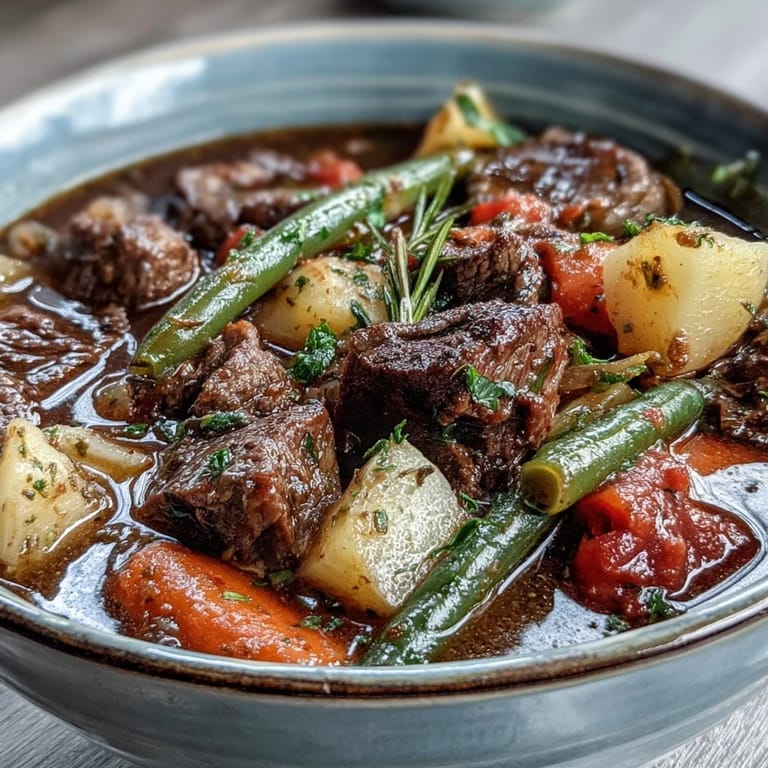
 My neighbor stopped by on a frozen February afternoon, and I had nothing in the kitchen but time and a craving for something that would warm us both from the inside out. She watched as I browned chunks of beef in a Dutch oven, the kitchen filling with that deep, savory smell that makes you feel like you're doing something right. Within minutes, we were trading stories while vegetables softened on the stove, and by the time that first bowl was ready, we both understood why beef and vegetable soup has survived generations of dinner tables. It's not fancy, but it doesn't need to be.
I made this soup for my daughter's college care package one November—I simmered it low and slow, then froze it in portions so she could reheat it in her dorm microwave during late-night study sessions. Her text back said it tasted like home, and honestly, that's when I knew I'd nailed something important about comfort food.
Ingredients
- Beef chuck (1.5 lbs, cut into 1-inch cubes): Chuck is the workhorse of beef soup—it has just enough fat and connective tissue that it becomes silky and tender through long, gentle simmering, rather than tough and stringy like leaner cuts would.
- Olive oil (2 tbsp): High heat searing depends on this; it's your vehicle for developing that golden crust on the beef that makes the whole pot taste deeper and more complex.
- Onion, carrots, and celery (1 large onion, 3 carrots, 2 stalks): This trinity builds the flavor foundation—don't skip any of them, because each one brings something irreplaceable to the broth.
- Garlic (3 cloves, minced): Add it after the softer vegetables so it doesn't burn and turn bitter; even 30 extra seconds of high heat changes its personality.
- Potatoes and parsnip (2 medium potatoes, 1 parsnip optional): Potatoes thicken the broth naturally as they break down, while parsnip adds an earthy sweetness that sneaks up on you in the best way.
- Green beans and peas (1 cup green beans, 1 cup frozen peas): These go in at the very end—they stay bright and crisp this way instead of turning into mush after an hour and a half of cooking.
- Diced tomatoes (14.5 oz can, undrained): The acidity cuts through the richness of the beef and beef broth, keeping everything balanced instead of heavy.
- Beef broth (8 cups): Quality matters here more than anywhere else; a thin, salty broth will produce a thin, salty soup, so taste yours first and adjust the salt accordingly.
- Bay leaves, thyme, oregano (2 bay leaves, 1 tsp each dried herb): These three work together to create that classic, recognizable soup flavor—remove the bay leaves before serving, or warn people about them.
- Salt and black pepper: Start conservative; you can always add more, but you can't take it out.
- Fresh parsley (2 tbsp, chopped): This is your final flourish—it brings color and a whisper of freshness that makes people notice the soup tastes alive.
Tired of Takeout? 🥡
Get 10 meals you can make faster than delivery arrives. Seriously.
One email. No spam. Unsubscribe anytime.
Instructions
- Brown the beef:
- Get your Dutch oven screaming hot with olive oil, then add the beef in a single layer—don't crowd the pot or it'll steam instead of sear. Let each side spend a full minute or two untouched so a golden crust forms, then set it aside while you build the rest of the soup.
- Soften the aromatic vegetables:
- In the same pot, the browned bits stuck to the bottom are liquid gold, so your onion, carrot, and celery will pick up all that flavor as they soften. After 5 minutes, add the garlic for just one minute so it blooms without scorching.
- Build the broth:
- Return the beef to the pot and pour in everything else except the peas and green beans—this is your moment to taste the broth and think about whether you want to adjust the seasoning before the long simmer. Bring it to a boil so you can see it's really happening, then drop the heat low and cover it.
- Simmer until the beef surrenders:
- An hour and fifteen minutes might feel like a long time, but that's what transforms tough muscle fibers into something tender—stir it occasionally so nothing sticks to the bottom and the flavors mingle evenly.
- Finish with the green vegetables:
- Uncover the pot, add the peas and green beans, and let them cook for another 10 to 15 minutes until they're soft but not disintegrating. This is when you taste again and adjust the salt, because it might have intensified during simmering.
- Final touches:
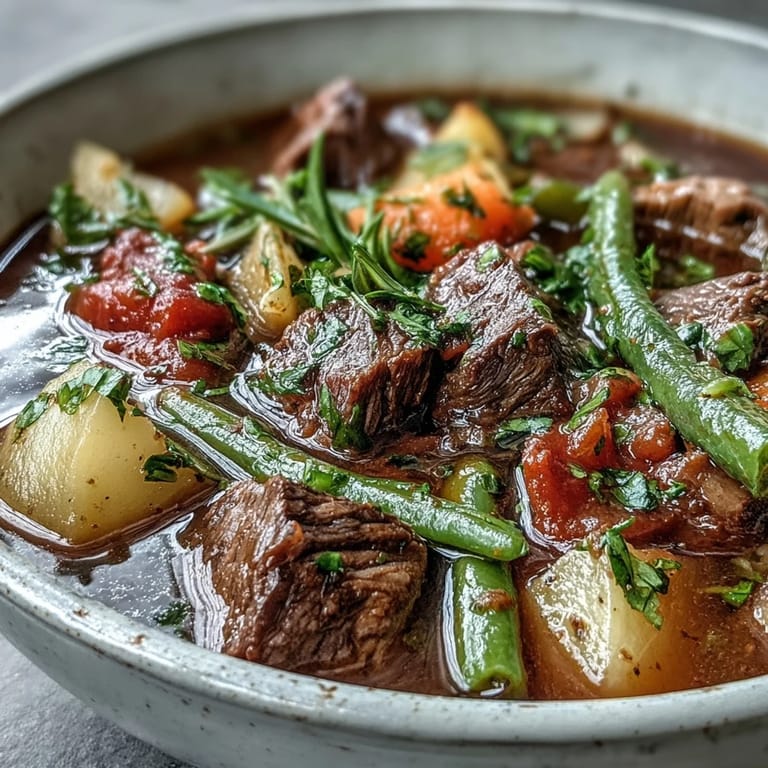
- Fish out the bay leaves (this is important—nobody wants to bite into one), ladle it into bowls, and scatter fresh parsley over the top so it looks intentional and tastes bright.
 Save to Pinterest
 There's something almost meditative about a pot of soup simmering on the stove for nearly two hours—your kitchen becomes a warm, forgiving place, and somehow the world feels smaller and more manageable. By the time you're ladling it out, you've already tasted it three times, adjusted the salt twice, and decided it's exactly what somebody needed today.
How to Store and Reheat
This soup is one of those dishes that genuinely improves as it sits in the refrigerator—the flavors marry together overnight, and by day two it tastes like you spent even more time on it than you did. Store it in an airtight container for up to four days, or freeze it in portions (leaving a little headspace so it doesn't split the container as it expands). Reheat gently on the stove over medium heat, stirring occasionally, and add a splash of broth if it's thickened too much.
What to Serve Alongside
Crusty bread is the obvious choice, and it's obvious for a reason—you want something to soak up the broth and push the vegetables onto your spoon. A simple green salad with vinaigrette cuts through the richness if you want something lighter on the plate, or a grilled cheese sandwich turns this into pure comfort if someone at your table needs exactly that.
Ways to Make It Your Own
The beauty of this recipe is that it's a template, not a strict law—I've made it with sweet potatoes instead of regular ones when someone mentioned they preferred them, added a splash of Worcestershire sauce on a day when the broth tasted a little flat, and even thrown in a pinch of smoked paprika when I wanted something with slightly more depth. The core of the soup is strong enough to handle your experiments without falling apart.
- Try adding turnips, rutabaga, or even winter squash in place of parsnip for different earthy notes.
- A bay leaf-worth of time with fresh rosemary instead of oregano creates an entirely different mood.
- If you want more body, mash some of the potatoes against the side of the pot to thicken the broth naturally.
 Save to Pinterest
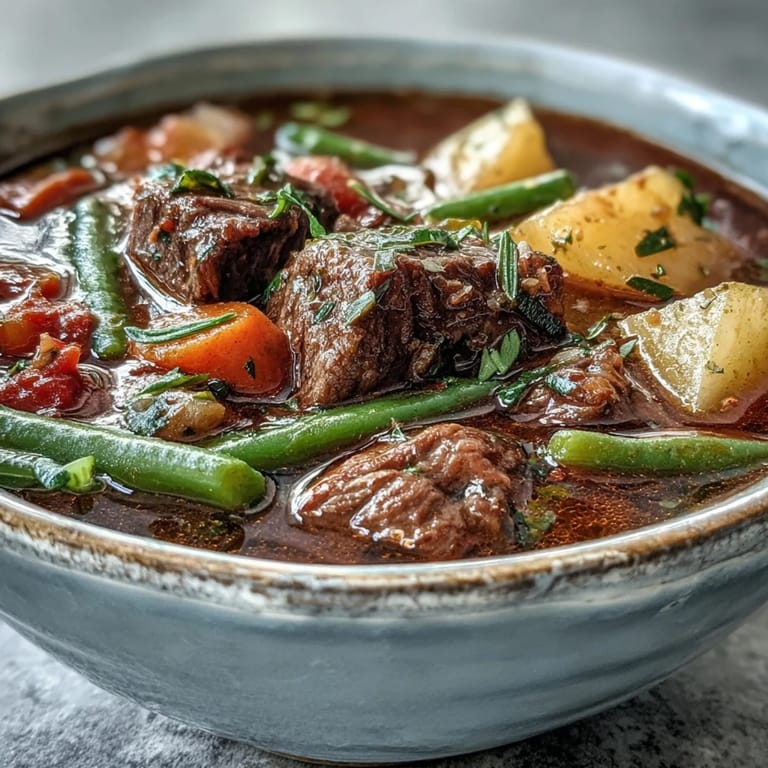
 This soup has a way of becoming part of your cooking rotation without you quite planning for it to happen. Make it once and you'll find yourself reaching for it again on cold afternoons, making it for people you care about, and eventually, someone will ask you for the recipe.
Recipe FAQs
- → How long does this soup take to make?
The total time is about 2 hours and 10 minutes, including 25 minutes of prep and 1 hour 45 minutes of cooking time. Most of that is hands-off simmering.
- → Can I freeze this beef and vegetable soup?
Yes, this soup freezes well for up to 3 months. Let it cool completely before transferring to airtight containers. Thaw overnight in the refrigerator before reheating.
- → What cut of beef works best?
Beef chuck is ideal because it becomes tender during long simmering. You could also use stew meat or round, but chuck offers the best flavor and texture breakdown.
- → Can I make this in a slow cooker?
Absolutely. Brown the beef first, then add all ingredients to your slow cooker. Cook on low for 7-8 hours or high for 4-5 hours. Add peas during the last 30 minutes.
- → What should I serve with this soup?
Crusty bread makes an excellent accompaniment for dipping. A simple green salad or roasted vegetables also pair nicely. The soup is substantial enough to stand alone as a meal.