 Save to Pinterest
 I discovered the magic of a grazing board quite by accident at an intimate dinner party where my carefully planned menu fell apart. With guests arriving in an hour and my soufflé refusing to cooperate, I raided the cheese counter, the bread aisle, and my pantry, arranging everything on a wooden board my mother had given me. What started as a last-minute rescue became the highlight of the evening—people lingered around that board for hours, lost in conversation. Now I orchestrate these deliberately, but that night taught me something: the most memorable meals often aren't about perfection, but about creating a beautiful space where people naturally want to linger.
I remember arranging one of these boards the night my theater-loving friend came to dinner, and she gasped when she saw the cheese and fruit spilling dramatically over the edge. She said it looked like velvet curtains taking their final bow, and that image stuck with me. Now whenever I build one, I think about that moment—about how food can tell a story even before anyone takes a bite, about how presentation becomes part of the experience itself.
Ingredients
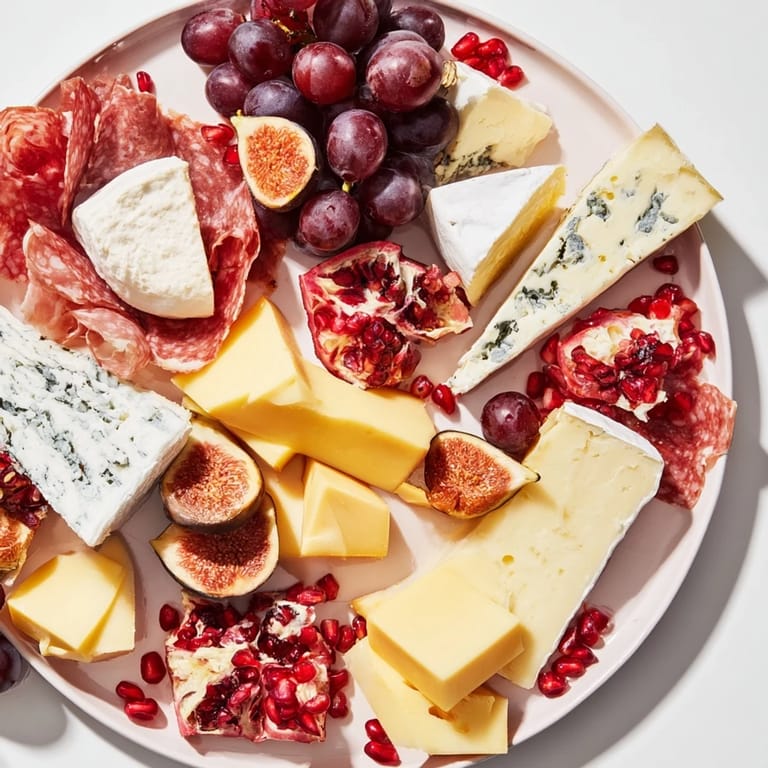
- Brie, 150 g, sliced into wedges: The soft anchor that binds everything together; cut it just before serving so it stays creamy and doesn't oxidize.
- Aged Cheddar, 150 g, cut into sticks: Those sharp, crystalline edges give you something to hold onto and create nice texture contrast against the soft cheeses.
- Blue Cheese, 120 g, broken into chunks: The bold voice in this composition; a little goes a long way, and breaking it by hand instead of slicing keeps it looking artisanal.
- Prosciutto, 100 g, loosely draped: Let it fall naturally rather than folding it perfectly; the wrinkles and folds are what make it look theatrical.
- Soppressata, 100 g, folded: Stack these into loose, casual pleats so they catch the light and create dimension on the board.
- Red Grapes, 1 cup, on the stem: Leave them clustered when you can; the stems become natural handles for guests and look like small decorative elements.
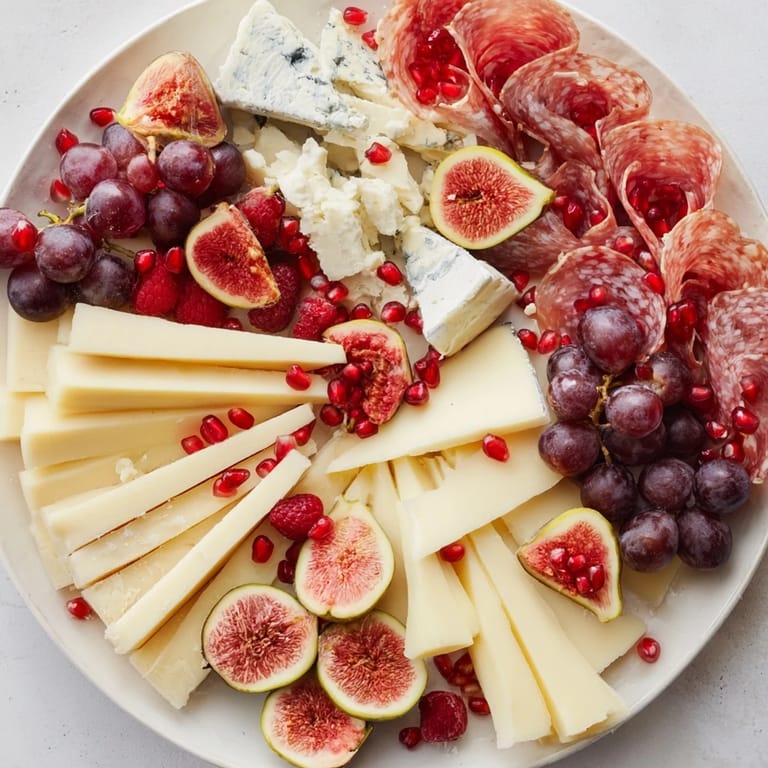
- Fresh Figs, 1 cup, halved: The jewels of the board—their burgundy interiors create visual drama, so arrange them with the cut side facing up.
- Strawberries, 1 cup, halved: Slice these last so they don't weep into the board and stain everything around them.
- Pomegranate seeds, 1 cup: Scatter these almost casually across the board; their bright pops of color guide the eye and make everything feel more festive.
- Baguette, 1, sliced: Cut on a slight angle for elegance and slice it just before serving so nothing goes stale or chewy during the party.
- Seeded Crackers, 150 g: These are the blank canvas for the cheeses; their texture supports rather than competes.
- Fig Jam, 1/2 cup: This bridges sweet and savory; nestle it in a small bowl so people instinctively know to pair it with the brie.
- Honey, 1/4 cup: A warm complement to the blue cheese and aged cheddar; let it pool slightly in its bowl so it looks intentional and inviting.
- Marcona Almonds, 1/2 cup: Their buttery richness makes them disappear quickly; buy more than you think you'll need because guests always underestimate how many they'll eat.
- Olives, 1/2 cup, green and black, pitted: The umami element that keeps people reaching back for more; pit them yourself if you can, as it shows thoughtfulness.
- Fresh herbs for garnish: Rosemary and thyme add aroma before anyone tastes anything; tuck them between ingredients so they release their oils as people reach across the board.
Tired of Takeout? 🥡
Get 10 meals you can make faster than delivery arrives. Seriously.
One email. No spam. Unsubscribe anytime.
Instructions
- Choose your stage:
- Select a large wooden or marble board and position it where it becomes the visual centerpiece, ideally near the edge of the table so the cascade effect is visible from all angles. The surface matters—marble feels sophisticated, wood feels warm; choose based on your mood and what you're serving alongside.
- Build the foundation with cheese:
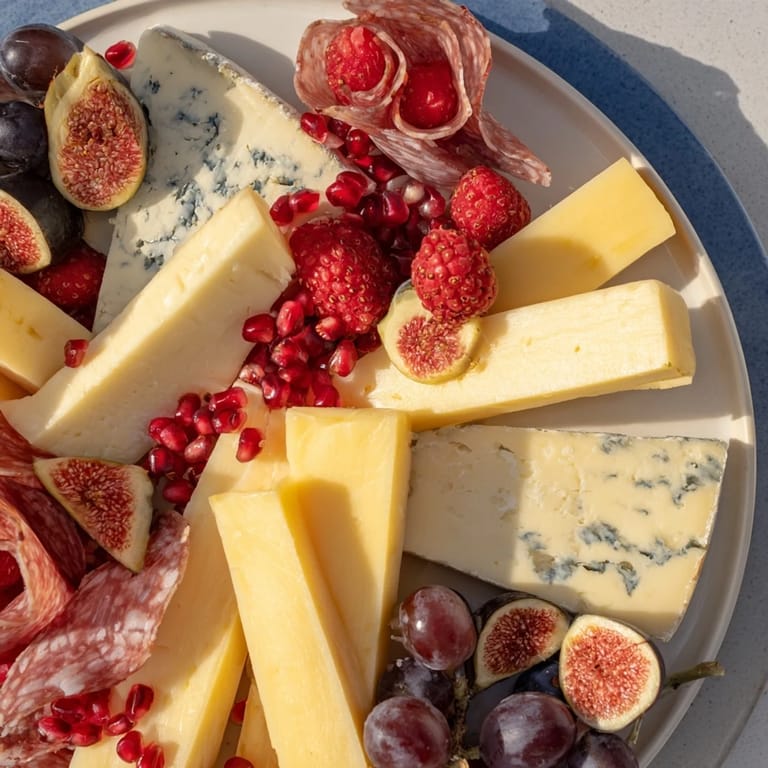
- Arrange your three cheeses strategically, letting some pieces edge over the board's rim like draped fabric. This isn't about symmetry; it's about creating visual tension and movement that makes people want to reach for something.
- Add the theater with charcuterie:
- Fold and layer your prosciutto and soppressata loosely, allowing them to tumble down the sides rather than lying flat. Watch how the light plays off the wrinkles and folds; these imperfections are what makes it beautiful.
- Paint with fruit:
- Tuck grapes, halved figs, strawberries, and pomegranate seeds throughout the board, letting some trail over the edge like a living, organic curtain. The seeds especially should scatter a bit; perfect placement looks sterile, but intentional abundance feels luxurious.
- Frame with bread and crackers:
- Fan your baguette slices and arrange crackers so they lean slightly over the edge, creating multiple layers of depth. Think of them as supporting actors that enhance without overwhelming the main stage.
- Crown with extras:
- Nestle small bowls of fig jam, honey, olives, and almonds among the other ingredients, positioning them where they're visible but not overwhelming. These little vessels become destinations that guide your guests' journey across the board.
- Finish with flourish:
- Tuck fresh herb sprigs between and around ingredients, letting their green fronds peek out unexpectedly. Serve immediately while textures are at their best and the whole thing radiates that just-arranged energy.
 Save to Pinterest
 There was an evening when my teenage nephew arrived at the table, put down his phone, and just stood there looking at the board for a full minute before asking if he could help himself. His mom and I exchanged a quiet look—the food had already done its job, creating this moment of simple presence that technology hadn't won. That's when I realized these boards aren't really about feeding people; they're about creating a reason for everyone to gather in one place and actually notice each other.
The Art of Positioning
The placement of each ingredient matters more than the quantity, and I learned this the hard way when my first attempts looked cramped and crowded. Now I think in terms of thirds: one-third cheese, one-third fruit and charcuterie, one-third bread and supporting players. The magic happens in the negative space—the board should never look completely full, because fullness leaves nowhere for the eye to rest and nowhere for your guests to imagine adding their own discoveries to the arrangement. Let the wood or marble show through; it's part of the composition, not something to hide.
Timing and Temperature
I've learned that bringing cheeses out of the fridge thirty minutes before serving transforms them—they soften just enough to be truly creamy, and their flavors bloom in ways cold cheese never can. The fruit should be cold though, especially on warm evenings; the temperature contrast between cool grapes and room-temperature cheese creates this pleasant little sensation on the palate. This isn't complicated, but it's the kind of detail that separates a good board from one people remember.
Making It Your Own
The most memorable boards aren't the ones that stick exactly to a recipe; they're the ones that reflect what your guests actually love. I've done versions with roasted grape clusters, with honeycomb instead of separate honey, with charred bread and whipped goat cheese spread. The curtain effect stays the same, but the details shift with the season and the people gathering around. This is your stage, and the ingredients are your props—use them to tell a story that feels true to your kitchen and your people.
- Edible flowers scattered across the board add unexpected color and make the whole thing feel more special without requiring any additional cooking.
- A light drizzle of aged balsamic over the fruit creates glossy jewel-like moments that catch the eye and add complexity to each bite.
- Trust your instincts about ratios and placement; there's rarely a wrong way to arrange beautiful ingredients that you love.
 Save to Pinterest
 Every time I build one of these boards, I'm reminded that the best entertaining isn't about perfection—it's about creating an invitation for people to slow down and enjoy each other. Let your hands guide you, trust your eye, and remember that the cascade matters less than the conversation it creates.
Recipe FAQs
- → How do I create the cascading effect on the board?
Arrange cheeses and charcuterie pieces so they slightly spill over the edge, mimicking draped curtains for a dramatic flow.
- → Can I prepare this board ahead of time?
It's best to assemble just before serving to maintain freshness and the visual appeal of fruits and herbs.
- → What are good drink pairings for this spread?
Crisp rosé or sparkling wine complements the creamy cheeses and fresh fruit beautifully.
- → How can I adjust it for a vegetarian diet?
Simply omit the charcuterie and use plant-based cheeses if desired.
- → What fresh herbs work best as garnish?
Rosemary and thyme add aromatic notes and enhance the board's visual appeal.
- → Are there allergen considerations to keep in mind?
Yes, this board contains dairy, tree nuts, and gluten. Check ingredient labels for any additional allergens.