 Save to Pinterest
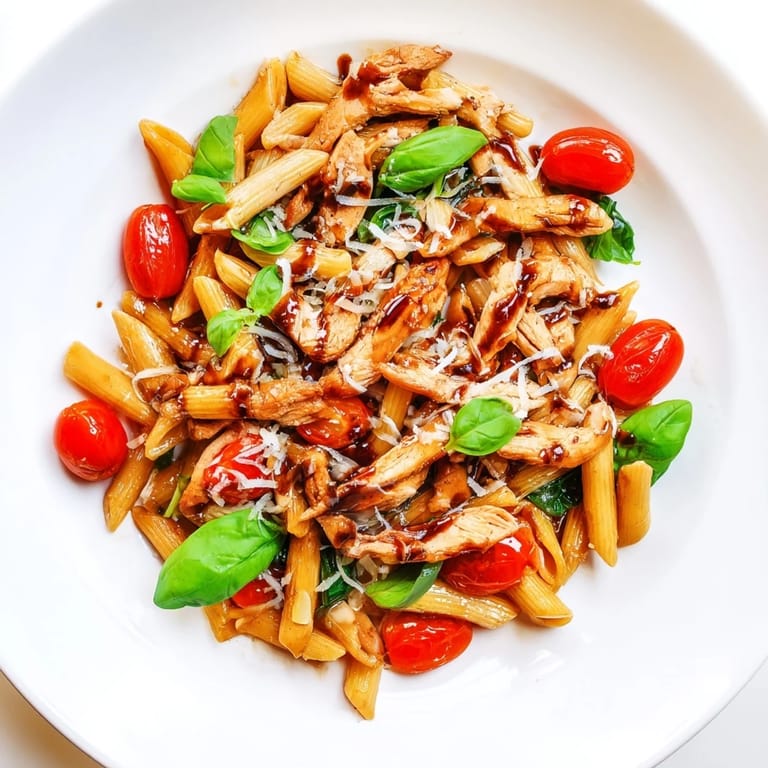
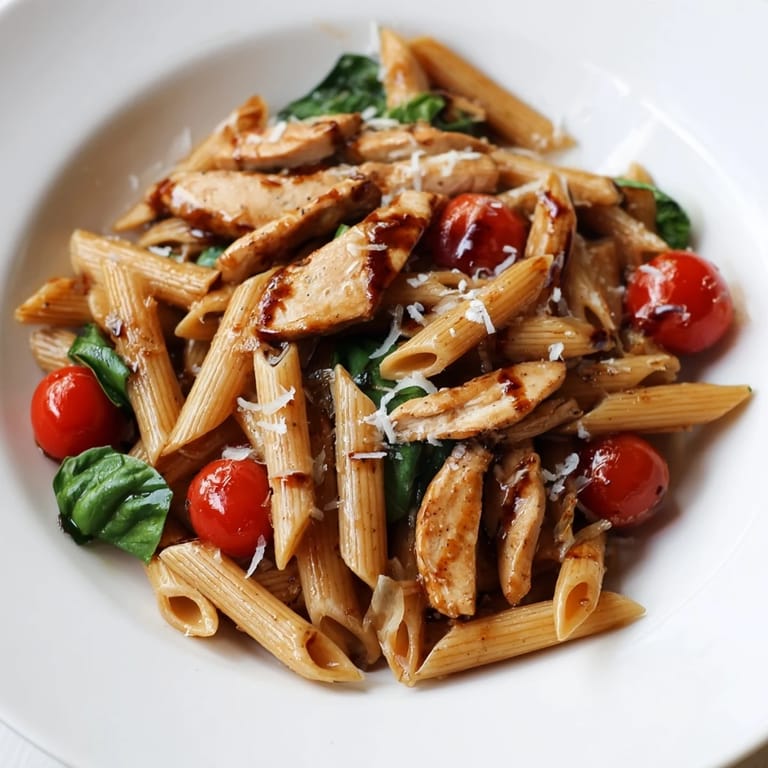
 One Sunday evening, I was staring at leftover chicken and a half-empty bottle of balsamic vinegar when inspiration struck. I tossed together what I had, let the vinegar bubble down into a glossy glaze, and suddenly dinner went from ordinary to something my family asked for again the next week. The way the tangy sweetness clung to the chicken and mingled with garlic and tomatoes felt like a small kitchen victory. That spontaneous experiment became this recipe, and it has never let me down since.
I remember making this for friends who showed up unexpectedly on a Friday night. I doubled the recipe, boiled extra pasta, and watched as they twirled their forks and went quiet in that good way people do when food surprises them. One friend even asked if I had taken a cooking class, which made me laugh because the whole thing came together while we were chatting over wine. It reminded me that impressive does not have to mean difficult.
Ingredients
- Boneless, skinless chicken breasts: Slicing them thin ensures they cook fast and soak up the glaze, plus they stay tender and juicy instead of drying out.
- Penne or spaghetti: Penne catches the sauce in its ridges, but spaghetti twirls beautifully with the glaze, so pick whichever shape makes you happiest.
- Garlic: Freshly minced garlic blooms in hot oil and fills the kitchen with that irresistible aroma that makes everyone wander toward the stove.
- Cherry tomatoes: They burst into sweet little pockets of juice when sautéed, adding bright color and a pop of freshness to every bite.
- Baby spinach: It wilts down in seconds and adds a soft green contrast without any bitterness or fuss.
- Olive oil: Use a good quality one since it is divided throughout the recipe and really shapes the flavor of the glaze and the sauté.
- Balsamic vinegar: This is the star, turning sharp and tangy into something rich and glossy when reduced with honey.
- Honey: Just a tablespoon balances the acidity and helps the glaze cling to the chicken like a dream.
- Dijon mustard: It adds a subtle kick and helps emulsify the glaze so it coats everything evenly.
- Dried Italian herbs: A simple blend of oregano, basil, and thyme brings warmth without needing a bunch of fresh herbs.
- Parmesan cheese: Freshly grated melts slightly into the hot pasta and adds that salty, nutty finish everyone loves.
- Fresh basil: Torn at the last second, it brings a hit of herbal brightness that makes the whole dish feel garden-fresh.
Tired of Takeout? 🥡
Get 10 meals you can make faster than delivery arrives. Seriously.
One email. No spam. Unsubscribe anytime.
Instructions
- Boil the pasta:
- Cook your pasta in well-salted water until it still has a slight bite, then scoop out half a cup of that starchy water before draining. That reserved liquid is magic for loosening the sauce later.
- Sear the chicken:
- Heat your skillet until it is nice and hot, add the oil, then lay in the seasoned chicken strips without crowding them. Let them sizzle undisturbed for a couple of minutes so they get golden edges, then flip and cook through before setting them aside.
- Sauté the aromatics:
- In the same skillet, toss in the garlic and let it bloom for just 30 seconds until fragrant but not brown. Add the cherry tomatoes and cook until they soften and start to release their juices.
- Mix the glaze:
- In a small bowl, whisk together balsamic vinegar, honey, Dijon mustard, and olive oil until smooth. This little mixture transforms into a glossy coating once it hits the heat.
- Glaze the chicken:
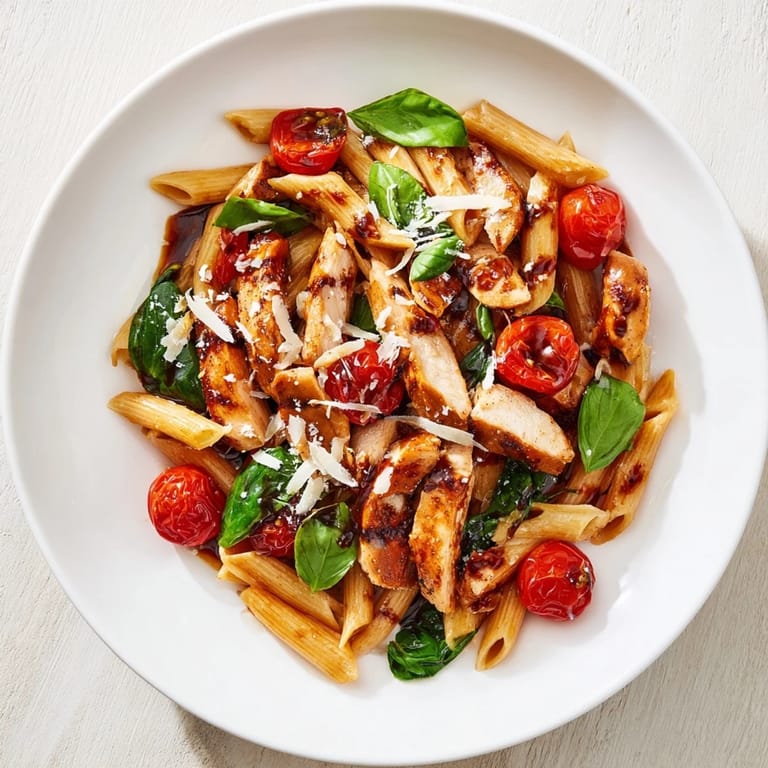
- Return the chicken to the skillet, pour the balsamic mixture over everything, and let it simmer gently. The sauce will thicken and cling to the chicken in a beautiful, shiny coat.
- Toss everything together:
- Add the cooked pasta and spinach to the skillet, toss well, and splash in some reserved pasta water to create a silky sauce. The spinach will wilt instantly and everything will come together in one gorgeous tangle.
- Finish and serve:
- Pull the skillet off the heat, taste for seasoning, then plate it up with a generous sprinkle of Parmesan and torn basil. Serve it hot and watch it disappear.
 Save to Pinterest
 There was a rainy Tuesday when I made this just for myself, curled up on the couch with a bowl and a book. The smell of balsamic and garlic lingered in the apartment for hours, and every bite felt like a hug. That is when I realized this dish was not just for impressing others, it was for taking care of myself too.
Choosing Your Pasta Shape
Penne works beautifully because the hollow tubes trap bits of chicken and tomato, giving you a little surprise in every forkful. Spaghetti, on the other hand, twirls elegantly with the glaze and feels a bit more romantic on the plate. I have also used rigatoni and fusilli with great results, so really any shape you love will do the job as long as you cook it properly al dente.
Making It Your Own
If you want to go vegetarian, swap the chicken for thick slices of portobello mushrooms or pressed tofu, both soak up the glaze like a sponge. You can also trade spinach for arugula if you like a peppery bite, or toss in some kale for extra heartiness. A pinch of red pepper flakes added with the garlic brings a gentle heat that plays nicely with the sweetness of the balsamic.
Serving and Pairing Ideas
This pasta shines on its own, but a simple side salad with lemon vinaigrette or a crusty piece of garlic bread makes it feel like a full Italian feast. I like to serve it family-style in a big shallow bowl so everyone can help themselves and the Parmesan gets passed around the table. A light Pinot Noir or a crisp Sauvignon Blanc complements the tangy glaze without overpowering the dish.
- Serve with a green salad dressed in olive oil and lemon for balance.
- Crusty bread is perfect for mopping up any leftover glaze on the plate.
- Leftovers reheat well with a splash of water or broth to loosen the sauce.
 Save to Pinterest
 This dish has earned a permanent spot in my weeknight rotation, and I hope it does the same for you. It is proof that simple ingredients and a little confidence can turn an ordinary evening into something worth remembering.
Recipe FAQs
- → Can I use chicken thighs instead of breast?
Yes, chicken thighs work beautifully and stay incredibly moist. They require slightly longer cooking—around 8-10 minutes—to ensure they're cooked through. The richer flavor pairs wonderfully with balsamic.
- → What type of balsamic vinegar is best?
Aged balsamic vinegar (at least 6 years) provides deeper, more complex flavor than standard balsamic. For the glaze to thicken properly and coat the chicken, choose one with good viscosity and avoid overly thin vinegars.
- → How do I prevent the chicken from drying out?
Slice the chicken into thin strips—this reduces cooking time and ensures even heat distribution. Avoid cooking above medium-high heat, and don't overseasoning before cooking as salt can draw out moisture. The glaze also helps retain moisture.
- → Can I make this dish dairy-free?
Absolutely. Simply omit the Parmesan or substitute it with a dairy-free Parmesan alternative. The balsamic glaze and herbs provide plenty of flavor on their own without the cheese.
- → What pasta shape works best?
Penne and spaghetti are ideal as their ridges or surface area capture the glaze well. Fettuccine, linguine, or even farfalle all work beautifully. Avoid tiny shapes like ditalini, which don't showcase the sauce effectively.
- → Why is reserved pasta water important?
Pasta water contains starches that emulsify with the oil and vinegar, creating a silky, cohesive sauce that clings to each strand. It prevents the dish from becoming too thick or dry, transforming the glaze into something luxurious.